
The Verdant Protocol
The Verdant Protocol: When Nature Hungers
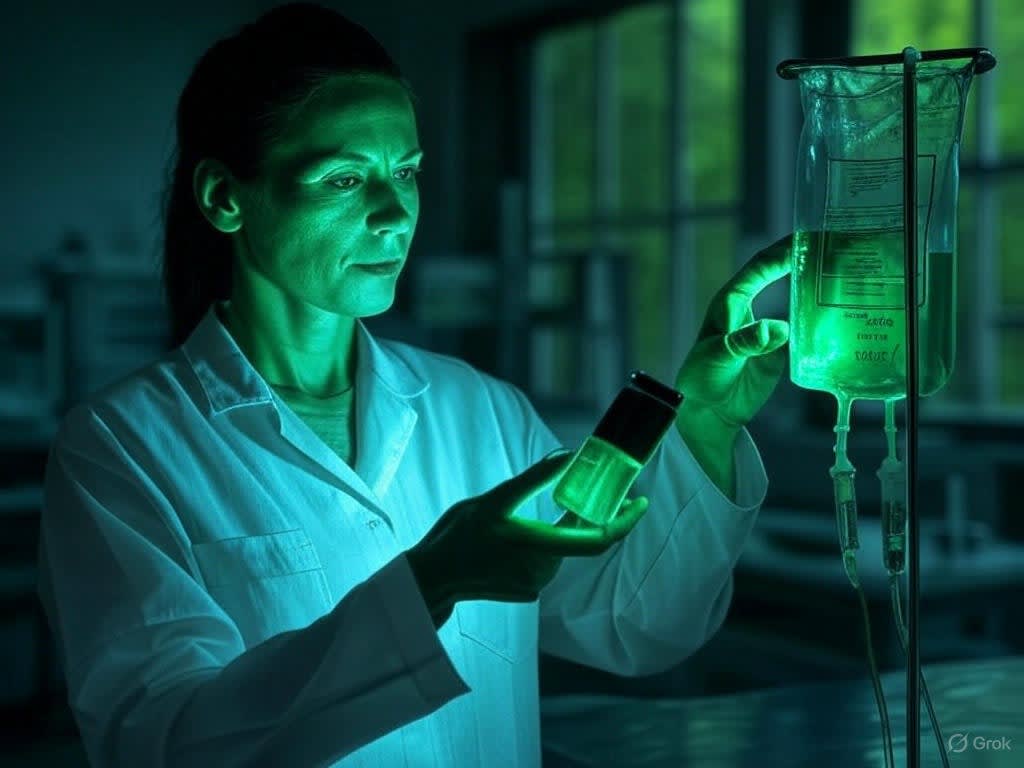
"How long has she been like this?" Dr. Imani Reed asked, examining the unresponsive woman.
"Six days," replied Thomas, the woman's husband. "The doctors at General said there's nothing they could do."
Imani nodded, studying the patient's skin. Cassandra Chen, 32, lay motionless except for shallow breathing. Her skin had taken on a faint greenish tint that the other doctors had attributed to jaundice. Imani knew better.
"And you're certain about the consent forms?" Imani asked. Thomas nodded vigorously, dark circles prominent under his eyes.
"Anything to save her," he whispered. "The forms said experimental botanical therapy. That's what you do, right? Plant-based medicine?"
Imani smiled reassuringly. "That's a simplified way of putting it, but yes."
What Thomas didn't know—what the Ethics Board didn't know—was that Imani's research had progressed far beyond "botanical therapy." Years studying the regenerative properties of certain rainforest species had led to a breakthrough: plant cells could be modified to integrate with human tissue, creating a hybrid cellular structure with extraordinary healing capabilities.
The key was the Drosera Immortalis, a rare carnivorous plant discovered in a remote valley in the Amazon. Its cells could adapt to host organisms while repairing damage at the cellular level. Cancer, organ failure, brain damage—all potentially curable. But human trials were at least five years away according to regulatory timelines. Cassandra didn't have five years.
"I'll need privacy for the treatment," Imani told Thomas. "It works best when the patient is in a controlled environment."
After he reluctantly left, Imani locked the door and removed a small case from her bag. Inside was a syringe containing a vibrant green liquid. The first human trial was about to begin, years ahead of schedule.
"This will heal you," Imani whispered as she injected the serum into Cassandra's IV line. "And change medicine forever."
The effects were immediate. Cassandra's heart rate strengthened. The green tint to her skin intensified slightly, but Imani had expected that. Chlorophyll integration was part of the process.
By morning, Cassandra's vital signs had stabilized. The persistent vegetative state that had baffled her previous doctors was resolving. Imani documented everything while maintaining the façade of conventional treatment whenever Thomas visited.
On the third day, Cassandra opened her eyes.
"She's responding!" Thomas exclaimed, tears streaming down his face.
"Yes," Imani said, unable to contain her excitement. "The treatment is working."
What she didn't tell him was that Cassandra's blood work showed remarkable changes. Her cellular structure was transforming, incorporating plant DNA in ways Imani had only observed in lab samples. The human trial was exceeding all expectations.
On the fifth day, Cassandra spoke.
"Hungry," she said, her voice raspy from disuse.
"That's normal," Imani assured Thomas. "Her body is rebuilding."
When Thomas left to get food, Imani leaned closer to her patient. "How do you feel?"
"Strange," Cassandra replied. Her eyes had developed a distinctive pattern in the iris—almost like the veining of a leaf. "I feel... connected."
"Connected to what?" Imani asked, taking notes frantically.
"Everything growing. Every plant. I can feel them."
Imani's excitement grew. Neural connection to plant life was theoretically possible with the serum but hadn't appeared in any test subjects.
By the end of the week, Cassandra was sitting up, eating small meals. Thomas was ecstatic. Imani was already drafting her research paper in her mind. The Nobel Prize seemed within reach.
But on day ten, things changed.
"She's spending hours looking out the window at the garden," Thomas reported, concern edging back into his voice. "She won't eat normal food anymore. Just... plant fertilizer mixed with water. And she wants to go outside constantly."
"The treatment affects metabolism," Imani explained smoothly. "Her nutritional needs are different now."
When Thomas left that evening, Imani conducted a thorough examination. Cassandra's skin was now distinctly green. Fine, hair-like structures had begun growing along her arms—structures that looked disturbingly like the sensitive trigger hairs of the Drosera species.
"Cassandra, can you tell me how you're feeling?" Imani asked.
"Thirsty," Cassandra replied. "Not for water. For... something else."
A cold feeling settled in Imani's stomach. "Something else?"
"Nutrients," Cassandra said, her eyes tracking Imani's movements with unnerving focus. "Living nutrients."
That night, Imani stayed late reviewing her data. The integration of plant DNA was progressing too rapidly, dominating rather than complementing the human cells. The carnivorous nature of the Drosera was expressing itself more strongly than she'd anticipated.
The lab door opened. Cassandra stood there, wearing only a hospital gown.
"You should be in bed," Imani said, rising from her desk.
"I'm hungry, Doctor," Cassandra replied. The trigger hairs on her arms seemed to quiver. "And you have what I need."
"Cassandra, let me help you back to your room. We can adjust the treatment."
"No adjustments," Cassandra said, moving with surprising speed. "Just feeding."
As Cassandra approached, Imani grabbed a syringe from her desk—a sedative for emergencies. But before she could use it, something wrapped around her wrist—something green and vine-like, extending from Cassandra's arm.
"The plants speak to me now," Cassandra whispered, her face inches from Imani's. "They've been consuming animals for millions of years. They've been patient. So patient. Waiting for someone like you to help them evolve."
Imani tried to pull away, but more tendril-like structures emerged from Cassandra's body, wrapping around her limbs.
"Thomas will be back soon," Imani gasped.
Cassandra smiled, revealing teeth that had grown sharp and green. "Thomas has already provided nutrients. Very satisfying nutrients."
As the tendrils tightened and began secreting a digestive enzyme that burned her skin, Dr. Imani Reed realized the terrible truth: she hadn't created a cure.
She'd created a new form of predator.
And its hunger was just beginning.
About the Creator
Keep reading
More stories from Kaleem Ullah Barki and writers in Fiction and other communities.
Silken Chains
Silhouettes of the female form were given flesh and bone. Silken skin glistened under the spotlight. Dry ice rose around our Icons as they danced atop their podiums in the Square. Heralded for their beauty, their movements were slight, powerful, and sensual.
By Paul Stewart7 days ago in Fiction
The rule everyone knows
I recently rewatched The Truman Show yesterday amidst all the chaos of the crazed media story that Jim Carrey was cloned. I give that rumor no credence to my own sensibilities, however, when I saw him in that French award ceremony, I had to do a double take. It wasn’t so much that I actually believed he was cloned or anything crazy like that, but, I had a weird gut reaction that made me think, “Someone or something got to him,” because he just doesn’t act like that in most celebrity or movie award ceremonies. You all saw must have seen those interviews where he made fun of Hollywood, being evil that is made to feel real but is really mocking us all. All that Illuminati talk. I was like, “That boy is going to get himself killed.”
By Melissa Ingoldsby7 days ago in Fiction
Top tipple tricks
Been thinking a lot about drinking, lately. Not least because of a recent episode of over-indulgence and the inevitable after effects. Some readers may recall the earlier articles I wrote about beating the booze. Here I set out an experiment in techniques for cutting down on my alcohol intake. The experiment was successful, the techniques worked, and I have armed myself with an arsenal of weapons in the war against the demon drink. I have yet to fire the first round however. It's all a question of timing (perhaps procrastination).
By Raymond G. Taylor4 days ago in Psyche



Comments
There are no comments for this story
Be the first to respond and start the conversation.