
"The United Kingdom in Crisis: Politics, Power, and the Path Ahead"
"Leadership, Legacy, and Loss: The UK’s Struggle for Political Renewal"

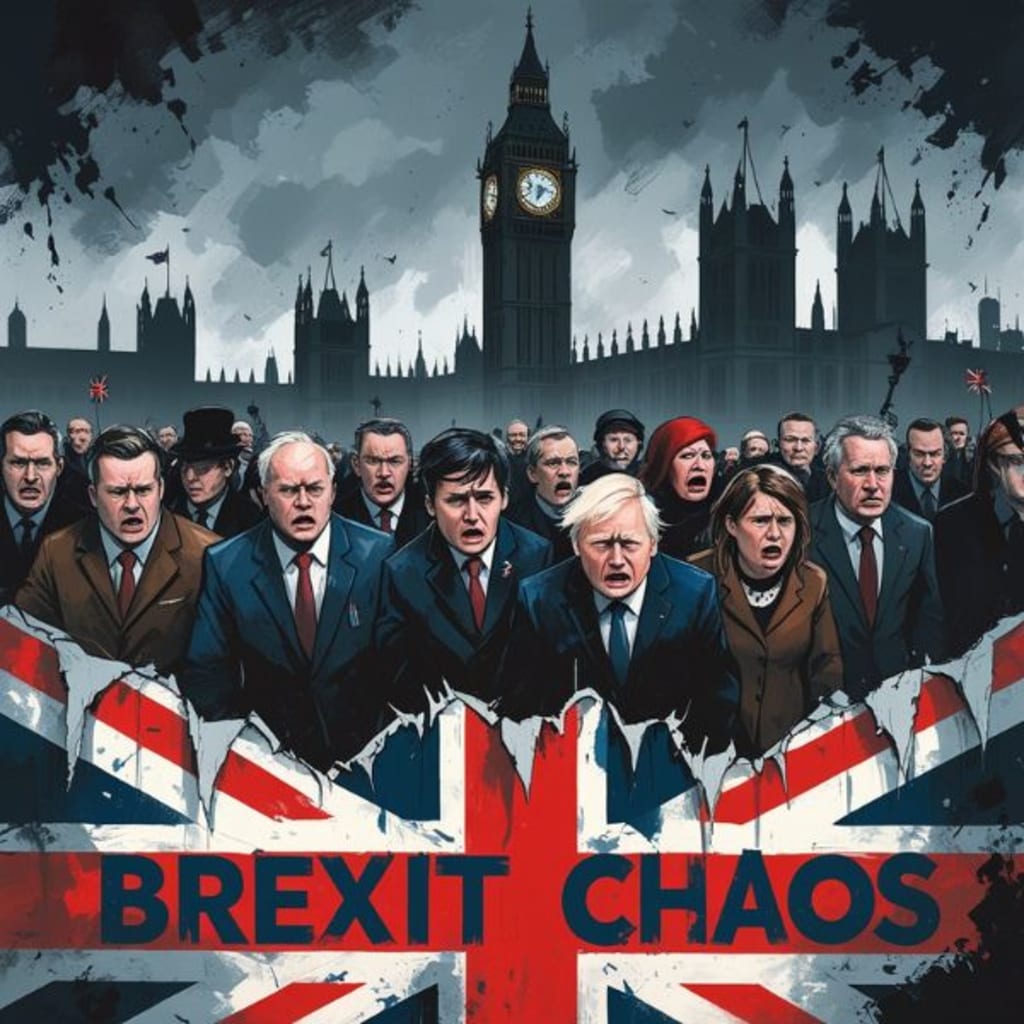
The United Kingdom is experiencing a prolonged political crisis marked by instability, division, and uncertainty. Triggered largely by Brexit, the crisis has exposed deep societal rifts and led to leadership turmoil, with five prime ministers since 2016. Constitutional concerns have emerged due to executive overreach and democratic erosion, while economic struggles—exacerbated by inflation, strikes, and public service cuts—have fueled public discontent. Regional tensions are rising, particularly in Scotland and Northern Ireland, threatening the unity of the UK. Cultural polarization and identity politics have further complicated the landscape. Despite these challenges, there remains potential for renewal through political reform, stronger institutions, and more accountable leadership. The upcoming general election will be a critical moment to determine the nation’s direction. The UK stands at a crossroads, facing serious risks but also opportunities to rebuild trust, strengthen democracy, and address the needs of its diverse population.
Here’s a 1,500-word essay exploring the political crisis of the United Kingdom. This version touches on historical context, Brexit, leadership instability, constitutional concerns, economic pressures, and regional tensions.
The Political Crisis of the United Kingdom: A Nation at a Crossroads
~1500 words
The United Kingdom, once considered a paragon of stable democracy, has found itself in a prolonged political crisis over the past decade. The combination of Brexit, leadership instability, constitutional tensions, economic uncertainty, and growing regional separatism has significantly strained the country’s political institutions and public trust. This crisis is not the result of a single event, but rather a culmination of deep-rooted issues and a rapidly changing global landscape. Understanding the UK’s political turmoil requires examining these interwoven threads and how they continue to shape the country's uncertain future.
I. The Brexit Earthquake
The 2016 referendum on whether the UK should leave the European Union (EU) marked the beginning of the current political turbulence. In a narrow vote—51.9% to 48.1%—the public chose to leave, setting off one of the most divisive and chaotic chapters in modern British politics.
Brexit revealed profound divisions in UK society: between England and Scotland, urban and rural communities, young and old, as well as among economic classes. While supporters hailed it as a reclamation of sovereignty and independence, critics warned of economic damage and geopolitical isolation.
Prime Minister David Cameron, who had called the referendum expecting a "Remain" victory, resigned immediately afterward. His successor, Theresa May, struggled for years to negotiate an acceptable withdrawal agreement with the EU. Her premiership was marred by repeated defeats in Parliament and intra-party rebellions, eventually forcing her to resign in 2019.
Boris Johnson, her successor, adopted a combative "Get Brexit Done" strategy. After winning a significant majority in the 2019 general election, he pushed through a withdrawal deal, finalizing the UK’s departure from the EU in January 2020. However, the deal did not settle the country's internal tensions. New trade barriers with the EU caused economic disruptions, particularly in Northern Ireland, where the implementation of the Northern Ireland Protocol created political strife and logistical problems.
II. Leadership Instability and Scandal Fatigue
One of the most visible symptoms of the UK’s political crisis has been the rapid turnover of prime ministers and cabinet ministers. Since 2016, the UK has seen five prime ministers in less than a decade: David Cameron, Theresa May, Boris Johnson, Liz Truss, and Rishi Sunak. This level of turnover is unprecedented in modern British politics and reflects a deepening instability within the ruling Conservative Party.
Boris Johnson’s leadership, while popular with certain voter bases, became synonymous with scandal. His handling of the COVID-19 pandemic, and particularly the "Partygate" scandal—where he and other government officials were found to have broken lockdown rules—deeply eroded public trust. Johnson was eventually forced to resign in 2022.
His successor, Liz Truss, presided over one of the shortest tenures in British history. Her controversial economic policies, particularly a mini-budget that triggered market panic, caused the pound to fall, mortgage rates to rise, and investor confidence to plummet. Within 45 days, she resigned, leading to Rishi Sunak becoming Prime Minister in October 2022.
While Sunak has brought a degree of calm, his leadership faces ongoing challenges: rebuilding party unity, restoring economic confidence, and addressing long-standing public dissatisfaction. The constant changes in leadership have left the public feeling politically fatigued and disillusioned with traditional party politics.
III. Constitutional Tensions and Democratic Concerns
The UK’s unwritten constitution—relying heavily on precedent, conventions, and parliamentary sovereignty—has been tested severely in recent years. Critics argue that this lack of a codified constitution has enabled excessive executive power and weakened checks and balances.
The 2019 prorogation of Parliament by Boris Johnson, later ruled unlawful by the UK Supreme Court, raised concerns about the erosion of democratic norms. Likewise, attempts to bypass parliamentary scrutiny during the Brexit process and the introduction of sweeping powers in new legislation (such as the Police, Crime, Sentencing and Courts Act) have been accused of weakening democratic accountability.
There is a growing debate about whether the UK's political system—based on First Past the Post voting, an unelected House of Lords, and centralized control—still serves a diverse and modern society. Calls for electoral reform and a written constitution are becoming louder, especially from younger voters and political reform groups.
IV. Economic Strain and Public Services
The political crisis in the UK is deeply tied to economic challenges. Brexit’s impact on trade and investment, coupled with global inflation, supply chain issues, and the economic fallout from the COVID-19 pandemic, has left the country struggling to recover.
The UK is facing a cost-of-living crisis, with soaring energy bills, food prices, and housing costs. Inflation reached historic highs in 2022–2023, leading to a decline in real wages and increasing poverty. Strikes have occurred across multiple sectors—nurses, teachers, railway workers—all demanding better pay and working conditions. These strikes, reminiscent of the 1970s, reflect a broader dissatisfaction with governance and economic policy.
Public services, particularly the National Health Service (NHS), are under immense pressure. Long waiting times, staff shortages, and funding gaps have made healthcare a central political issue. Meanwhile, local councils across the UK are warning of bankruptcy, with several already declaring financial distress due to decades of austerity and cuts.
These economic woes fuel political unrest and voter anger. Many citizens feel that successive governments have failed to deliver on promises of prosperity and fairness.
V. Regional Discontent and the Union at Risk
Perhaps the most existential threat to the UK’s political unity is the growing regional discontent, especially in Scotland and Northern Ireland.
Scotland, which voted overwhelmingly to remain in the EU, has become increasingly vocal about independence. The Scottish National Party (SNP) argues that Brexit was imposed against Scotland’s will, reigniting calls for a second independence referendum. Though the UK government has resisted this, the question remains a live and divisive issue.
Northern Ireland faces its own unique set of challenges. The Northern Ireland Protocol, part of the Brexit deal, has created a de facto customs border in the Irish Sea—causing anger among unionists who feel it undermines their place in the UK. Political gridlock has paralyzed the Northern Ireland Assembly for extended periods. There are growing concerns that this discontent could threaten the fragile peace established by the Good Friday Agreement of 1998.
Wales, too, is seeing rising calls for greater autonomy and, in some circles, independence. While not as intense as in Scotland or Northern Ireland, these sentiments reflect a wider dissatisfaction with the centralized nature of UK governance.
If these tensions continue to grow unchecked, the United Kingdom could face the possibility of fragmentation—an outcome once considered unthinkable.
VI. Culture Wars and the Polarization of Public Debate
The political crisis is also driven by a broader culture war—debates over identity, race, immigration, gender, and historical memory. The UK has seen a marked increase in political polarization, often amplified by social media and populist rhetoric.
Debates over "woke culture," statues, and immigration policy have become central to political campaigns and media discourse. The government’s Rwanda asylum plan, aimed at deterring illegal migration by deporting migrants to Africa, has drawn both domestic and international criticism. Supporters see it as a firm stand on border control; opponents see it as cruel and ineffective.
These cultural debates are not just symbolic—they reflect deeper anxieties about national identity in a post-Brexit, post-imperial Britain. They often distract from pressing economic and social issues but have proven effective in mobilizing certain segments of the electorate.
VII. The Road Ahead: Uncertain but Not Hopeless
Despite the gravity of the political crisis, there are signs of resilience and opportunity. British civil society remains active and engaged. The UK’s media, though often criticized, still plays a critical role in holding power to account. Public institutions like the courts have demonstrated independence in key moments.
New political movements and smaller parties—like the Green Party, Liberal Democrats, and reformist groups—are gaining traction, offering alternatives to the traditional two-party dominance. Within the Labour Party, under Keir Starmer, there has been an attempt to rebuild credibility and present a government-in-waiting, although many voters remain skeptical.
Reform is necessary, but not impossible. Electoral reform, devolution of power, transparency in governance, and economic policies that prioritize equity and sustainability could help restore faith in the system.
The next general election, expected no later than January 2025, will be a pivotal moment for the country. It will not only be a referendum on the performance of the Conservative Party but a broader verdict on how well the political system itself is working.
Conclusion
The political crisis of the United Kingdom is complex, multifaceted, and ongoing. From Brexit and leadership scandals to economic hardship and the threat of regional disintegration, the UK faces profound challenges. Yet, as with any democratic society, the path forward lies in reform, public engagement, and the courage to face uncomfortable truths. Whether the UK emerges stronger from this crisis depends on its leaders’ willingness to listen, adapt, and govern with integrity and vision.
About the Creator
Kazi Mirajul Islam
I am expert in digital Marketing .I am also E- book writer & story writer. I am committed to delivering high-quality content.Also create social media account like Facebook,twitter account ,Instagram ,you tube account create and mained.
Keep reading
More stories from Kazi Mirajul Islam and writers in Fiction and other communities.
"The Cost of Living and Beyond: Unpacking the UK’s Socio-Economic Challenges"
The socio-economic situation of the United Kingdom is marked by stark contrasts and complex challenges. While the UK remains a major global economy with strong financial and service sectors, it faces deep-rooted issues including income inequality, wage stagnation, and a rising cost of living. The effects of Brexit, the COVID-19 pandemic, and global inflation have strained household finances and public services. Millions rely on food banks, and child poverty rates remain high. The housing crisis, with unaffordable rents and a lack of social housing, continues to impact millions.
By Kazi Mirajul Islam9 months ago in Families
Miss Persephone's Manual to a Seemingly Ordinary Life
Miss Persephone was found at the dining table, her blue eyes swollen, her tears arriving and retreating like the tides of the ocean. Earlier that day, her family had visited her in the retirement home where she had lived for eight years. It was her eightieth birthday.
By Imola Tóth4 days ago in Fiction



Comments
There are no comments for this story
Be the first to respond and start the conversation.