
The Tunguska Event: Exploring the Mysterious Explosion of 1908
Uncovering the Possible Causes and Implications for Planetary Defense

The Tunguska Event is considered one of the most mysterious and unexplained natural events in modern history. On June 30, 1908, a massive explosion occurred in the remote forests of Siberia, Russia, which devastated over 2,000 square kilometers of land, destroyed countless trees, and killed several reindeer. The explosion, which was estimated to be around 1,000 times more powerful than the atomic bomb that was dropped on Hiroshima, is believed to have been caused by an asteroid or comet entering the Earth's atmosphere and exploding before it could reach the ground.
The Tunguska Event took place at around 7:14 a.m. local time in a sparsely populated region of Siberia, about 40 kilometers north of the Podkamennaya Tunguska River. Witnesses in the area reported seeing a bright blue-white light in the sky, followed by a loud explosion that shook the ground and knocked people off their feet. Some reports even claimed that the explosion was so intense that it lit up the sky as far away as London and New York.
In the aftermath of the event, several expeditions were launched to investigate the cause of the explosion. The first expedition, led by the Russian mineralogist Leonid Kulik, arrived in the region in 1921. Kulik found that the explosion had flattened trees for kilometers around the epicenter, but he was unable to locate any impact crater or remnants of a meteorite. He also found that the trees near the center of the blast had been stripped of their branches and bark, suggesting that they had been subjected to extreme heat and pressure.
Over the years, various theories have been proposed to explain the Tunguska Event. Some scientists have suggested that the explosion was caused by a small black hole passing through the Earth's atmosphere, while others have proposed that it was a result of a nuclear explosion or an alien spacecraft crashing to Earth. However, most scientists today believe that the most likely explanation for the Tunguska Event is that it was caused by an asteroid or comet entering the Earth's atmosphere and exploding before it hit the ground.
The evidence supporting the asteroid/comet theory is compelling. Analysis of the debris found in the area suggests that it was of extraterrestrial origin, and the lack of a crater at the epicenter suggests that the object exploded before it reached the ground. In addition, the fact that the explosion was so powerful suggests that the object was traveling at a high velocity when it entered the Earth's atmosphere.
Despite the many investigations and theories, the Tunguska Event remains one of the great unsolved mysteries of modern history. Even today, more than a century after the explosion occurred, scientists continue to study the event and search for answers. Some researchers believe that the Tunguska Event may hold clues to the future of the Earth, as it highlights the danger posed by asteroids and comets that could potentially strike our planet.
In recent years, there has been increased focus on studying near-Earth objects (NEOs), which are asteroids and comets that orbit the sun and come within relatively close proximity to the Earth. The discovery of potentially hazardous NEOs has prompted efforts to develop ways to deflect or destroy these objects if they pose a threat to our planet.
In 2013, the Chelyabinsk meteor exploded over Russia, injuring more than 1,500 people and causing widespread damage. The event served as a reminder of the potential danger posed by NEOs and underscored the need for continued research and preparedness.
The Tunguska Event may have been a warning shot, a reminder of the destructive power of the cosmos and the importance of protecting our planet from potential threats. As we continue to explore the mysteries of the universe, it is essentialthat we remain vigilant and take steps to mitigate the risks posed by asteroids and comets. This includes tracking potentially hazardous NEOs, developing methods to deflect or destroy them if necessary, and enhancing our overall planetary defense capabilities.
In conclusion, the Tunguska Event remains a fascinating and mysterious event that has puzzled scientists and enthusiasts for over a century. While we may never know for certain what caused the explosion, the evidence suggests that it was likely caused by an asteroid or comet entering the Earth's atmosphere and exploding before it hit the ground. The event serves as a reminder of the potential dangers posed by near-Earth objects and the importance of continued research and preparedness in order to protect our planet from potential impacts. By studying events like the Tunguska Event, we can gain valuable insights into the nature of our universe and the risks we face as a species.
About the Creator
Keep reading
More stories from Dhavalsinh Darbar and writers in Fiction and other communities.
The Wow! Signal: A Mystery from Deep Space
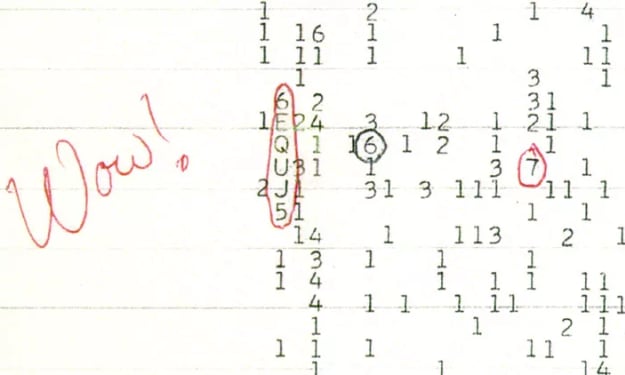
In 1977, a radio telescope located at Ohio State University's Big Ear Observatory picked up an unusual signal from outer space. The signal was so strong that the astronomer who discovered it, Jerry R. Ehman, famously wrote "Wow!" in the margin of the printout. The signal lasted for 72 seconds, but it has never been heard again. The Wow! Signal, as it has come to be known, remains one of the most intriguing mysteries in the search for extraterrestrial life.
By Dhavalsinh Darbar3 years ago in Fiction
Bomb Scare
It was 2027, and the world never thought it would happen. A missle hit the United States, but it wasn't where they had anticipated. A little town in the northeast was hit by a missile strike, they didn't know why, and they didn't know exactly where it hit, but they did know it was a coastal community, somewhere between Maine and Delaware.
By Gregory Payton8 days ago in Fiction
The Man Who Lived the Same Day for 10 Years
The first time it happened, Daniel thought it was a coincidence. He woke up at exactly 6:42 AM. The same grey light pushed through the curtains. The same car alarm beeped outside. The same neighbor slammed their apartment door down the hallway.
By Imran Pisani3 days ago in Fiction
My First Time Skiing and I Got Lost, Alone, in the French Alps
Looking back, I can trace some of my life’s biggest adventures to a simple action from my sister. She’d introduced me to Tommy (a very long time ago), a colleague of hers, who had overshared his penchant for Italian-looking women, and I ticked that box.
By Chantal Christie Weissabout 3 hours ago in Humans


Comments
There are no comments for this story
Be the first to respond and start the conversation.