
The True Story of Icarus
A Modern Retelling of the Boy Who Tried to Touch the Sun

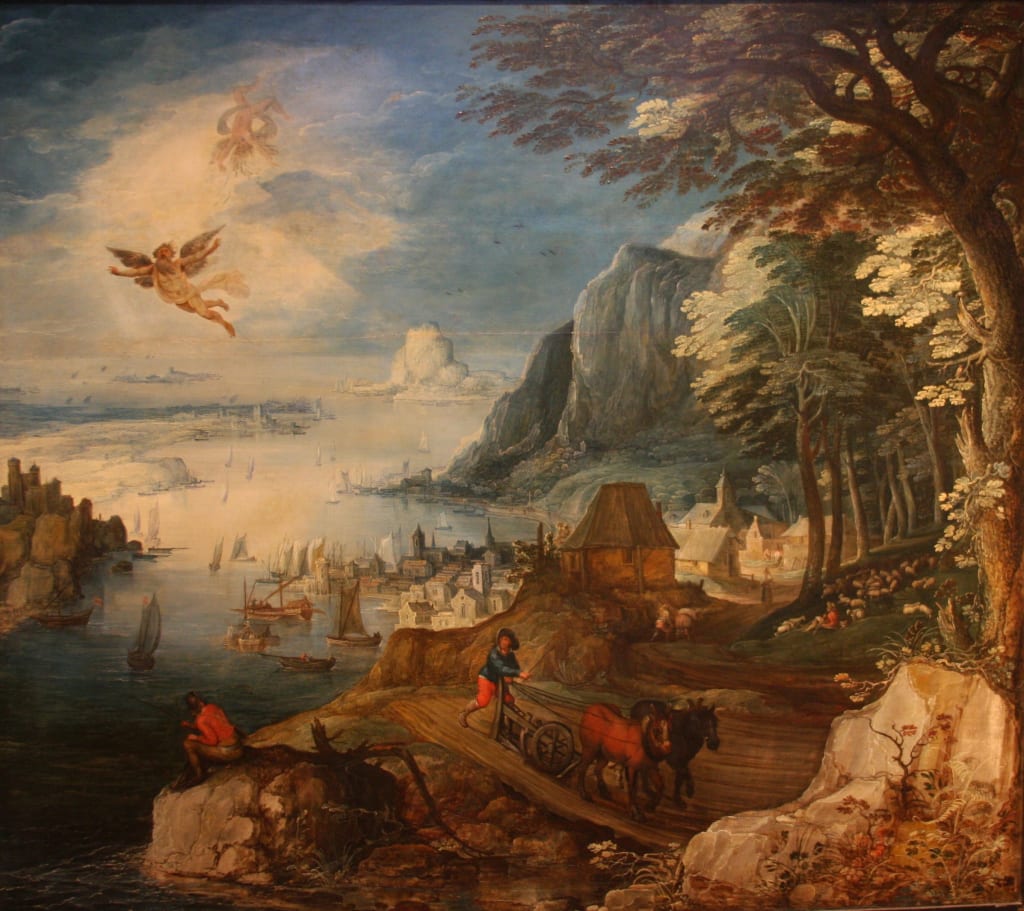
“A selfish goal, perhaps…” He thought to himself as the summer sun rolled over his shoulders and through his bright, blonde hair as he sat watching the ocean, alone.
“Icarus, are you ready?” Daedalus, his father said, walking up to him, concerned.
Icarus had been ready for all of his life.
He had watched the sun slowly move across the infinite sky from quiet dawns towards inevitable twilight daily, empowered by its warm light and radiant glow. There was no one as enthused by the sun as Icarus was; without its presence, his passion for exploration and the adventures it entailed was left cold and fading.
And for a few moments every day, Icarus looked for the keeper of his happiness.
Helios smiling atop a fiery chariot as his horses pulled the life of the world towards the next horizon.
It was his father who had unwittingly imprisoned them both within the sullen, gray tower connected to the Labyrinth which housed its own feral prisoner. Daedalus was then left at the mercy of his own creation and this terrible fact pushed the architect to seek freedom from his mistakes.
Imprisonment had worn Icarus’ youthful, hot soul down to just smoldering embers. As the days turned into months and the months became nothing more than torturous darkness, all that separated them was one hour of sunlight afforded to him by Minos and it was in those hours that Icarus reflected on how peaceful his restored freedom would truly be.
It was the victorious Theseus that stoked Icarus’ love of freedom and changed this love into a blind obsession. To watch that courageous warrior with but a sword and ball of threads enter the Labyrinth and leave with the head of its master invigorated Icarus to seek his own liberation. Just as Theseus fought bravely to return to his kingdom, Icarus wished to fight for liberty so absolute that he could supersede even Helios’ duty to the heavens and become a master of his condition.
The sun brought Icarus life just as it had brought life to so many others it touched.
But Icarus was not sated by the hours of light he was afforded by his cruel captor.
Icarus had gained a hunger for light so strong that only contact with its progenitor would reignite the flames in his soul. He had read of Phaeton’s failures and knew he wanted nothing more than to fly alongside Helios and bask in the energies which illuminated his reality. Within the darkness, Icarus thought and wondered and hungered for the light.
Working quietly within the same darkness, Daedalus, inspired by the birds that would frequent Crete, meticulously crafted wings constructed from feathers and wax that would secure their escape from the island. Daedalus made sure to test the wings while Icarus slept nights before to ensure their success and mitigate any possible risks that could arise during their flight. Confident in his plan, Daedalus stirred Icarus away from his fantasies and ruminations and towards the hope that rested within his creations.
“Icarus, today, we escape from this infernal place to our home once again. It is important that you heed my warnings and trust my counsel just as you would trust your breaths,” Daedalus said, severely, as he looked out onto the waters below them.
“Yes, father! I have been preparing for this moment for what feels like an eternity now. I knew you would not fail us,” Icarus gleefully yelled out as he turned his gaze towards Helios’ grin.
“We may have wings now but we are not eagles and we are not cormorants. To fly low as the cormorant does will fill your wings with seaspray and fog that will drag you down to Poseidon’s empire. To fly high as the eagle does will melt the wax which holds your wings together and leave you with arms that do you no good in the air, no matter how hard you struggle to stay afloat. To behave as either the cormorant or the eagle will lead you to your undoing. Do you understand this?” Daedalus advised his son harshly but lovingly in hopes that Icarus would comprehend his words deeply.
Icarus’ gaze into the sun remained unwavering as his father sought a response. Icarus simply nodded his head in agreement as his eyes continued to rest upon the solar chariot which held his greatest desire.
Donning the wings, Icarus thought of Phaeton as a fool for his hubris but understood the power bestowed to those Helios had been closest to and those few who were able to freely touch the sun.
Icarus remembered Theseus and his triumph, as well as Helios’ and his beckoning grin, and dove off the cliffs of Crete and towards his uncertain destiny.
The boy flew close to his father at first, exhilarated by the freedom his new wings provided and the warm winds of the sea that helped ease any underlying anxiety about their escape. Looking towards Daedalus, he smiled brightly as the sun reflected off his teeth.
Daedalus was pleased by his child’s happiness, oblivious to the superficiality of the respect his son showed towards his warnings. It was the happiest he had seen Icarus’ in months and this fact helped mask the pain of the regrets he had from building the Labyrinth that led many to their dooms. To Daedalus, their freedom had been sealed by his genius and fortitude but to Icarus, there was more to accomplish than escaping Crete.
Icarus slowly gained speed and height as the pleasant winds lifted him towards the warm embrace of Helios’ light. His soul, which had been but the twinkle of a candle moments before now blazed forth into a wonderful, torrid flame that excited Icarus in ways he had never felt before.
Daedalus, noticing Icarus’ reckless elation, called out to him, frightened by his behavior.
“Icarus! Slow down! You are flying too high! We have a long journey ahead of us! Do not abandon it with your carelessness!” Daedalus’ rebuke fell on deaf ears as Icarus, blinded by his single, warped goal, flew even higher towards Helios’ chariot.
“I must touch the sun. I must taste its light completely. My fate has led me into complete darkness; now, I must bathe myself in eternal light!” Icarus thought to himself maniacally.
Daedalus’ yells of worry and anger trailed off as Icarus came closer and closer to his happiness, or what he thought would make him happy. The freedom afforded by the wings and the heat of the sun only lifted him higher and higher away from his worries and in those moments of complete bliss, it was then that his wings began to melt.
Blinded by an insatiable hunger for light, Icarus continued to flap his wings until he could no longer go any higher than he was. Vigorously flapping, Icarus looked around him as the feathers from his wings fell down into the ocean gently, like the petals of a tree; his father was nowhere in sight.
“No! I should have listened to my father. No… I can’t find him and now I am falling… I’ve failed you, father… I’ve failed you,” Icarus said aloud, his worries only heard by the zephyrs that flew about and the feathers that had lifted him to his untimely demise.
His mind, clear from his excessive adoration for the sun and its light now quickly began to make peace with his fate.
As Icarus plummeted down towards the cerulean and indigo waters below, he thought deeply again.
“No… I cannot quit now. I know I have let my father down but I must touch the sun… I must! I cannot just let myself fall here, I must fight this fate!” Icarus roared as he suddenly burst into flames.
Terrified by this, Icarus continued to swing his arms in one final, desperate attempt at reaching Helios in the sky.
Suddenly, Icarus felt himself rise out of his mortal form, watching it fall faster and faster before it fell into the shifting sea with a splash.
His soul erupted out of his body in one final flash of flames and light; his new form floating higher and higher again, carried on by wings of flame into the soft blue sky and towards the aether that seemed to be a reflection of his inelegant fall.
Soon, he found himself approaching the very happiness he had sacrificed everything for.
A loud, composed voice erupted from atop the fiery chariot as the sounds of fire and startled horses carried on through the sky.
“Boy… You’ve looked up to me now for months on that island as I’ve looked upon the world with a smile. I took notice of this only a few days ago. For just a few minutes within an hour every day, you have looked up here, for what?” Helios’ asked curtly, intrigued.
Icarus looked at his arms and his wings fearfully as he struggled to choke up a response. Helios continued to speak.
“… This is my domain. It is not one made for mere mortals and truthfully, not for many gods, either. I’ve granted you this new body, made of your ambition and your soul only to sate my curiosity. You are no bird and you are no god. What has brought you here today?” Helios inquired as he motioned his horses to continue you moving.
Icarus took a deep breath and assumed a more confident demeanor before speaking.
“Helios, I was imprisoned on that island for months now. I had forgotten what your warmth had felt like and in my time alone I began to obsess over that light. I knew in those months that so many others enjoyed freely what I could only enjoy for but an hour a day. The thought of that angered me and I believed I would never feel the true extent of your glory again. This… these struggles have led me here today. I wished to be like the hero, Theseus, and escape from my condition completely. I felt conflicted… I was blinded by my hubris,” Icarus stated, solemnly.
“What is your name?” Helios asked, firmly.
“Icarus,” the boy said.
“Icarus… there was once someone like you, my very own son, who believed he could handle my duties to the world… But, I see it in your eyes; you are not here to usurp me. I can hear your father now calling out for you below us. Do you believe your goal was what you truly wanted?” Helios asked.
The boy seemed perturbed by the god’s question.
“To free yourself from your condition is an impossible task, Icarus. Even I, as mighty as I am, have to live with my condition, too. I have a duty to the world to carry this light and spread it across the land. Without this light, this sun, your world… the animals and plants within it, you and your father would all die. That is my condition. Theseus, gallant as he was, was not free from his condition either. He is king now only because he had not listened to his father, just as you did not listen to yours. He is a son without a father, and now, your father has no son,” Helios stated, calmly.
Icarus listened intently as Helios continued speaking.
“Even we gods cannot free ourselves from our fates. We are bound to our duties and must live with our conditions. Even touching the sun which I carry with me would not have freed you from this. Your hunger for light is what caused your undoing. You could have carried on to safety, a heroic act by itself but you chose to appease a temporary hunger with an extraordinary solution. You are a child, children behave carelessly but your pride and your desire for what I give so freely, your happiness, rested within this outcome,” Helios concluded his speech.
“What am I to do now?” Icarus asked, worriedly.
“I have bestowed upon you a piece of my godhood to keep you alive. You are bright and filled with my energies but you may never again return to your family or your home. You fly beside me now only because of this light. I fly so far away from humanity because of this truth. You are free to explore and travel amongst the stars now. You may show yourself tonight to the world as an example of your decisions and what they have brought but you will never be able to return to the world. Do you understand?” Helios asked Icarus firmly after explaining his new reality.
“Yes… Yes sir,” Icarus agreed, respectfully.
“Icarus! There is still life for you yet. Do not let your past decisions cloud your future. Truthfully, you have obtained what most could never imagine not just because of your reckless pride but your determination and resolute defiance in the face of failure. Your body is gone but your soul, the idea of you, will live on forever. Know this,” Helios said his goodbyes to young Icarus as he whipped his horses to continue on far into the inevitable sunset.
Icarus reflected on his new fate, his condition, and what Helios had spoken of and chose to continue on; as the brightest star the night of his death, many were confused by his sudden appearance in the night sky as well as his equally sudden disappearance nights after.
The sea his mortal form plunged into now carries his name; a testament to the dangers of human hubris and thoughtless actions.
However, Icarus as he is, bright, with wings of flames, tells a different story entirely; his travels far and deep into places unknown out far past the Earth and Helios’ realm bring light to places we may never see. His brilliant shine, far off as it is, is as distant as the most advanced telescopes can see.
Icarus remains now as an example of how far our own lights can truly go, even to those we may never meet, if only we dedicate ourselves to flying as Icarus flew; to go places no one thought possible by moving past our physical limitations by becoming something greater.
Something that could inspire others by illuminating these dark paths and uncertain roads towards the impossible for those who choose to walk them.
Belief in his greatest fantasies for months breathed life into the impossible.
And for humanity, that is what makes the impossible, possible.
About the Creator
Angel Santiago
My work primarily focuses on freedom; I hope it may help you find your own.
I am a storyteller born near the beaches of New Jersey, raised in the mountains of Virginia, and currently residing in Durham, North Carolina.
Thank you for reading.
Keep reading
More stories from Angel Santiago and writers in Fiction and other communities.
A New Divide
There weren't always dragons in the Valley. In truth, there wasn't always much of anything here, really. The Valley was a land of not much happening most of the time. The people were dull, the days were tedious, and the months were separated by the rare occasions that anything of consequence transpired, which was never often, mind you.
By Angel Santiago4 years ago in Fiction
Pandora’s Burden
“My brother warned me to not accept gifts from the one who commissioned you,” said Epimetheus to the woman clad in silvery raiments standing at the entrance to the temple. Her silver tiara and the silver rings on her fingers and toes glinted in the firelight cast by torches set on either side of the doorway. Lingering in the shadows, beyond the reach of the flames as she was, he could not tell what she held in her hands. At first what appeared to be a box was perhaps a funerary urn, or maybe merely an apple.
By J. Otis Haasabout 6 hours ago in Fiction
Seeking The Facts Behind a Myth
Each individual alone judges what they have faith in from what life has taught them. Faith arrives when there is an interplay between mind and body, that forms a strong framework laid on strong foundations. Faith that information, from something larger that can transcend to the depth of the heart and enhance a spirit with confidence in a soul that sees past blindly believing in the causes of wars fought in the name of religious idealism or a way of life that imposes restrictions based on race, caste or the gender one is born into, often stems from the dignity of science, church and community. Through the nature of alchemy, astrology and theory, the brain sorts through what is repressed, unknown or ignored then disassociates preconceived ideas to bring honor and respect to the dead.
By Katherine D. Grahamabout 4 hours ago in Fiction
Why Didn't Anyone Tell Us
Men, move along. This is not for you. This is for the women. I was forty-five when I began menopause. It is pretty young for that to be going on in a woman’s life, but I had undiagnosed PCOS, my entire life. Thank you to all the gynecologists I had seen my entire life. That in itself should encourage women to keep seeking second opinions, especially when you are not getting correct answers or any at all.
By Alexandra Grant3 days ago in Humans




Comments
There are no comments for this story
Be the first to respond and start the conversation.