
The Swing That Never Stopped
A memory that refused to fade, even after the playground was gone

The Swing That Never Stopped
A memory that refused to fade, even after the playground was gone
Some memories arrive uninvited, slipping into our minds like unannounced guests. Others cling to us, their weight so familiar that we mistake them for part of our own skin. And then there are those rare, golden memories — the kind that resurface without bitterness, without longing, but with a tender ache that reminds us we were once children who believed the world could hold us forever.
For me, that memory is a swing set.
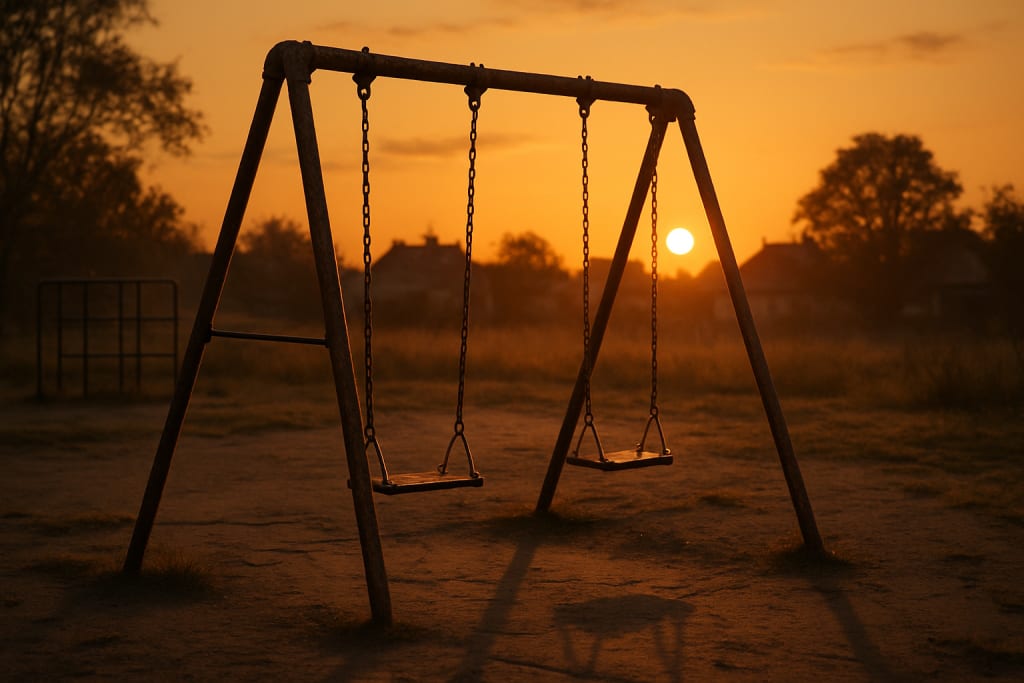
It wasn’t anything extraordinary. Rust crept along its iron frame, and the rubber seats had been patched and re-patched by well-meaning caretakers. Still, to a group of restless kids, it was a kingdom. We raced to it after school, fighting for turns, pushing each other higher, daring gravity to let us go.
I can still hear the creak of the chains, the way the metal groaned under weight yet always held steady. The sound was almost a song, marking the rhythm of our laughter. The harder we pumped our legs, the closer we believed we were to touching the sun.
Where the memory begins
I was ten when I first realized the swing set was more than a playground toy. That year, my father left. He didn’t leave with shouting or slammed doors. He left quietly, in the kind of silence that sinks into walls. My mother cried in the kitchen, but I pretended not to notice. Instead, I ran outside and sat on that swing, pushing myself higher and higher, as if the motion could erase the stillness that had swallowed our house.
The swing became my confidant. Its chains listened when I had no one to talk to. Its steady back-and-forth offered me comfort when life tilted off balance. Every evening, when the sun dipped and shadows grew long, I’d be there — the boy on the swing, chasing something he couldn’t name.
The friends who drifted away
Time passed, and so did friends. Some moved away, some found cooler places to hang out, and some simply grew too tall for playgrounds. I stayed. Even when I pretended I had outgrown it, I’d circle back, kicking the dirt beneath it, testing whether the old creak still sang.
There was one afternoon — I must have been thirteen — when I found the swing empty and the playground deserted. For the first time, I felt the weight of silence pressing against me again. But then I sat down, pushed off the ground, and realized the chains still remembered me. The swing still knew my rhythm.
It was like meeting an old friend who hadn’t forgotten your laugh.
The day it disappeared
Years later, when I returned from college, the swing set was gone. The playground had been flattened, paved into something practical — a parking lot, I think. The patch of dirt where I’d left my childhood had been swallowed whole, and in its place, neat white lines directed cars into order.
It should have felt like betrayal. Instead, it felt inevitable. Nothing in life holds still, not even the things you beg to remain. Yet, as I stood on that asphalt, I swore I could still hear the faint creak of chains. Memory has a way of defying bulldozers.
Why it still matters
Now, when life overwhelms me — bills, deadlines, the constant noise of adulthood — I close my eyes and summon the swing. I feel the seat beneath me, the air brushing against my face, the rush in my chest as the ground falls away.
It isn’t just nostalgia. It’s survival. That swing taught me that even when everything changes — when fathers leave, when friends drift away, when childhood is paved over — there are rhythms we carry inside us. Rhythms that remind us we once believed in weightlessness, in freedom, in touching the sun.
And maybe, just maybe, that belief is what keeps me going now.
About the Creator
LONE WOLF
STORY
~ Dear Cousin Shee!~
07/07/0000 Dear Cousin Shee, Thank-you for sending us our first ever tree house letter. It was such a wonderful surprise to see an envelope in our tree-house mail box! It was indeed great to learn our hope was true that there is a post officer here at after all.
By Jennifer Cooley4 days ago in Fiction
Wild Card Weekend Recap: What Happens Now?
I think I figured out why I love Wild Card Weekend so much. It's because it's the first playoff anything of the calendar year. The NFL season starts in the fall, and once upon a time, the champion was crowned either on or slightly before New Year's. The evolution of the NFL schedule has resulted in the playoffs starting just into the New Year, and currently, the final week of the season falls on the first weekend of the New Year, with Wild Card Weekend coming a week after that. So yes, chronologically, the NFL's Wild Card Weekend serves as the first playoff anything of the calendar year.
By Clyde E. Dawkins7 days ago in Unbalanced



Comments
There are no comments for this story
Be the first to respond and start the conversation.