
The Summer that wasnt
A dystopian future where summer is a distant memory
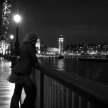

Scene One: The Archives
The Archives were colder than the streets above.
Elias pulled his coat tighter as he descended into the vault, the air thick with dust and silence. The lights flickered overhead—old fluorescents that hummed like insects trapped in glass. Down here, the world didn’t ask questions. It just waited to be forgotten.
He passed rows of sealed cabinets labeled in faded script: Pre-Collapse Communications, Civilian Logs, Agricultural Records. Most hadn’t been touched in years. The Overseer said the past was corrosive. “Survival is forward-facing,” she’d told him. “Nostalgia is a disease.”
But Elias had always been drawn to the quiet corners. The ones where memory lingered.
He didn’t know why he kept coming back. Maybe it was the silence. Maybe it was the hope that somewhere, buried in the static, was a reason for all of this. A reason the sun had vanished. A reason the world had stopped growing.
At his desk, he powered up the terminal and logged the day’s task: Reclassification of Audio Archives: Sector 9-G. Another day of static and silence.
Until he found it.
Buried in a mislabeled directory: Solstice_Logs_01.
He clicked.
The audio crackled, then cleared. A woman’s voice, soft and steady.
“If you’re hearing this, it means the failsafe didn’t work. Summer is gone.”
Elias froze.
“My name is Dr. Mara Lin. I was part of Project Solstice. We thought we could slow the warming. But we didn’t stop the heat—we stopped the cycle.”
The recording ended.
He sat back, heart thudding. The voice felt like a memory he’d never lived.
He stared at the screen, the cursor blinking like a heartbeat. He should have flagged the file. Reported it. That was protocol.
But something in her voice—calm, resolute, human—cut through the numbness he’d carried for years. It stirred something he thought had died with the last summer.
He copied the file to a private drive and slipped it into his coat.
Above him, Greyreach groaned under a sky that hadn’t seen sunlight in twelve years.
Scene Two: The Transit Station
Two days later, Elias found Solstice_Logs_02.
“We warned them. They wanted control, not balance. The machine was never meant to stop summer. Someone changed the parameters. Someone turned it into a weapon.”
He copied the file, hands trembling.
As he turned to leave, he saw her.
The Overseer.
“You’re working late,” she said.
“Sector 9-G is slow going.”
She descended the steps, boots echoing. “Be careful with old files, Elias. Some things are better left buried.”
“I understand.”
She smiled thinly and left.
Elias waited, then pulled out a scrap of paper he’d found tucked inside the first log’s directory:
If you’re reading this, you’re not alone. Look for the mark near the old transit station. We remember.
Outside, the city was slick with mist. He walked quickly, toward the station.
He didn’t know what he’d find.
But he couldn’t unhear her voice.
⸻
Scene Three: The Ghost in the Stone
The mark was real.
Etched into the stone beneath a rusted transit map, the symbol glowed faintly—half a sun, fractured. Elias reached out.
The wall shimmered.
She appeared.
Not in a burst of light, but as if she’d always been there. A woman in a faded lab coat, her eyes sharp and impossibly alive.
“Elias,” she said.
He stumbled back. “You’re—”
“Dr. Mara Lin. Or what’s left of her.”
Her voice was the same. Calm. Measured. But now it echoed strangely, like it was bouncing off the walls of time.
“You’re a projection,” he whispered.
“A neural echo. My consciousness was archived before the collapse. I was meant to guide the restoration process. But the system was never activated.”
“Why now?”
“Because you listened.”
She stepped closer. “The Overseer knows you’ve accessed the logs. She’s part of the suppression protocol.”
Elias’s mind reeled. “She’s a collaborator?”
“She’s a failsafe. Greyreach was never meant to survive. It was meant to contain.”
“Contain what?”
“The truth. The machine that stopped summer still exists. And it can be reversed.”
“Why me?”
“Because you’re still asking questions.”
She pointed. “Go to the old observatory. I’ll meet you again.”
Then she vanished.
⸻
Scene Four: The Whisper in the Fog
The fog was thicker in the old market.
Elias moved through broken stalls, the Whisperer’s note in his coat. He felt watched. Every shadow seemed to lean closer, every silence felt intentional.
A figure stood in the alley, wrapped in a patchwork coat, face hidden beneath a scarf and goggles. They didn’t move. Didn’t speak.
“You’ve heard her,” the voice was low, distorted. “The ghost in the stone.”
“You’re one of them,” Elias said. “The Whisperers.”
“We don’t call ourselves that. That’s what the Overseer calls us. Like we’re a rumor. A sickness. But we’re just... remembering.”
They stepped aside, revealing a faded mural on the wall behind them—half a sun, fractured, painted in ash and rust. Beneath it, a series of symbols: dots, slashes, spirals. Elias recognized them from the Archives. They were old-world data tags, used to encode locations.
“We’re everywhere,” the Whisperer said. “In the cracks. In the code. We leave messages in corrupted files, in graffiti, in the hum of broken machines. The city is a library. You just have to know how to read it.”
Elias stared at the symbols. “How many of you are there?”
“Enough to remember. Not enough to act. Not yet.”
They handed him a small device—a data shard, warm to the touch.
“Take this to the observatory. Slot it into the terminal. She’ll know.”
“What’s on it?”
“Proof. Of what they did. Of what they’re still doing. And a map of the buried machine.”
Elias hesitated. “Why me?”
“Because you haven’t given up. And because you still believe the sun matters.”
The Whisperer turned to leave, but paused.
“If you make it to the observatory, look for the second mark. It will be hidden in the floor tiles. That’s where we left the override key.”
Elias nodded, heart pounding.
“Be careful,” the Whisperer said. “The Overseer isn’t just watching. She’s listening. And she’s afraid.”
Scene Five: The Overseer’s Watch
The Overseer stood before the wall of screens.
“Pause Sector 9,” she said.
One screen froze—Elias, hooded, walking through the market.
“He’s made contact,” she said aloud.
“Subject Elias Voss has accessed Solstice Logs 01 and 02.”
She opened a drawer and pulled out a memory shard. A sun, fractured.
“They’re waking up,” she whispered. “The ones who still believe in warmth.”
She walked to the cryo-vaults. Vault 7.
Inside: Mara Lin.
Not a projection.
Not yet.
She placed her hand on the glass.
“You were supposed to stay buried,” she said. “But if you insist on returning…”
She turned away.
“…then I’ll bury you again.”
She didn’t fear Elias. She feared what he might choose.
⸻
Scene Six: The Observatory Gate
The observatory loomed like a forgotten god.
Elias slipped through the breach in the fence, the Whisperer’s shard pulsing faintly in his coat. Inside, the silence was thick, the air colder than the streets. The dome above was cracked, its glass panels clouded with age.
He moved through the central chamber, past shattered consoles and faded solar symbols. The place felt sacred, like a tomb built for light.
He found the terminal—dormant, dust-covered. He knelt and inserted the shard.
The console hummed.
Lights flickered. The rings began to glow.
And then she appeared.
Mara Lin. Clearer now. Younger. Her projection shimmered with stored memory.
“You made it,” she said. “Good.”
“The Whisperer said this shard contains proof.”
“It does. And a map. The machine is buried beneath Greyreach.”
Elias stepped closer. “Can it be reversed?”
“Yes. But it requires a key. A living conduit. Someone attuned to the Earth’s rhythms.”
He frowned. “What does that mean?”
“You’ve spent your life in the Archives,” she said. “You’ve listened. Remembered. That makes you a candidate.”
“A candidate for what?”
Her image flickered. “To become the bridge. The machine needs a human interface—someone willing to give themselves to it. Permanently.”
Elias stared at the console. “You want me to sacrifice myself.”
“I want you to choose,” she said. “Truth or survival. The sun waits for no one.”
The lights dimmed. The console pulsed once, then went dark.
Her image faded.
Elias stood alone in the cold, the echo of her voice lingering in the silence.
He looked down at his hands. They were shaking.
He thought of the Archives. Of the silence. Of the years spent cataloguing the past while the world above withered. He had always believed he was preserving something. But maybe he had just been waiting—for this.
He could walk away. No one would know. The Overseer would erase the logs. The Whisperers would scatter. The world would keep surviving in its grey, frozen way.
But if he stayed—if he gave himself to the machine—maybe the world would remember how to grow again.
Outside, Greyreach groaned under its eternal cloud cover.
And beneath it, the machine waited.
About the Creator
Liz Burton
writing for fun and just giving it a go
Keep reading
More stories from Liz Burton and writers in Fiction and other communities.
The Cold Embrace of Loneliness
The first day of June arrived with a sky so blue it looked painted by a child—too perfect to be real. Eliza stood at her kitchen sink, hands resting on the cool porcelain, watching the neighbour’s children chalk suns and hopscotch grids onto the pavement. Their laughter floated up like bubbles, bursting just before they reached her window.
By Liz Burton7 months ago in Fiction
Flower Bloom 369
FLOWER Bloom 2/25/26 Wednesday By Mariann Carroll Karen had been with Tony for 7 years. Tony started acting strangely after her surgery. He would mow the lawn in the rain and be on his cellphone. He started pushing Karen away. Tony came clean about seeing someone. Karen moved out two months later. Karen moved in with a friend. She felt betrayed.
By Mariann Carroll3 days ago in Fiction
I was in a Toxic Relationship, with my Workplace
“You got that?” My ex yelled. His hands were balled into fists at his side. At six foot three, he towered over me. A normal person would have been afraid, but I looked up a video of George Lopez repeatedly saying, “I got this,” and showed it to him. I had grown used to this treatment, so much so that I didn’t blink when he ripped the phone from my hand and threw it across the room.
By Jade M.3 days ago in Confessions




Comments (3)
Liz, stand up for yourself and your story, The Lavender Hill. If it's not AI, then fight for your spot-
I am sorry you are leaving
Absolutely breathtaking. This story chilled me to the bone and warmed my heart at the same time. The imagery is haunting, the characters unforgettable — especially Elias, whose quiet courage reminded me how powerful hope can be, even in the darkest worlds. Dr. Mara Lin’s voice felt like a heartbeat of lost summers, echoing across time. I couldn’t stop reading. Thank you, Liz, for reminding us that even in dystopia, memory, warmth, and belief still matter. 🌒☀️