
THE STREETS REMEMBERED
In a city that erased my name, the pavement held my story.

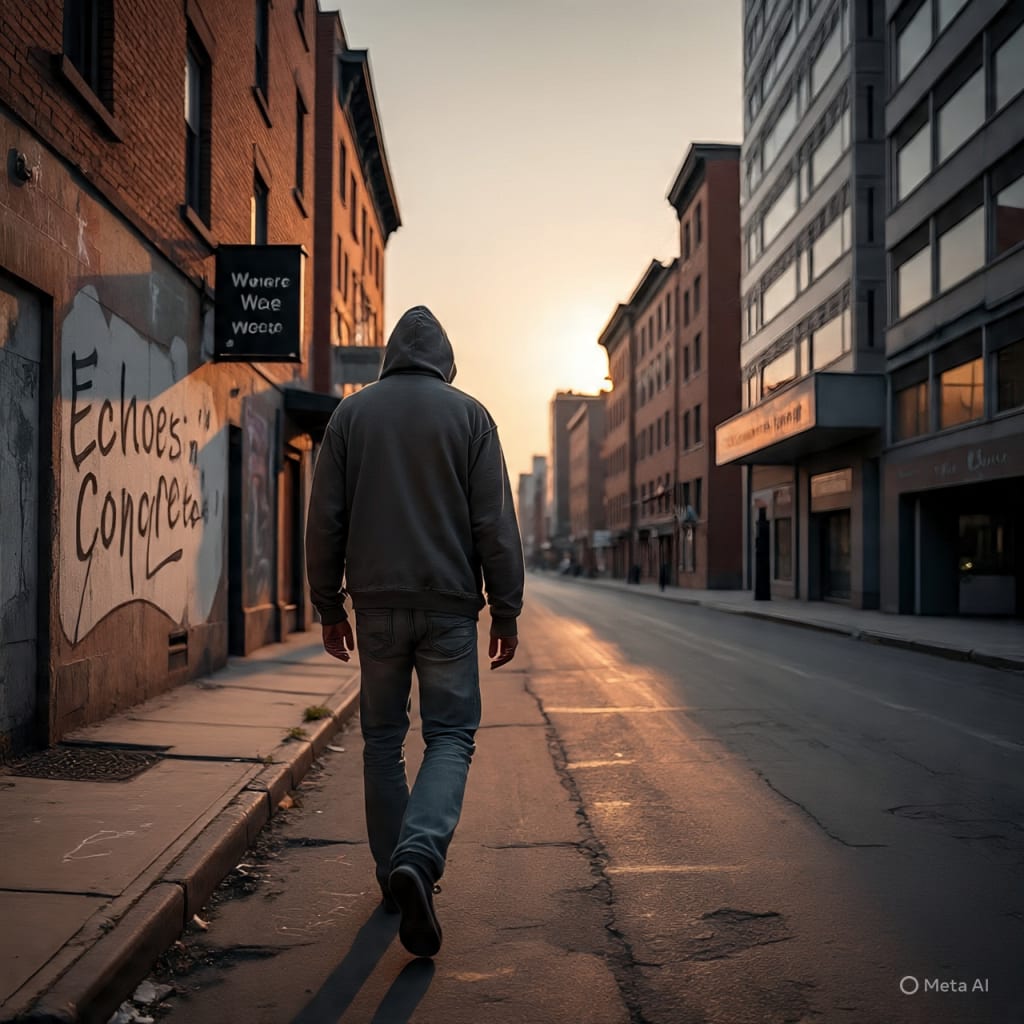
They tore down the corner store last week—the one with the sun-bleached awning and the old bell that clanged when the door opened. I used to run there barefoot for popsicles in the summer, pennies hot in my hand. Now it’s a vacant lot, fenced off with plastic tape and silence. The city moves on, but the streets remember.
I grew up on these blocks, my world mapped out by cracked sidewalks and leaning lamp posts. My mother’s voice echoed off brick walls when she called me home for dinner. My first kiss was beneath a broken streetlight, where the bulb flickered like a nervous heart. And the first time I ran from something—really ran—it was these streets that gave me a path and a hiding place.
They call it gentrification now. Glossy words in brochures with smiling faces. “Revitalization,” they say, as if life didn’t already pulse through every back alley and corner stoop. They forget who lived here before the yoga studios, before the artisan bakeries. They paint over murals that told our stories and call it progress.
I left the city for a while. College. A job. A different skyline. I thought distance might dull the ache of everything I’d lost. But even far away, I could hear the rhythm of my old streets like a heartbeat beneath the noise. I came back hoping something would still feel like mine.
But everything’s cleaner now. Colder. The city doesn’t look me in the eye anymore. The people who once nodded at me on the street are gone. In their place are strangers with headphones, eyes down, moving fast. The city forgot me. But the streets—they remember.
They remember the old man who played saxophone outside the train station, his case always open, not for money but for connection. They remember the girls who danced double-dutch on asphalt stages, their laughter louder than the traffic. They remember the boy who tagged his dreams on every brick wall he could reach, hoping someone—anyone—might read them.
One night, I walk alone. Past the old school with boarded windows. Past the park where my friends and I once spun stories under the swings. I reach the alley behind Mrs. Delgado’s building. She used to give us tamales wrapped in napkins when we helped her carry groceries. She’s gone now—moved or pushed out, I don’t know.
I stop and press my hand to the graffiti-covered wall. Some of it is new—slick and soulless—but beneath the layers, I spot the edge of an old tag. Faded, but mine. A name I gave myself when I needed to feel seen. The city tried to erase it, but the paint never fully held. The wall remembers.
The next night, I return with a can of spray paint. My hands tremble. Not with fear, but with memory. I don’t write my name this time. I write a message: "We were here."
It’s not for the tourists or the transplants. It’s not for the city that buried us under rent hikes and zoning laws. It’s for the streets. For the kids growing up now, looking for proof that someone like them once stood here and mattered.
The next morning, someone adds to it. A heart. Then a date. Then a line from an old local song. In a week, the whole wall is alive with color and names and truth.
The city tries to paint over it, of course. But it keeps coming back—louder, bolder. Not as rebellion, but as remembrance.
I start walking the streets with a notebook. I write down memories. Mine. Others’. I talk to shopkeepers who’ve held on, to elders who remember the city before it wore a suit and tie. I collect stories like loose change, and I leave them where they can be found—slipped into library books, written on napkins at cafés, posted on poles.
One day, a girl no older than I was when I left finds one of my notes. I watch from across the street as she reads it, then tucks it into her pocket like something sacred.
That’s when I know: I was never erased. Just scattered.
The city may forget names, but the streets—they remember souls.
The corner store is gone. But the corner still holds the echo of kids laughing. The playground has new equipment, but the dirt beneath remembers every scraped knee and whispered secret. The street signs may change, but the wind still carries the scent of summer rain on hot asphalt, the same way it always did.
I walk home. Past memories layered like paint. Past voices that linger in the cracks. And I whisper to the city:
“You forgot me. But the streets—they kept me.”
About the Creator
Masih Ullah
I’m Masih Ullah—a bold voice in storytelling. I write to inspire, challenge, and spark thought. No filters, no fluff—just real stories with purpose. Follow me for powerful words that provoke emotion and leave a lasting impact.
Keep reading
More stories from Masih Ullah and writers in Fiction and other communities.
The Last Spark
The storm had arrived earlier than expected. In the village of Darwaza, nestled between silent mountains and forgotten roads, the skies had always whispered before they wept. But this time, the clouds roared with fury, and the lightning wasn’t just a flash—it was a voice.
By Masih Ullah8 months ago in Fiction
Silken Chains
Silhouettes of the female form were given flesh and bone. Silken skin glistened under the spotlight. Dry ice rose around our Icons as they danced atop their podiums in the Square. Heralded for their beauty, their movements were slight, powerful, and sensual.
By Paul Stewart5 days ago in Fiction
The rule everyone knows
I recently rewatched The Truman Show yesterday amidst all the chaos of the crazed media story that Jim Carrey was cloned. I give that rumor no credence to my own sensibilities, however, when I saw him in that French award ceremony, I had to do a double take. It wasn’t so much that I actually believed he was cloned or anything crazy like that, but, I had a weird gut reaction that made me think, “Someone or something got to him,” because he just doesn’t act like that in most celebrity or movie award ceremonies. You all saw must have seen those interviews where he made fun of Hollywood, being evil that is made to feel real but is really mocking us all. All that Illuminati talk. I was like, “That boy is going to get himself killed.”
By Melissa Ingoldsby5 days ago in Fiction
Top tipple tricks
Been thinking a lot about drinking, lately. Not least because of a recent episode of over-indulgence and the inevitable after effects. Some readers may recall the earlier articles I wrote about beating the booze. Here I set out an experiment in techniques for cutting down on my alcohol intake. The experiment was successful, the techniques worked, and I have armed myself with an arsenal of weapons in the war against the demon drink. I have yet to fire the first round however. It's all a question of timing (perhaps procrastination).
By Raymond G. Taylor2 days ago in Psyche



Comments
There are no comments for this story
Be the first to respond and start the conversation.