
The Starling’s Song
A Tale of Music and Memory in a City of Silence

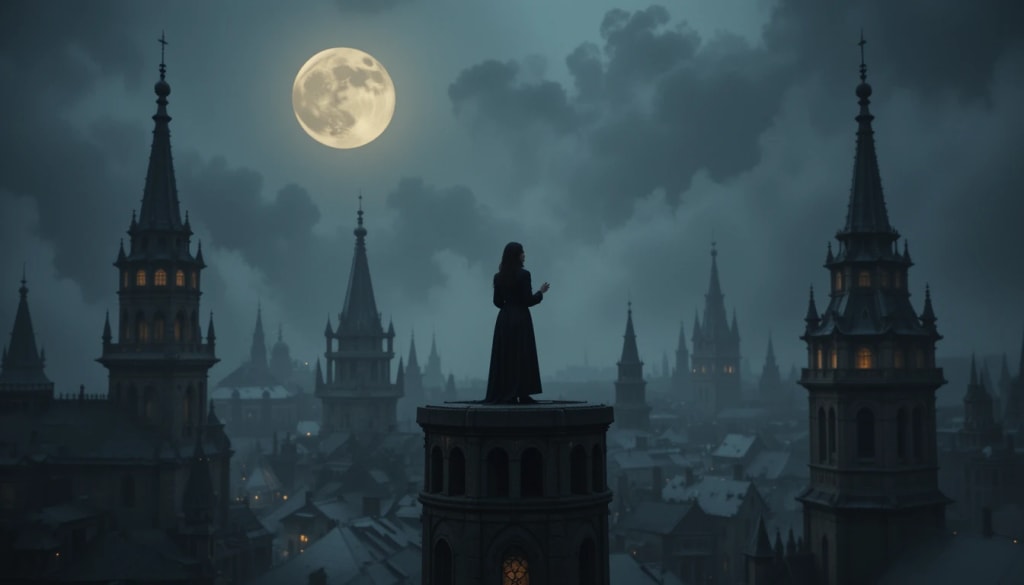
In the heart of Cindersky, a city of soot-stained spires and cobblestone alleys, silence was a law. The bells of the great cathedral had not rung in a century, and music—once the city’s soul—was forbidden. The elders claimed it was for protection, that songs carried a power that had nearly destroyed Cindersky long ago. The people obeyed, their voices hushed, their lives gray as the ash that fell from the sky. But in the shadows, whispers spoke of the Starling, a figure whose melodies could wake the city or break it.
Mira was twenty, with a voice she’d never dared to use. She worked in the charcoal pits, her hands blackened from sifting ash, her days filled with the clink of shovels and the coughs of her fellow workers. Her mother, Lira, had been a singer before the ban, and she’d taught Mira in secret, humming lullabies behind closed doors. “Your voice is a gift,” Lira had said before sickness took her. “But it’s dangerous. Keep it hidden.” Mira obeyed, but the silence gnawed at her, a hunger she couldn’t name.
Cindersky wasn’t always quiet. Old stories told of a time when music flowed like water, when the cathedral’s bells sang to the stars. But a century ago, a song went wrong—a melody so potent it cracked the cathedral’s spire and set the city ablaze. The elders banned music, claiming it was the Starling’s curse, and the people, scarred by loss, complied. Mira doubted the tale, but she felt the city’s emptiness, as if it were a body without a heart.
One evening, as ash fell like snow, Mira found a relic in the pits—a tarnished locket, etched with a bird in flight. Inside was a scrap of parchment with a single line of music, five notes in a looping script. When she hummed them, soft as a breath, the air shimmered, and a warmth spread through her chest. She stopped, heart pounding, and hid the locket in her pocket. It was no ordinary song.
That night, she dreamed of a woman with wings like a starling’s, her voice weaving light into the dark. “Sing,” the woman urged, her eyes bright as embers. “The city needs your voice.” Mira woke, the notes burning in her mind. She didn’t believe in dreams, but the locket felt heavy, alive, as if it carried a truth she couldn’t ignore.
The next day, she sought answers in the city’s archives, a crumbling hall of dusty tomes. The records were guarded by Varn, an elder with a face like carved stone. Mira showed him the locket, keeping the parchment hidden. “What is this?” she asked.
Varn’s eyes narrowed. “Where did you find it?”
“The pits,” she lied, her voice steady. “What does it mean?”
“A relic of the old singers,” he said, his tone sharp. “Dangerous. Give it to me.”
Mira clutched the locket tighter. “It’s just a trinket.”
He lunged, faster than his age suggested, but Mira slipped away, her heart racing. Varn knew something, and she wasn’t leaving until she did too. That night, she returned to the archives, picking the lock with a hairpin. In a forgotten ledger, she found it: a tale of the Starling, a singer whose voice could mend or shatter. The last Starling had sung a song to save Cindersky, but it cost her life. Her locket, etched with a bird, held the key to her melody—a song hidden in the cathedral’s belltower.
Mira’s breath caught. The cathedral was a fortress, its doors barred, its tower sealed. Varn and the elders patrolled it, their fear of music like a blade. But the locket’s notes hummed in her mind, urging her forward. She had to try.
Under cover of night, Mira crept to the cathedral, the locket warm against her chest. The doors were locked, but a rusted grate in the alley led to the undercroft. She squeezed through, her boots echoing in the dark. The air was thick with the scent of wax and stone, and the faint hum of the locket guided her to a spiral stair. She climbed, her pulse a drumbeat, until she reached the belltower.
The bells hung silent, their surfaces etched with musical notes. At the tower’s heart was a pedestal, its surface carved with a bird-shaped indent. Mira placed the locket there, and the air pulsed. The bells trembled, and a soft note rang out, clear and pure. She sang the five notes from the parchment, her voice shaking but strong, and the tower came alive. Light poured from the bells, weaving into a melody that shook the dust from the rafters.
Footsteps thundered below. Varn burst into the tower, his face twisted with rage. “Stop!” he roared. “You’ll destroy us!”
Mira’s voice faltered, but the locket’s warmth steadied her. “You’re the one destroying us,” she said. “You hid the Starling’s song to keep control.”
Varn drew a knife, his eyes wild. “The song broke us once. I won’t let it happen again.”
Mira dodged as he swung, her voice rising, the notes weaving a shield of sound. The bells sang with her, their chimes shaking the tower. Varn stumbled, clutching his ears, and the knife clattered to the floor. The light grew blinding, and Mira saw the truth in his eyes—fear, not of her, but of what the song revealed. He’d silenced Cindersky to hide his own failure, his role in the fire that scarred the city.
The melody swelled, and Mira poured her heart into it—her mother’s lullabies, her own buried hopes. The cathedral trembled, but it didn’t crack. The spire glowed, whole and strong, and the ash outside stopped falling. When the song ended, silence returned, but it was different—alive, expectant.
Varn was gone, fled or undone by the music. Mira stepped outside, the locket still in her hand. The city stirred, voices rising in wonder. A child hummed, tentative, then louder. Others joined, their songs soft but growing. Cindersky was waking.
Mira returned to the pits, but she was no longer just a worker. She taught the children to sing, quietly at first, in hidden corners. The elders tried to resist, but the city’s heart was beating again, and they couldn’t stop it. Mira kept the locket, a reminder of the Starling’s gift, and sang each night, her voice a beacon in the dark.
Cindersky changed slowly. The cathedral’s bells rang again, softly at first, then bold. The ash cleared, revealing stars, and the city breathed. Mira never forgot the woman in her dream, the Starling’s call. She sang for her mother, for the city, for herself. And somewhere, in the notes, she found freedom.
About the Creator
Shohel Rana
As a professional article writer for Vocal Media, I craft engaging, high-quality content tailored to diverse audiences. My expertise ensures well-researched, compelling articles that inform, inspire, and captivate readers effectively.
Keep reading
More stories from Shohel Rana and writers in Fiction and other communities.
The Clockmaker’s Daughter
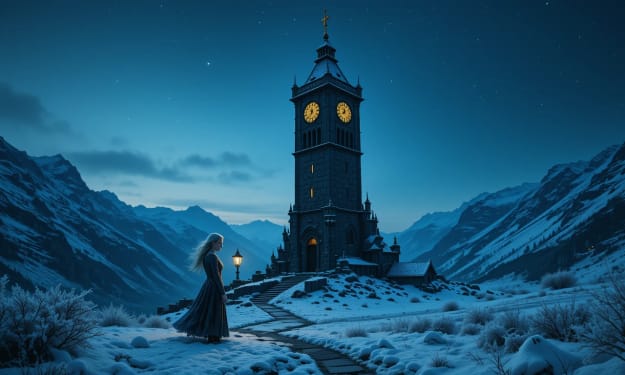
Nestled in the frostbitten valley of Glimmerfall, where the river sang beneath a crust of ice, stood a town that lived by the tick of its clocks. Glimmerfall’s heart was its clocktower, a spire of blackened stone that loomed over slate-roofed houses, its chimes marking every hour with unshakable precision. The townsfolk said the tower was a gift from the Clockmaker, a mysterious figure who’d built it centuries ago to keep time—and secrets—safe. But in Glimmerfall, time had a way of standing still, and secrets had a way of festering.
By Shohel Rana8 months ago in Fiction


Comments
There are no comments for this story
Be the first to respond and start the conversation.