


There is something timeless about snow. It arrives not with thunder or fanfare, but with a soft, silent insistence. In its stillness lies an extraordinary power — to transform, to conceal, and to speak without words. The snow does not shout. It whispers.
Nature’s Quiet Transformation
When the first snowflake falls, the world begins to change. What was once familiar becomes suddenly new. Roads, trees, rooftops — all cloaked in white, as if the earth itself is taking a breath and resting beneath a soft, chilled blanket.
Snow doesn't demand attention; it earns it. It silences the usual sounds of life: tires on gravel, dogs barking, leaves rustling. In its place is a calm so profound that even the air feels different — crisp, hushed, reverent. In cities, the chaos dims. In forests, the wildlife treads lightly. The snow changes everything and asks nothing.
A Blank Canvas for Memory and Imagination
For many, snow is more than weather — it is a memory. Childhood snow days, snowball fights, building snowmen with numb fingers and flushed cheeks. For others, it's a symbol of solitude, a companion to long winter nights spent inside, staring out the window while flakes drift past like lost thoughts.
Writers and artists have long used snow as a metaphor: for purity, for silence, for death, for renewal. In literature, snow often erases the past and sets the stage for something new. In film and photography, it lends drama, mystery, or stark beauty. Snow is not just scenery — it is mood, emotion, story.
The Whispering Landscape
One of the most haunting qualities of snow is its ability to conceal. Under its surface may lie a forgotten path, a buried flower, or yesterday's scars. Snow smooths out the jagged edges of the world, like a brushstroke over pain. It covers, but it does not erase. What’s hidden may still breathe beneath.
But snow also whispers. On a still winter night, you can hear it: the faint patter of flakes, the distant groan of ice, the soft crunch under boots. It speaks in creaks and sighs, in patterns traced on glass and branches. Those who listen carefully can hear the snow telling stories — of seasons past, of animals burrowed below, of winds that traveled from faraway places.
A World Suspended
There’s a surreal quality to a snowy world. The sky seems closer, the horizon further. Light behaves differently — moonlight on snow can be as bright as day, while a snowstorm can dim the sun into a ghost behind a veil. In this suspended reality, time feels slower. We move more carefully, more mindfully. We watch our breath. We notice.
In this frozen stillness, reflection becomes possible. It’s as if snow creates a pause — in nature, in ourselves. This is perhaps the snow’s greatest gift: a moment to be quiet. To listen. To feel without noise.
The Beauty and the Brutality
Yet snow is not just gentle and poetic. It is also harsh, dangerous, even deadly. Snowstorms can isolate entire regions. Roads vanish, power lines fall, lives are disrupted. In the wild, animals struggle to find food. For the unhoused or unprepared, the snow is not beautiful — it is unforgiving.
This duality is what makes snow so compelling. It is both art and force. A dream and a danger. Its softness can kill, and its silence can speak of survival. The same snow that draws us to the fireplace and fills us with wonder can also challenge us to endure.
Cultural and Spiritual Meaning
Across cultures, snow holds powerful meaning. In Japanese aesthetics, it’s tied to the concept of wabi-sabi — the beauty in impermanence and imperfection. In Norse myth, snow was a gift and a curse from the gods. Indigenous Arctic cultures developed entire vocabularies for the nuances of snow, recognizing it not as one thing, but as many — each with its own purpose and presence.
Even in modern times, snow continues to shape identity and ritual. From the excitement of the first snowfall to the quiet awe of a blizzard, it marks the season not just in climate, but in our minds and hearts.
A Mirror to the Soul
Perhaps the snow is so affecting because it mirrors something in us. Just as it blankets the earth, we too have layers — surfaces we show the world and the depth beneath. Like snow, we can be soft and silent. We can cover pain or preserve beauty. We can change everything and say nothing.
Standing in falling snow, there’s a rare clarity. You are small, but part of something vast. You are still, yet surrounded by motion. In those moments, the world feels simpler, deeper, truer.
Conclusion: Listening to the Snow
In a noisy world full of movement and distraction, snow reminds us of stillness. Of listening. Of seeing. It teaches us that beauty does not always need to shine — sometimes it simply falls, slowly, softly, and asks us to pay attention.
The next time snow begins to fall, don’t just look at it — listen. Listen for the whispers of the frozen world. They’re telling a story. Maybe even yours.
About the Creator
FAIZAN AFRIDI
I’m a writer who believes that no subject is too small, too big, or too complex to explore. From storytelling to poetry, emotions to everyday thoughts, I write about everything that touches life.
Keep reading
More stories from FAIZAN AFRIDI and writers in Fiction and other communities.
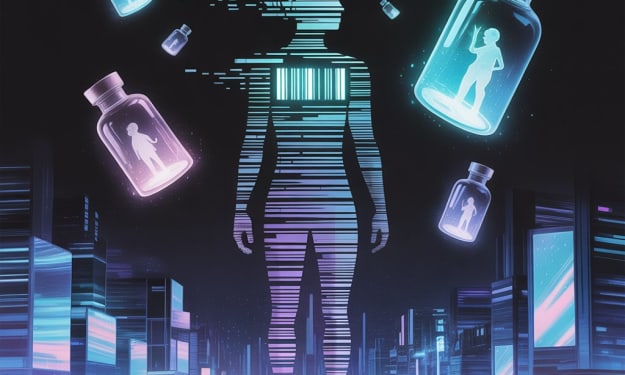
The Memory Market
The moment Lia stepped into the Memory Market, the scent of lavender and static filled her lungs. Rows of glowing capsules floated in midair, each pulsing with a faint heartbeat of light. A whisper surrounded her—the echo of a hundred lives for sale.
By FAIZAN AFRIDI9 months ago in Fiction
Pearl
1980 something. we all hung out at Pearl and you and i were nothing special, or so i thought. i mean we all danced, drenched in our own sweat, our own saline solution of fear, too many beers, shots, laughter, tears, fucks in the bathroom and i don't know when we began to be afraid. do you?
By ROCK aka Andrea Polla (Simmons)5 days ago in Fiction
The Hands That Rocked The Baby Killed Its Daddy
The Hands That Rocked The Baby Killed Its Daddy They said she was gentle. They said she had the softest voice in the ward, the kind that could calm a fevered child with a single hush. They said she was patient. Devoted. Harmless. They never listened closely enough.
By Marie381Uk 2 days ago in Fiction
I wanted to title this something different, but worried that my chosen title might cause problems entering the United States in the future so this is the new title. It's the greatest title. No one has ever written a title better than this. (All titles unrelated to content).
Let me be honest. I am finding this difficult. Now, I like a challenge, a stretch, a bit of an obstacle course. “Write about the decline of the British Empire in the form of a narrative poem in which your protagonist is an artichoke” I read, and flex my fingers. “Write a haiku to evoke the sensation of sibilance using only the first half of the alphabet.” “Well”, I think to myself, “this should be fun.” But “write about a system that isn’t working”? A system that isn’t working? Now? In 2026? ONE system? My favourite system that isn’t working? The sexiest system that isn’t working? The one giving me the most angst day to day? The one giving me the most existential dread? I am, as I say, finding this difficult. I will own that I have contemplated writing a thousand words on why the steady “all on” setting on my fairy lights is the EIGHTH of seven options which must be sequentially activated to get there, because that is a system that some fool came up with and it definitely doesn’t work, and now who is paying the price, eh? But how can I write about my fairy lights when…. When…. When….
By Hannah Moore4 days ago in Humans


Comments
There are no comments for this story
Be the first to respond and start the conversation.