
The Silent Shadow of the Forest
How the Wolf Became a Symbol of Fear, Strength, and Survival
The Silent Shadow of the Forest
BY [ WAQAR ALI ]
How the Wolf Became a Symbol of Fear, Strength, and Survival
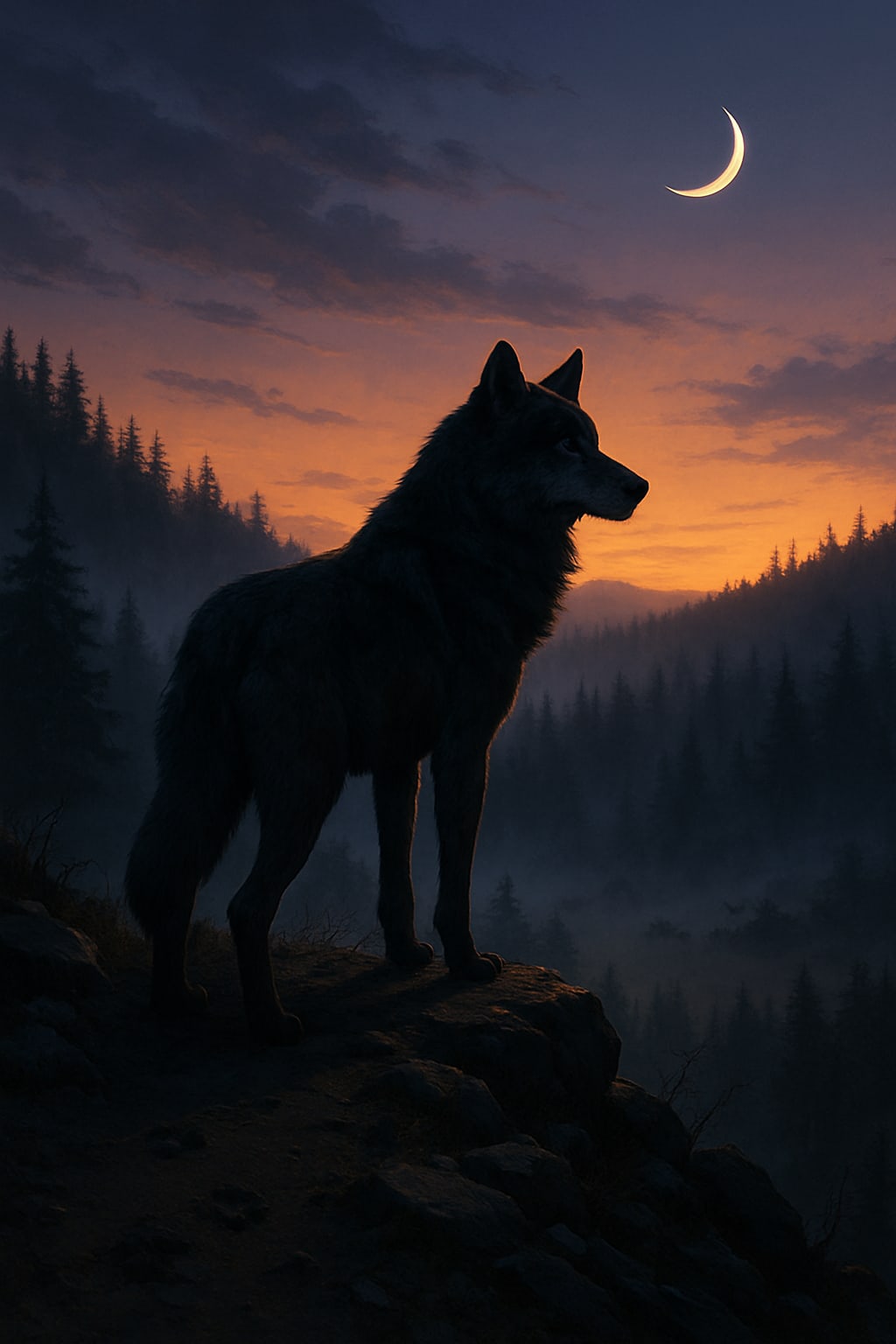
The forest was quiet that night, but the silence was not empty—it was alive. A faint rustle in the underbrush, the distant cry of an owl, and the shifting of branches carried a whisper of something unseen. Yet, what truly unsettled the villagers was not what they could hear, but what they could not. The wolf was out there, and though unseen, its presence was undeniable.
For centuries, the wolf has held a powerful grip on human imagination. From ancient folklore to modern storytelling, it has often been painted as a creature of danger, a predator lurking in the shadows. But behind the myths and the fear lies a more complex truth—one that reveals not only the wolf’s nature, but also the way humans see themselves in the wild.
The Call of the Pack
Unlike many predators, wolves are not solitary hunters. They move as a pack, bound together by loyalty, hierarchy, and cooperation. Every wolf has a role, from the leader—the alpha—down to the youngest pups. This system allows them to survive in harsh conditions, chasing down prey far larger than themselves, from elk to bison.
The sound of a wolf’s howl, stretching across valleys, is more than just a chilling note in the night. It is communication, a call to gather, a warning to intruders, or a declaration of territory. For those who have stood in forests or mountains and heard it echo through the darkness, it becomes an unforgettable memory—an ancient voice that stirs something primal in the human spirit.
Wolves in Human Stories
Human history has often treated the wolf as both an enemy and a mirror. In European folklore, it became a symbol of cunning danger, appearing in tales like Little Red Riding Hood and The Three Little Pigs. In these stories, the wolf is the villain, a threat to innocence and safety. These narratives reflected the fears of rural societies who lived close to the wild, where wolves sometimes did attack livestock and occasionally people.
But not all cultures saw the wolf as evil. In Native American traditions, for example, wolves were often seen as teachers and guides. They represented loyalty, intelligence, and strength. Tribes observed the way wolves cared for their packs and taught their young, drawing lessons about family, leadership, and survival. To the Pawnee, wolves were spiritual companions, while to the Lakota, the wolf was a model of perseverance.
In Norse mythology, wolves were powerful forces—sometimes destructive, like Fenrir, the great wolf destined to bring about Ragnarök, but also symbolic of freedom and wildness. Even in fear, there was respect for the animal’s raw strength.
The Wolf as Survivor
Despite centuries of persecution—being hunted, trapped, and driven from their habitats—wolves have shown remarkable resilience. Once nearly exterminated in parts of Europe and North America, they are slowly making a comeback in many regions. Conservation efforts and a growing recognition of their role in ecosystems have helped restore wolf populations.
When wolves were reintroduced to Yellowstone National Park in 1995, the effects were dramatic. By controlling the overpopulation of elk, wolves allowed vegetation to recover, which in turn supported other wildlife like beavers, birds, and fish. This ecological ripple effect, known as a “trophic cascade,” revealed the wolf as not just a predator, but a keystone species essential to balance.
The wolf’s survival story is also about its adaptability. Wolves can thrive in forests, tundras, deserts, and even semi-urban environments. Their endurance is a reminder that wildness cannot be easily tamed or erased.
Between Fear and Reverence
Why does the wolf continue to capture our imagination? Perhaps because it represents the wildness within us. The wolf is disciplined, loyal to its pack, and deeply tied to the rhythms of survival—qualities that humans both admire and fear. It challenges our desire for control over nature, reminding us that there are forces we cannot fully tame.
Even in modern times, debates about wolves reveal more about people than about the animals themselves. Some see them as dangerous predators threatening farms and livelihoods; others see them as symbols of freedom, wilderness, and ecological health. This divide shows how the wolf still stands at the crossroads of fear and reverence.
A Final Howl
The wolf is more than just a shadow in the forest—it is a living testament to survival, strength, and complexity. It has been the villain of fairy tales, the spirit guide of tribes, the threat to farmers, and the savior of ecosystems.
To look at a wolf is to glimpse a part of the wild that still lingers in the human heart. Its eyes hold both mystery and truth: the reminder that we, too, are animals of instinct, story, and survival.
So the next time you hear a howl rising in the night air, do not just feel fear. Listen deeper. For in that cry lies the history of the forest, the bond of the pack, and a mirror of ourselves—echoing through time, unbroken, untamed.
About the Creator
LONE WOLF
STORY
~ Dear Cousin Shee!~
07/07/0000 Dear Cousin Shee, Thank-you for sending us our first ever tree house letter. It was such a wonderful surprise to see an envelope in our tree-house mail box! It was indeed great to learn our hope was true that there is a post officer here at after all.
By Jennifer Cooley4 days ago in Fiction
Wild Card Weekend Recap: What Happens Now?
I think I figured out why I love Wild Card Weekend so much. It's because it's the first playoff anything of the calendar year. The NFL season starts in the fall, and once upon a time, the champion was crowned either on or slightly before New Year's. The evolution of the NFL schedule has resulted in the playoffs starting just into the New Year, and currently, the final week of the season falls on the first weekend of the New Year, with Wild Card Weekend coming a week after that. So yes, chronologically, the NFL's Wild Card Weekend serves as the first playoff anything of the calendar year.
By Clyde E. Dawkins7 days ago in Unbalanced



Comments
There are no comments for this story
Be the first to respond and start the conversation.