
The Silent Doorway
The first time Mira heard the sound


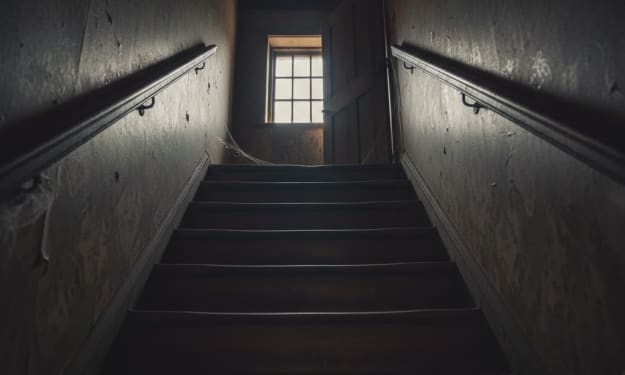
The first time Mira heard the sound, she thought it was the wind. A soft tap-tap-tap coming from the end of the hallway, near the old wooden door no one ever touched. Her grandmother had always told her, “Stay away from that door. Some rooms are better left alone.” But curiosity is louder than warnings, especially when the house feels too quiet.
Mira had returned to her childhood home for the first time in years. The rooms felt smaller now, the walls filled with memories she wasn’t ready to face. Her grandmother’s death had left the house cold, and everything inside seemed frozen in time. But that door at the end of the hallway—it felt alive.
On the second night, the tapping sound returned. This time, she heard a whisper too. Not clear… just a soft breath that didn’t belong to the house. Mira’s heart beat faster, but instead of running, she found herself walking toward the forbidden door. It was strange—she wasn’t scared. She felt… called.
The door creaked when she touched it, as if it had been waiting for her. The air changed instantly, turning colder. And then she pushed it open.
Inside was a small room she didn’t remember from her childhood. Dust floated like glitter in the faint light coming from a tiny window. Old books, broken toys, and a wooden chair sat in the center, perfectly still. It wasn’t frightening—it was lonely.
Then she noticed the drawings on the wall.
Children’s drawings. Soft pencil sketches of a little girl standing alone. In all of them, the girl’s face was blurred out, as if someone erased it. Mira stepped closer, her chest tightening. Something about the drawings felt familiar… painfully familiar.
Suddenly, a draft swept through the room and a page from an old notebook fluttered to her feet. Mira bent down and picked it up. It was a diary entry. The handwriting was shaky but readable:
*“She cries every night. No one sees her. They locked her away to protect her, but she only wanted love.”*
Mira felt her breath catch. She turned the page. Another line:
*“Mira must never know.”*
Her blood went cold.
She kept flipping through the diary, each page heavier than the last. Her grandmother’s handwriting revealed a truth Mira never imagined—there had been another child in the family. A sister. A sister who had been hidden away in this very room because she was sick, fragile, and the world wasn’t kind to children who didn’t fit its rules. She died young—too young—and her existence was buried in silence.
The tapping sound came again. But this time, it wasn’t scary. It was gentle, like fingers tapping on wood… or a child asking to be heard.
Mira felt something warm brush her shoulder, like a small hand. Not threatening—soft, almost grateful.
“I’m sorry,” she whispered into the empty room. “I didn’t know.”
The air settled. The coldness lifted. And the room, once filled with forgotten shadows, felt peaceful—finally acknowledged.
Mira closed the diary, placed it on the chair, and stepped out. As she shut the door, the tapping stopped for good. The silence that followed was not empty. It felt complete, like a lost story finally told.
And for the first time since returning home, Mira felt a strange comfort—as if she wasn’t alone anymore, not in a haunting way, but in a healing one.
The Silent Doorway was no longer a place of fear.
It had become a place of truth, memory, and quiet forgiveness.
Sometimes the places we avoid the most are the ones we need to face to heal. A forgotten room, a buried memory, an unopened door — they all hold pieces of us we once left behind. When we finally return to them, we don’t just rediscover the past… we reclaim ourselves.
About the Creator
Keep reading
More stories from Kashif Wazir and writers in Fiction and other communities.
Whispers in the Attic
I never liked the attic. Even as a child, I felt its weight from below. The narrow stairs creaked when you walked on them, and the door at the top looked older than the house itself. My parents never went up there. Sometimes I heard faint noises scratches, whispers, or maybe just the wind but the room remained a mystery.
By Kashif Wazir3 months ago in Fiction
Bomb Scare
It was 2027, and the world never thought it would happen. A missle hit the United States, but it wasn't where they had anticipated. A little town in the northeast was hit by a missile strike, they didn't know why, and they didn't know exactly where it hit, but they did know it was a coastal community, somewhere between Maine and Delaware.
By Gregory Payton8 days ago in Fiction
Jane's Gamble
Jane’s Gamble Challenge: Something Is Beginning, I Think “I won’t be long,” Jane assured Stardust, her mustang companion, while securing him to the hitching post. After a quick pat of his neck, she walked towards the tavern entrance, greeted by the stink of old cigarette smoke and stale beer before she even reached the steps of Boone‘s Saloon.
By Jean-François Lamothe8 days ago in Fiction



Comments
There are no comments for this story
Be the first to respond and start the conversation.