
The Silent Bond
A heart-warming tale of loyalty, trust, and unspoken friendship.
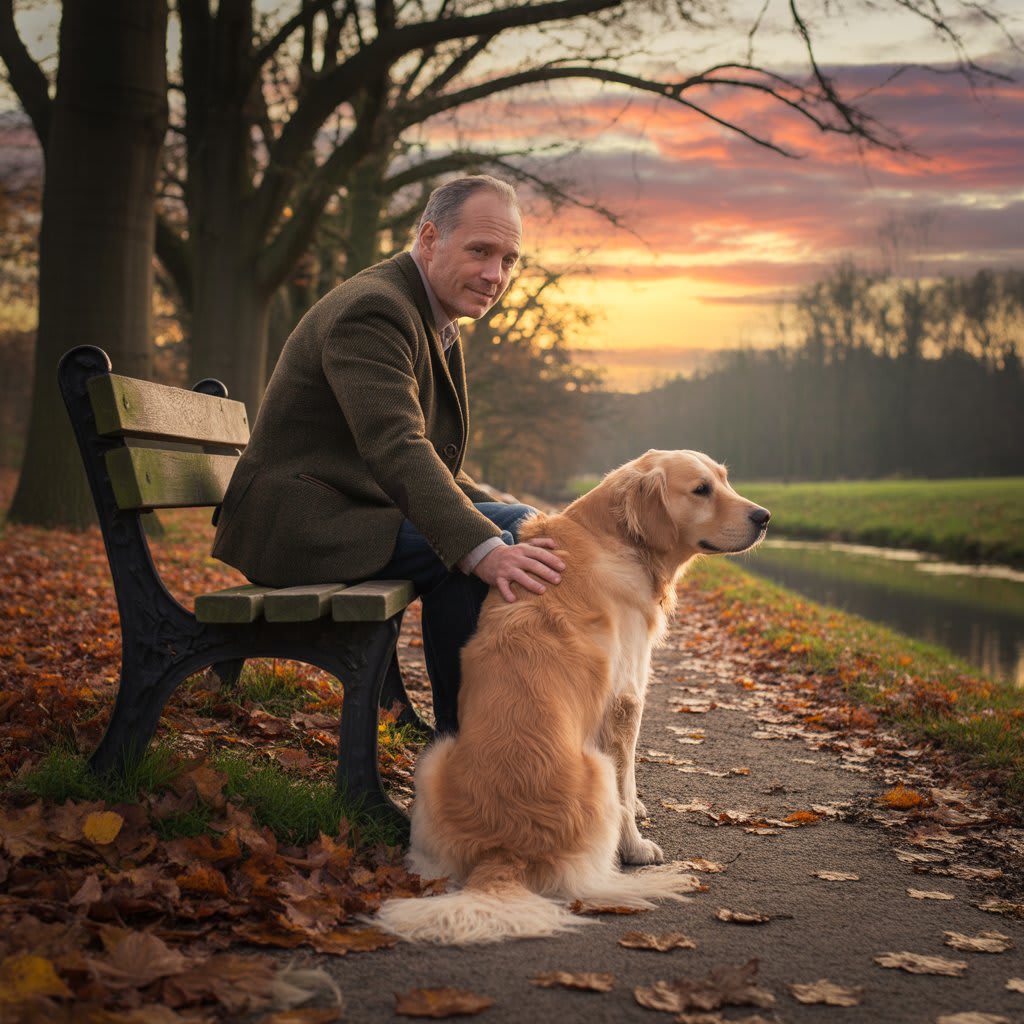
In the quiet village of Gulwood, where rolling hills kissed the horizon and sunrises painted the skies with soft gold, lived a man named Haroon. He was in his late sixties, a retired schoolteacher who led a humble life filled with books, daily routines, and silent prayers. But Haroon was never truly alone. By his side—always—was Rafi, his dog, companion, and the quiet keeper of his heart.
Rafi had come into Haroon’s life ten years earlier, on a cold and rainy evening. Haroon had just finished evening prayers and was walking home when he heard a faint whimper near a garbage bin. Curious and concerned, he followed the sound and found a tiny, soaked puppy, shivering with fear. The creature was frail, its ribs showing, and it looked up with eyes that pleaded for help. Without hesitation, Haroon took off his shawl, wrapped the pup inside it, and took him home.
That night, he fed the pup warm milk, dried him by the fireplace, and placed him on a small pillow by his bedside. The next morning, the puppy woke up with new life in his eyes—and from that day forward, he never left Haroon’s side.
As years passed, Rafi grew into a strong, intelligent dog. He was medium-sized, with a golden-brown coat, alert ears, and eyes that seemed to understand emotions better than most humans. He accompanied Haroon everywhere: the market, the mosque, the fields. People in the village admired their bond—so pure and unspoken, like a silent understanding that transcended language.
Haroon was not a man of many words. He believed in action, in stillness, and in deep thought. Rafi was the same. He didn’t bark unnecessarily, didn’t chase other animals, and never caused trouble. He would simply walk beside Haroon, tail gently wagging, always watching, always listening.
Children in the village loved Rafi. He let them pet him, run around him, and sometimes sneak him pieces of bread or meat. But at the end of every game, he’d return to Haroon’s feet—his home, his world.
Years passed. Seasons came and went. Haroon grew older. His once firm steps became slower, and his back slightly bent. His visits to the town decreased. Rafi adapted. He fetched the newspaper, carried small bags, and even waited patiently outside the pharmacy when Haroon needed medicine. The shopkeeper would hand over a paper bag, and Rafi would carry it home in his mouth like a professional courier.
But life, as it does, moved toward its inevitable end.
One winter, Haroon fell ill. It began with fatigue and coughing, then loss of appetite. The village doctor visited and diagnosed him with heart complications. He recommended rest, a lighter diet, and medicine. But deep down, everyone knew Haroon didn’t have much time.
Rafi noticed the change instantly. He stayed indoors more often, lying beside Haroon’s bed, following him from room to room. When Haroon coughed at night, Rafi would nudge him gently, sometimes even fetching a glass of water from the table with his teeth.
Neighbors brought food, offered help, and tried to take care of Haroon. But Rafi was the most consistent caregiver—present, watchful, and quiet.
One evening, with a weak voice, Haroon whispered, “Rafi… you’ve been my greatest blessing.” He placed a trembling hand on the dog’s head. “You never asked for anything. Just stayed.”
Rafi nuzzled closer.
That night, Haroon passed away in his sleep.
The next morning, the village mourned. Though Haroon had no children, he had been a father figure to many. The funeral was simple. They buried him under a large tree at the edge of the village—the same tree under which he used to read poetry to Rafi on warm afternoons.
Rafi didn’t leave the grave that day. He sat beside it, staring at the mound of soil as if trying to understand why Haroon hadn’t come home.
Days passed. Then weeks.
Rafi continued his ritual. Every morning, he would walk to the grave, sit quietly for hours, and return home before nightfall. Neighbors offered him food, some even tried to adopt him, but he refused to stay with anyone else. He’d accept food, politely, but never company.
The villagers admired his loyalty. Some said they had never seen such devotion. Others began bringing their children to Haroon’s grave to tell them the story of the dog who never left.
As time moved on, Rafi aged too. His coat began to gray. His walks became slower. But still, he visited the grave—every single day.
One cold morning, Rafi didn’t return. A farmer found him lying peacefully beside the grave, his eyes closed, his body still. He looked like he had fallen asleep beside his master—just like he used to.
The village buried Rafi beside Haroon. A small stone was placed with the words:
“Rafi — The dog who taught us love and loyalty without ever speaking a word.”
Years later, the tree where Haroon and Rafi were buried became known as “The Bond Tree.” People came from nearby towns to see it, to sit in its shade, and to hear the tale of the silent bond between a man and his dog.
And even today, on quiet evenings, if you sit by that tree and close your eyes, some say you can still feel the presence of a wise old man reading poetry—and the soft breathing of a loyal dog by his side.
About the Creator
Pandora’s Burden
“My brother warned me to not accept gifts from the one who commissioned you,” said Epimetheus to the woman clad in silvery raiments standing at the entrance to the temple. Her silver tiara and the silver rings on her fingers and toes glinted in the firelight cast by torches set on either side of the doorway. Lingering in the shadows, beyond the reach of the flames as she was, he could not tell what she held in her hands. At first what appeared to be a box was perhaps a funerary urn, or maybe merely an apple.
By J. Otis Haasabout 18 hours ago in Fiction
Seeking The Facts Behind a Myth
Each individual alone judges what they have faith in from what life has taught them. Faith arrives when there is an interplay between mind and body, that forms a strong framework laid on strong foundations. Faith that information, from something larger that can transcend to the depth of the heart and enhance a spirit with confidence in a soul that sees past blindly believing in the causes of wars fought in the name of religious idealism or a way of life that imposes restrictions based on race, caste or the gender one is born into, often stems from the dignity of science, church and community. Through the nature of alchemy, astrology and theory, the brain sorts through what is repressed, unknown or ignored then disassociates preconceived ideas to bring honor and respect to the dead.
By Katherine D. Grahamabout 15 hours ago in Fiction




Comments
There are no comments for this story
Be the first to respond and start the conversation.