
The Silence That Carried Her Name
In a town that feared memory, she was the one thing they tried to forget.


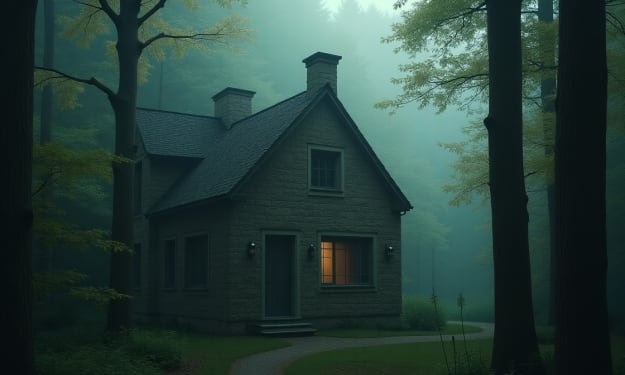
There is a house on the edge of Mapleridge Lane. It has no mailbox, no number, no name on the deed—at least none that anyone will say aloud.
The kids call it The Listening House, not because it speaks, but because it seems to listen when no one else will.
You see, in towns like ours, silence isn’t empty. It’s a presence. A weight. And when silence carries the name of a girl everyone forgot, it becomes something else.
Her name was Elira Mae.
She lived there once, before the curtains were permanently drawn, before the trees wrapped their roots too tightly around the foundation, as if trying to hold something in—or keep something out.
Elira wasn’t like the rest of us.
She didn’t care for Friday parades or lemonade stands or the sleepy, slow-churned rhythm of life in Greystone Hollow.
She painted on the walls of abandoned barns. She whispered to animals. She wrote poems and left them in the library books no one checked out anymore.
People called her odd. Different.
But odd is just a label they give to someone who refuses to be what the town wants.
The last time anyone saw her was spring.
She walked into the woods barefoot, a sketchbook tucked under her arm, and told her mother, “I’ll be back when the sky learns how to cry honestly.”
She never came back.
Rumors came like rain:
Some said she was taken.
Others said she ran away.
The cruelest said she wanted to disappear—so she did.
The official story was… no story.
Sheriff Madsen called it a “private matter.”
Her parents sold the house a month later and vanished.
But the town remembers her, even as it denies her.
In whispered poems.
In the dusty, untouched aisles of the library.
In the shimmer of the lake when it reflects the moon too perfectly.
Ten years later, I came back.
I never thought I would.
But grief has a strange geography. It maps your heart in forgotten roads and hidden coordinates, and before you know it, you’re standing at the edge of a place you swore you’d left behind.
I came back after my mother’s funeral.
I came back because Elira was my friend.
No, more than that.
She was the only person who ever saw me.
I was the quiet one.
The girl who loved ghost stories, who journaled in invisible ink.
She found me behind the bleachers one fall, sketching constellations no one else believed in.
“You draw the sky like it’s trying to remember itself,” she said.
I never forgot that.
That night, after the funeral, I walked past the Listening House.
And I heard her.
Not a voice. Not a whisper.
Just… the unmistakable rhythm of Elira’s laugh, carried in the wind like a song with no melody.
I don’t remember walking inside.
Only that the door wasn’t locked.
The dust inside was thick, but untouched—as if time had folded in on itself.
Then I saw it.
On the wall.
Words written in charcoal.
“If I vanish, it’s because they stopped hearing me.
Not because I stopped speaking.”
I read it out loud.
And something shifted.
The window creaked open.
The trees hushed.
And the silence… listened back.
They tried to erase her.
But memory is louder than silence.
And words—once planted—grow in secret places.
The next day, I went to the library.
I asked for Elira Mae.
The librarian looked stunned.
“Funny,” she said. “We just found a whole drawer of poems. Uncatalogued. Signed E.M.”
She handed me one.
It read:
“For the girl who listened when no one else did—
I’ll be in the wind.
When it sounds like your name,
follow it home.”
So I did.
I reopened the Listening House.
I cleaned the dust, opened the curtains, and let the sky cry honestly for the first time in ten years.
And now?
Now children leave poems in the mailbox that wasn’t there before.
Strangers say the air feels lighter near the porch.
And some nights, when the wind is just right,
I hear her laugh.
Still odd.
Still wild.
Still unforgotten.
About the Creator
Pir Ashfaq Ahmad
Writer | Storyteller | Dreamer
In short, Emily Carter has rediscovered herself, through life's struggles, loss, and becoming.
Keep reading
More stories from Pir Ashfaq Ahmad and writers in Fiction and other communities.
The House That Ate Sound
It began with the floorboards. They didn’t creak. Not under my boots when I first stepped inside. Not when I rolled the heavy suitcase behind me. Not even when I jumped, just to test. The silence was absolute. Thick. The kind that coats your skin and fills your ears like cotton.
By Pir Ashfaq Ahmad8 months ago in Fiction
Hottest in the Office
Dear Rafi, You’re very distracting to work around. For the first second I saw you the other day, I thought you were some type of executive. It took a moment to realize no, you were just the new guy, dressed up for the job he wants. Be still, my heart.
By Gabriel Shames4 days ago in Pride



Comments
There are no comments for this story
Be the first to respond and start the conversation.