
The Shape of Love in the Dark
When Darkness Reveals the Heart

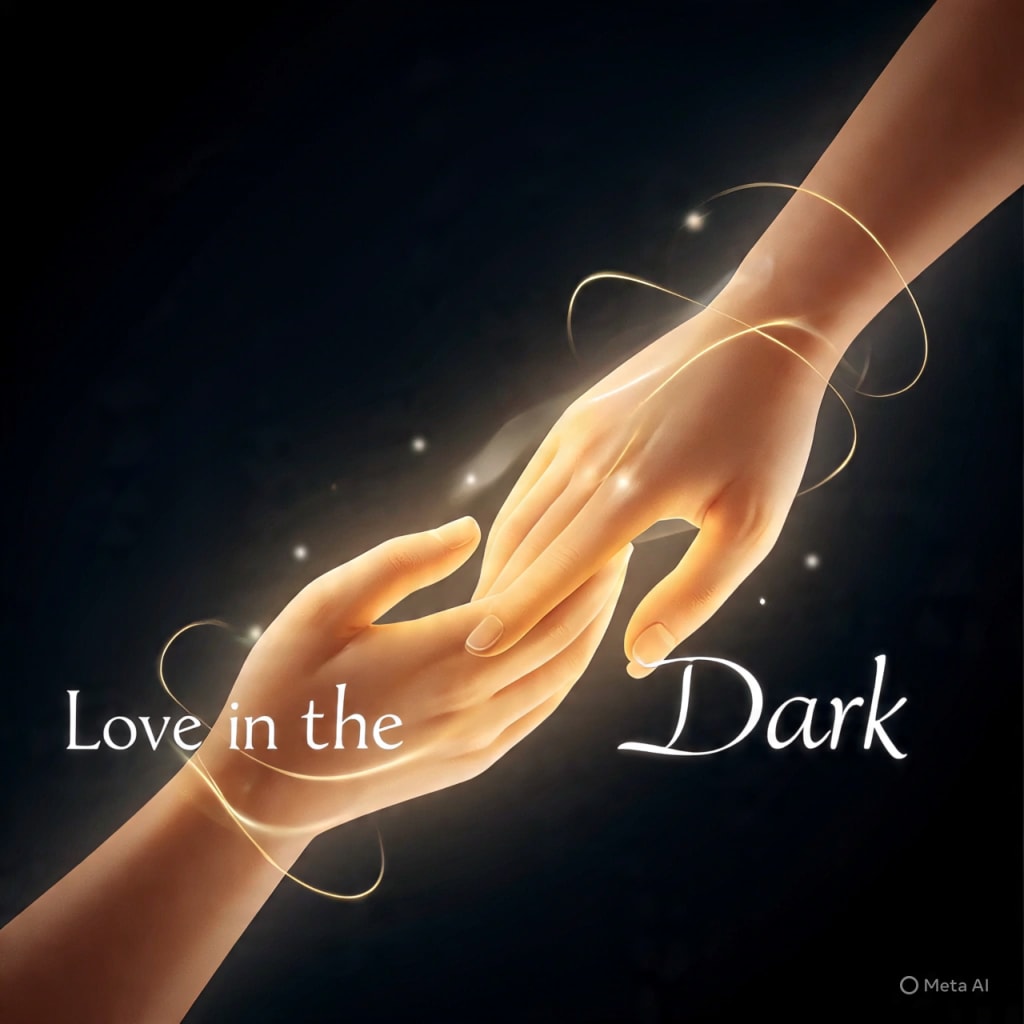
The world went dark for Lila one winter morning when her vision vanished without warning. It had begun with blurred shapes, flashes of light, and migraines. Doctors called it a rare degenerative condition—fast, irreversible, incurable. By the time the snow had melted, Lila lived in permanent night.
She was twenty-seven.
The grief came in strange waves. Not just sadness, but the terrifying loss of independence. No more painting, no more hiking solo, no more quiet morning coffees spent watching the sun ripple across her windowpane. Even the shape of her apartment, once memorized and moved through effortlessly, became an enemy of stumbles and bruises.
People said: “At least it’s not your hearing.”
People said: “You’ll learn to adapt.”
People said: “Love is still out there.”
Lila stopped listening.
She withdrew, living with the static of her thoughts and the hum of audiobooks she barely remembered once they ended. Her world was a soundscape now: the whistle of the kettle, the buzz of her old fridge, the distant sound of buses. She could hear her heartbeat, the creak of her wooden floors, the loneliness of her apartment.
Then came Theo.
It started with the wrong coffee.
Lila had ordered a cappuccino at a café she never went to before—one she’d chosen simply because it was close enough to stumble to without much risk. But when she sipped the drink handed to her, it was too bitter. Black coffee.
“Oh no,” came a voice—low, warm, textured like velvet with a grain of gravel. “I think I took your drink. I asked for black, but this tastes… much too friendly.”
She smiled faintly. “Mine was a cappuccino.”
“Would you like to trade back? Or shall we both suffer and call it fate?”
That made her laugh. A real one, short and surprised.
They talked for half an hour. He never once commented on her cane. He asked questions, not too many, and listened like he actually wanted to know the answers.
When she got up to leave, he said, “May I walk you home?”
She hesitated. Then said, “Sure.”
He didn’t take her elbow. Didn’t try to steer her. Just walked beside her and talked like it was the most natural thing in the world.
He left her at her building door with no numbers exchanged, no awkward promise to meet again. But the next day, he was at the same café. So was she.
And so it began.
Theo had been blind from birth. He called her “rookie” and teased her when she bumped into tables. But he was never unkind. He spoke about the world in strange, beautiful ways: the way walls echoed differently depending on the color of paint, how trees felt warmer than poles because they held life, and how people’s silences said more than their words ever did.
They sat in silence together often. Comfortable, shared silence. Sometimes he’d hum jazz tunes. Other times they’d listen to rain through the café window.
Once, when she asked what he thought people looked like, he said, “Shapes don’t mean much to me. I think of people by the way they move through space. The ones who carry storms. The ones who drift like clouds. You’re… quiet lightning.”
“What does that even mean?” she laughed.
“It means you’re beautiful in ways most people will never see.”
It was late spring when Lila first let Theo touch her face.
They were on her couch, sharing orange slices and listening to Ella Fitzgerald. She didn’t speak—just took his hand and brought it to her cheek.
He didn’t hesitate. His fingers were gentle, slow. He traced her eyebrows, her eyelids, her nose. His thumb rested just over her lips.
“That’s the shape of you?” he murmured.
“No. That’s just the shape of my face.”
He nodded. “Then let me learn the shape of your love.”
There is something sacred in loving without sight. In not being distracted by symmetry or smiles, but instead noticing the way someone sighs when they’re tired, the way they squeeze your hand when they're scared. Theo showed her that.
He never called her brave. He never told her to be stronger than she felt. But he was there—solid as oak and soft as moss.
They made love in silence, in laughter, in shadow. And in darkness, Lila found her sight again—not for the world, but for herself.
Because love, she learned, had a shape.
It was the warmth of a mug pressed into your hands on a cold day.
It was the curl of a pinkie finger resting against your own as you walked.
It was a voice that knew exactly when to speak—and when not to.
One summer night, as they sat listening to cicadas through the open window, Lila asked, “Do you think we’d still have found each other if I hadn’t gone blind?”
Theo didn’t answer immediately. He reached for her hand, lifted it to his lips.
“Maybe not,” he said. “But you did. And I was here. That’s all that matters.”
The shape of love, Lila decided, was not always visible.
But it could be heard in a laugh.
Felt in a touch.
Tasted in a kiss.
It existed in the dark just as powerfully—maybe even more—than in the light.
Because love, real love, does not need eyes.
It just needs presence.
And the courage to reach.
About the Creator
Keep reading
More stories from Haris Raheem and writers in Fiction and other communities.
Bomb Scare
It was 2027, and the world never thought it would happen. A missle hit the United States, but it wasn't where they had anticipated. A little town in the northeast was hit by a missile strike, they didn't know why, and they didn't know exactly where it hit, but they did know it was a coastal community, somewhere between Maine and Delaware.
By Gregory Payton8 days ago in Fiction


Comments
There are no comments for this story
Be the first to respond and start the conversation.