
The Secret Beneath the Pines
A small town. A hidden past. And a secret that could change everything.”

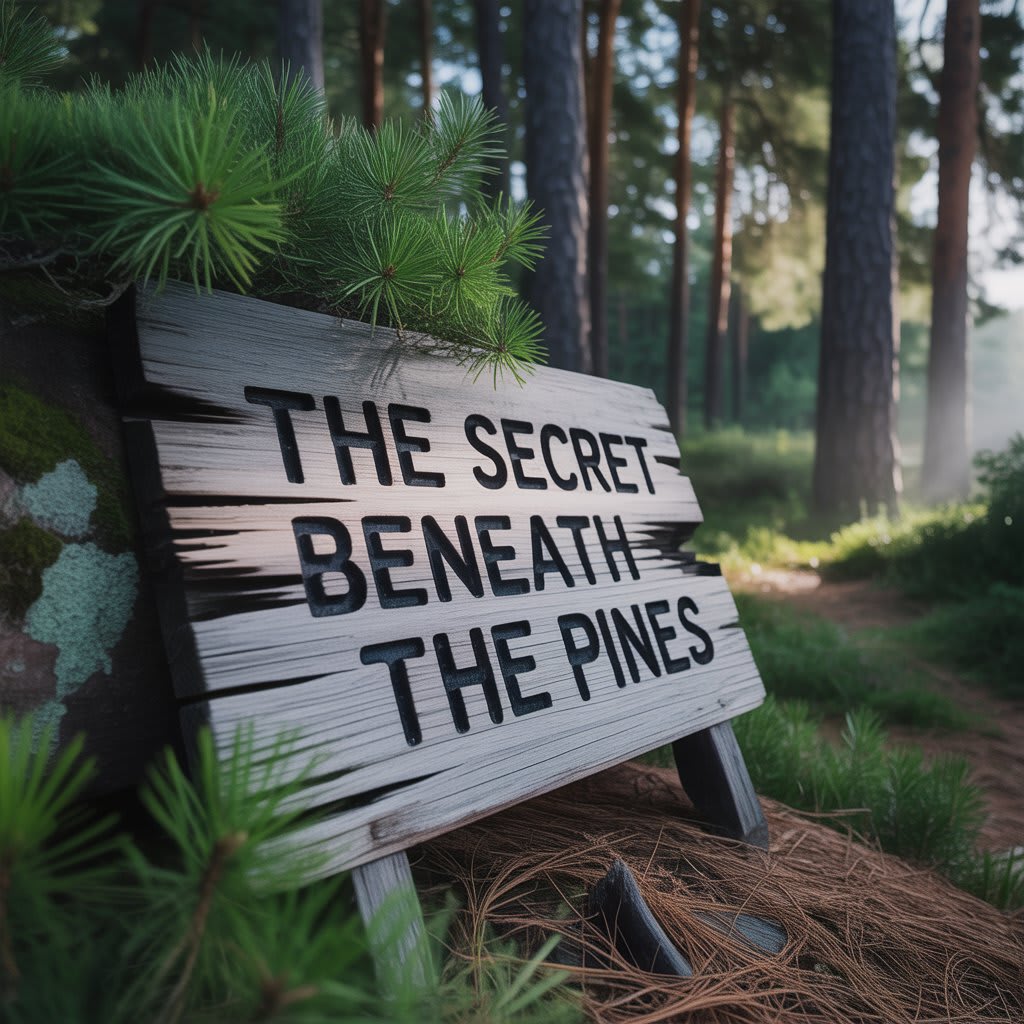
Nestled at the edge of dense pine forests, the town of Millstone appears at first glance to be the kind of place where time stands still. With its cobblestone streets, vintage storefronts, and neighborly smiles, Millstone seems untouched by the chaos of the modern world. Yet beneath the charm lies a history so carefully buried that most townsfolk have long forgotten—or chosen to forget. But secrets have a way of clawing back to the surface, and in Millstone, something hidden beneath the pines is about to change everything.
For decades, Millstone’s forests have been the subject of whispered rumors. Children spoke of strange lights between the trees, of eerie sounds at night. Teenagers dared one another to spend the night deep in the woods, while the older generation dismissed it all as nonsense. But beneath these stories lay fragments of truth—traces of something that had once shaken the town to its core.
The heart of this secret begins in the autumn of 1973. One October night, the earth itself seemed to shudder. A deafening sound—some said like thunder, others like machinery—pierced the stillness. The next morning, a section of the forest near Black Hollow was cordoned off by government officials. Trucks rolled in under the cover of darkness. Locals were told it was a meteor strike, nothing more. Yet, curiously, no meteorite was ever displayed, no scientific teams ever reported their findings. Within weeks, the incident faded from public view. Those who asked too many questions were quietly warned to let the matter rest.
And so Millstone moved on, or pretended to.
Fast forward fifty years, and the past is stirring once again. It began when Emily Carter, a young journalist and lifelong resident of Millstone, received an anonymous letter. The envelope was old, yellowed at the edges, with no return address. Inside was a simple message:
The truth lies beneath the pines. Find it before they do.
With her curiosity ignited, Emily plunged into the town’s history. She unearthed faded newspaper clippings, incomplete reports, and—most chilling of all—testimonies from long-silent witnesses. A former police officer recalled strange men in unmarked uniforms. A retired nurse described treating burn victims with injuries she couldn’t explain. There were reports of birds falling dead from the sky, of animals fleeing the woods in panicked herds.
Emily's investigation led her to Black Hollow—the same forest that had been sealed off all those years ago. Equipped with only a flashlight, a notebook, and determination, she ventured into the pines one moonless night. The deeper she walked, the more oppressive the atmosphere became. Trees twisted into unnatural shapes. The air smelled of metal and something older—something forgotten.
Then she found it: a metallic hatch, half-buried under moss and roots, its surface cold and strangely smooth to the touch. Symbols—faded and unfamiliar—were etched along its perimeter. Emily knew immediately this was not the work of any local craftsman. Her hands trembled as she traced the carvings. The hatch was locked, immovable, but its mere presence confirmed every dark whisper that had haunted Millstone for decades.
The next day, before she could publish her findings, Emily was approached by men she did not recognize—men who claimed to represent the state but carried no badges. They warned her gently at first, then more firmly: stop digging. For her own safety. For the good of the town.
But Emily refused to be silenced.
Word began to spread through Millstone. Some residents reacted with fear, others with anger. A few recalled their own childhood memories of that fateful night in 1973. The local historical society unearthed forgotten records. Even the mayor, once dismissive, acknowledged that something long-buried was re-emerging.
As Emily continued her investigation, she discovered that the forest’s secret was not just a local curiosity—it was part of something larger. Declassified documents hinted at military experiments, crashed aerial objects, and biological research conducted in secluded areas. Other small towns had experienced similar patterns: unexplained accidents, vanishing evidence, and official denials. It was as if Millstone was just one node in a hidden network of events designed to be forgotten.
The deeper Emily went, the more she realized that this was not just about a hatch in the woods. It was about identity, history, and the right to the truth. What do we owe to the past, even when it terrifies us? Who decides what is too dangerous for the public to know?
In the end, Emily published her story. Some residents called her a hero, others a troublemaker. The hatch remains locked, and officials continue to deny any wrongdoing. Yet something fundamental has shifted in Millstone. The people have begun to ask questions. To look beneath the surface.
And the forest still stands—silent, ancient, watching.
The secret beneath the pines is no longer fully hidden. And once a secret begins to unravel, it rarely stays buried for long.
About the Creator
Keep reading
More stories from Waseem Khan and writers in Fiction and other communities.
No One Leaves the Lighthouse
The wind howled like a living thing, tearing at the cliffs and battering the lone lighthouse that stood against the endless gray of the sea. Inside, Keeper Elias Rowan lit the final lantern, his hands steady despite the storm that raged beyond the thick glass panes. His face, carved from years of solitude, betrayed no fear, no surprise. He knew this storm well. It came every year, on this very night.
By Waseem Khan 7 months ago in Horror
Mirror on the Wall
GillVille Drive was a quiet neighbourhood with recently paved roads, manicured lawns, a playground and soccer field, and houses much too large and extravagant for the average person to afford. Some houses had two garages, third floor balconies, backyard ponds, and one even had solar lights in the shape of owls and pinecones lining the walkway to its massive oak front door. This such house was the left half of a duplex. The other half was unoccupied, but balloons of yellow, white, and blue brushed against each other softly in the wind. On each balloon was written the words “open house” with too many exclamation marks. The balloons looked cheap and informal. They stood out for that reason. Two of the yellow ones had already popped. They dangled limply on their string.
By Gillian Corsiattoabout 10 hours ago in Fiction


Comments (1)
Your words touched me more deeply than I expected—sometimes we write through pain, and sometimes we heal through someone else’s. Thank you for reminding me that stories like ours matter. I’m also someone who writes from a place of struggle and silent strength. Following you now—and I’d be honored if you ever visit my corner of Vocal too. We rise when we lift each other.