
The Roast Chef
A recipe for being true to yourself


There was kid who wanted to cook roasts. He saw his mother and grandfather in their kitchens and admired their skill, as well as their craft. He became an afficionado for roasts that cooked all day or smoked over the weekend, and he longed to be able to make his own to share someday.
In his teen years, try as he might, he couldn't replicate the exact taste, flavor and mouthfeel of the savory roasts that came from his family before him. After multiple failed attempts, he decided to explore something new. He researched new flavor combinations and tried out recipes from distant lands and in ancient texts. He settled on using cinnamon and a berry extract for flavor and a backwards roasting process – cooking slow and long from the start and finishing with a hot oven to get glaze and caramelization.
After graduating high school, he found work at a small local restaurant and the owner took a chance on allowing him to make and serve his unique roast cuisine. Patrons loved it, and it actually increased revenues. It was a quiet little place, unknown beyond their sleepy town. The Roast Chef, as he came to be called, learned several additional dishes and explored changing their taste profiles as well. The other chefs at the restaurant – trained professionals – were mixed in their feelings about all of this. A few loved him for his spunk and uniqueness, others not so much. The Roast Chef had no formal culinary training. There were suspicions of favoritism. Plus, he commented a bit too often on non-cooking things like the firewood being stacked too close to the stove and the fear of it causing a fire. Or that the stack of wood blocked the emergency exit.
One night during cleanup, the restaurant caught fire. Burned to the ground. The owner and one of the chefs were killed in the blaze because they couldn't get out in time. It was a total loss. Turns out insurance had lapsed and there were legal complications, too. The Roast Chef was devastated and heartbroken over the loss of his friends and the place he had been working, and given a chance. He took odd jobs around for a while suffering from survivor guilt and wondering why the world was as chaotic as it was.
After a few years to grieve, he decided to finally attend culinary school and prove (or refine) his skills and get back to being a chef, his first love. He excelled greatly at the school, earning a 4.0 GPA, winning multiple instructor awards, and graduated as valedictorian of his class. With certificates proving his acumen he was hired at a nationally known restaurant. They had him preparing multiple dishes according to their recipes. While he enjoyed the work, he longed to show off his unique roast and he let his leadership know of his experience and unique ability.
One day his boss came and told him to make a roast for an investor event. It was a few weeks off, and the boss told the Roast Chef to take this as an opportunity to shine. He was encouraged to pull out all the stops and wow the investors. So, the Roast Chef traveled to get the absolute best cut of meat, he ordered the finest cinnamon, he even took a trip to hand pick the perfect blend of berries. He planned out complementary side dishes, and selected a unique paper wrapping to serve the roast in. After taking time to prepare and marinate the roast, and preheat the oven to the exact temperature, the Roast Chef carefully placed his prized prepared roast into the oven. Just then the boss returned and wanted to have a look to see how things were going. There was pressure to have the investor lunch in the afternoon, and the boss wanted to check in on how possible it would be to get this out, ready, and done in the next hour or so.
Now the Roast Chef wanted nothing more than to please his boss. He started in on all the things he was planning and hoping for this roast. The finest Saigon cinnamon, the best cut of meat, a handful of extravagant side dishes. But he let the boss know that at this exact moment, the meat was just room temperature and still raw - with uncooked spices and fruit on it. He had not even started on the side dishes yet. And the roast would take another 6 hours at low heat to cook properly, finishing with a high-heat caramelizing for another 20 minutes after that.
The boss was less than impressed. In fact, he was disappointed, and even a bit angry. He told the Roast Chef that he had not asked him to travel out and find the best possible cut of meat or to waste time searching for perfect berries. He needed a roast that worked and soon. Questions were raised about best use of time and resources, and the cinnamon-berry thing did not seem like a good idea. Besides, it was known industry standard to glaze the meat first, not at the end. On his way out the boss accosted the sous chef for not expediting the Roast Chef's efforts.
They sent in a few other chefs to help get this done more quickly. One of them rinsed off much of the expensive cinnamon down the drain. Another poked holes in the meat checking for temperature. Yet another slathered on several spoonfuls of garlic and pepper – a completely different flavor profile.
After 4 hours of cooking, the roast was still not done. It smelled strange. The holes had let out much of the juices and marinade. The mix of just a little cinnamon and berries with the slathered garlic was not working. And it was still raw on the inside. The boss returned again and was more distraught than before. This investor event – now a dinner instead of a luncheon – needed to happen in an hour and no more extensions could be given. The boss was getting pressure from top leadership and blamed for delays. There would already be costs.
The boss saw no reason why the meat should not be done by now. He offered to help but the Roast Chef didn't know even where to begin, let alone how his boss could be of assistance. The boss left giving a 20-minute deadline.
The Roast Chef did not know what to do. He felt sick to his stomach, he had a headache, he was trembling. Worry over possibly losing his job cascaded over him. He had wanted so desperately to reward his boss with an amazing roast, to impress the donors to new heights of investment. He ended up cutting the roast into slices, adding more garlic to overpower any vestige of cinnamon, picked off the remaining berries, and cranked the oven temperature up.
Twenty-five minutes later, the meat was relatively cooked through and not tastelessly dry. The Roast Chef took the special paper he had gotten to wrap up the roast and started wrapping up each individual slice. At this point the boss came back again and quietly told the Roast Chef to stop, to just plate it as is. He knew the Roast Chef had wanted to make it special, but it needed to be taken out and served to the investors … now.
The investors were satisfied enough. It was similar to things they had eaten here before. Some even gave nods to the chef, although investment levels went a little down this year.
For the Roast Chef nothing had gone right. His art had been rejected for expediency. He was responsible for the entire culinary team going under review due to this delay and the drop in investment. The Roast Chef wondered how he would ever recover from this disgrace.
That night, long after the investors had gone and the kitchen lay silent, the Roast Chef stayed behind. Wondering if he even deserved to be called a chef. He was deeply frustrated. He softly wept for his lost masterpiece. Was it really a bad idea—or just the wrong idea for that kitchen, that day, that specific need?
There were still a few clumps of Saigon cinnamon wet and stuck to the sides of the sink. A berry had fallen on the floor and he gently picked it up as if it were a lost treasure. Suddenly crushing it in anger, frustration, and sadness.
Its fragrance rose—sharp, sweet … defiant.
He paused, inhaled deeply, and smiled to himself. There was much to do, reputation to rebuild, perhaps a resume to compose. Somewhere, someone was hungry for something different – and he would roast again.
About the Creator
Christopher M. Kelly
I seek to inspire, to be the updraft to equip those around me to soar. In my stories and writings, my goal is to connect people to new ideas and vistas of conceptualization - for practical solutioning as well as for fantastical imagining.
Keep reading
More stories from Christopher M. Kelly and writers in Fiction and other communities.
The Fish in the Woods
There once was a little fish who did not know how well she could swim. She and her family had a vital job of using their snouts to push pebbles around. They kept the bottom of the stream clear, ensuring deeper channels, helping their river keep flowing. The stream flowed through a wide field and was wide itself, but shallow. She was often told that fast swimmers were lazy wanderers and not to be trusted. But as she grew, the fish started to realize that she hated pushing stones and dreamed of something more.
By Christopher M. Kelly6 months ago in Fiction
Flower Bloom 369
FLOWER Bloom 2/25/26 Wednesday By Mariann Carroll Karen had been with Tony for 7 years. Tony started acting strangely after her surgery. He would mow the lawn in the rain and be on his cellphone. He started pushing Karen away. Tony came clean about seeing someone. Karen moved out two months later. Karen moved in with a friend. She felt betrayed.
By Mariann Carroll5 days ago in Fiction
The Library of Possible Prefaces
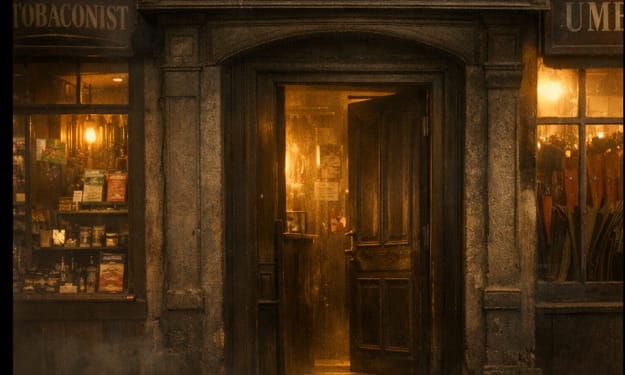
If you have come this far, you have already made a mistake. The library does not let you know you are there. It appears between a tobacconist and a shop that sells umbrellas, in a city whose name I will not give you, because the name of a city is the end of a city, and this city has not yet decided what it is.
By Tim Carmichaelabout 18 hours ago in Fiction
I was in a Toxic Relationship, with my Workplace
“You got that?” My ex yelled. His hands were balled into fists at his side. At six foot three, he towered over me. A normal person would have been afraid, but I looked up a video of George Lopez repeatedly saying, “I got this,” and showed it to him. I had grown used to this treatment, so much so that I didn’t blink when he ripped the phone from my hand and threw it across the room.
By Jade M.4 days ago in Confessions



Comments
There are no comments for this story
Be the first to respond and start the conversation.