
The Road Beyond the Trees
A Tale of Secrets, Silence, and a Red Mustang

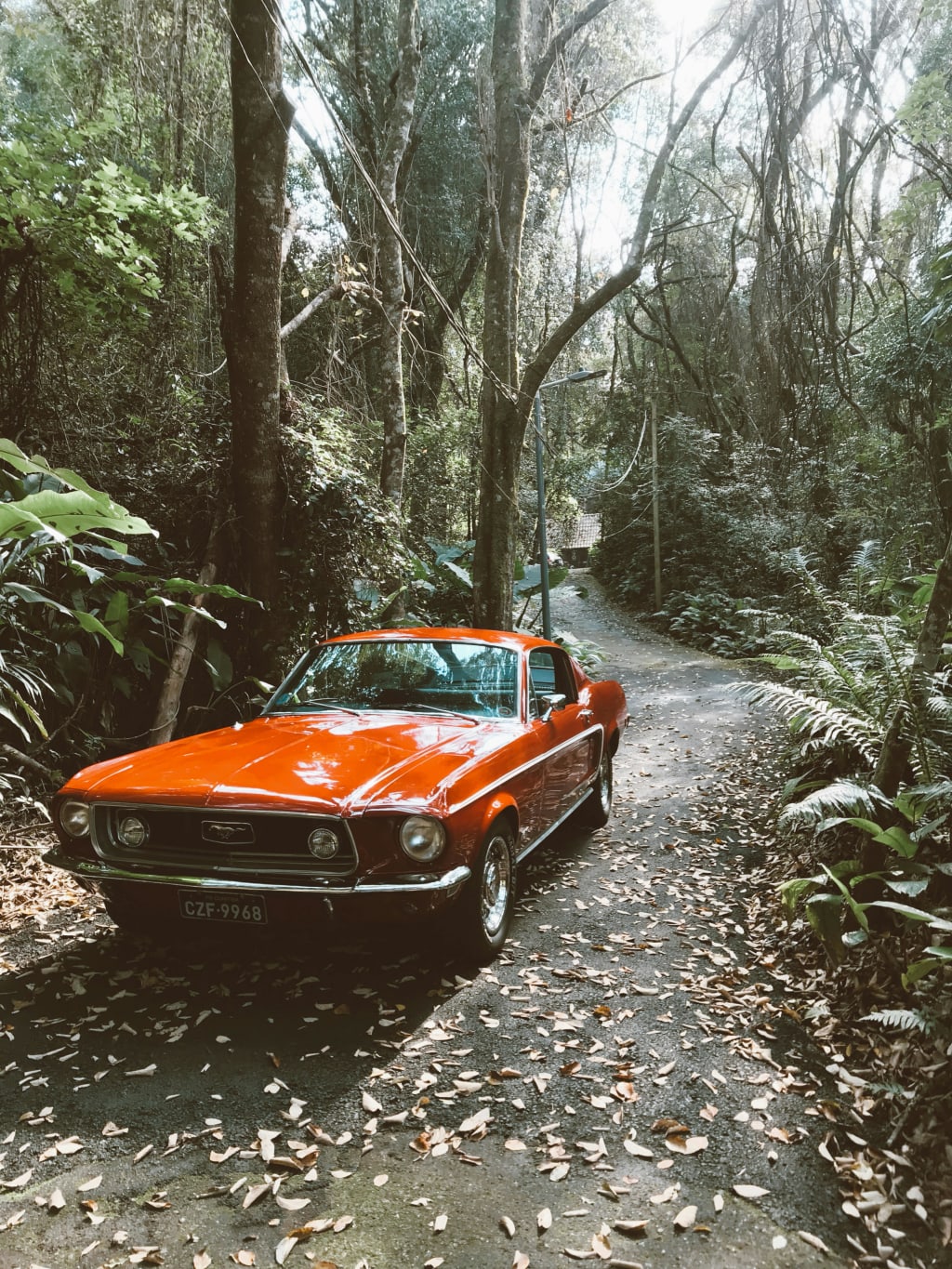
It was the color that first caught my eye—an electric red that stood out like a heartbeat amidst the lush canopy of green. The classic Mustang seemed oddly placed in the middle of a winding forest road, its hood glistening in the dappled sunlight. I remember how the light filtered through the leaves, dancing on polished metal, breathing life into something that was otherwise perfectly still.
I’d never been a “car person,” at least not until that morning when I stumbled upon the deserted vehicle in the quiet woods of Evergreen Hills. I was there for a solitary hike, an attempt to escape the suffocating routine of my job in the city. Yet, I found myself rooted to the spot, transfixed by the vivid contrast of metal and foliage. That the car was empty, with its doors locked and no driver in sight, only heightened the mystery.
What made a vintage Mustang—a dream car for many—end up in this remote forest, far from any paved roads or service stations? Who had driven it there, and why had they left it behind? Little did I know, my fleeting moment of curiosity would unravel into an extraordinary chain of events, changing my life in ways I could never have foreseen.
Chapter I: A Chance Encounter
I didn’t think much of it at first. My plan was to snap a photo, maybe post it online with a bemused caption: Mystery Mustang in the Middle of Nowhere. As I retrieved my phone, I heard a faint rustling behind the trees. My heart pounded, imagining I might have intruded upon someone’s private property. But I saw no one—just the fading footprints on damp leaves near the driver’s side door.
Approaching the car, I ran my hand lightly across the hood. The metal was still warm, suggesting whoever had driven it there hadn’t been gone long. The windows were slightly fogged, revealing a hint of the leather interior. I peered through the glass: an old map on the passenger seat, half-crumbled candy wrappers in the cup holder, and a single Polaroid photograph tucked beneath the rearview mirror. It was too dark to make out any details of the picture.
I was on the verge of leaving a note, possibly scrawling something like If you need help, contact me at…, but I had no pen or paper in my backpack. Instead, I reached for my phone again, capturing a few more images—one from the front, one from an angle that showed off the curved lines of the car’s body, and another that encompassed the forest backdrop. As I moved around, trying to get the perfect shot, a voice in my head kept whispering, Something is off. This can’t just be a random breakdown.
Yet, after a few more moments of hesitation, I decided it wasn’t my place to pry. I had come for solitude, and the last thing I wanted was to entangle myself in a potential drama. So, I turned away, continuing my hike along the narrow forest path, leaving the red Mustang to its secrets.
Chapter II: Threads of Curiosity
The day after, I found myself scrolling through my phone’s camera roll, unable to forget the vivid image of that car among the trees. When my coworker, Megan, noticed my distraction during a team meeting, I casually mentioned the find. Her eyes lit up with the same curiosity.
“Why would anyone park a classic Mustang in the middle of a forest?” she wondered aloud.
I shrugged, but inwardly, the question gnawed at me. That night, sleep evaded me as I browsed online forums about abandoned vehicles and local legends. Most stories involved rusted trucks or old tractors hidden behind barns, not gleaming muscle cars. A strange compulsion urged me to return to the forest, to see if it was still there.
By the weekend, the allure was too strong. Early Saturday morning, I packed a small lunch, grabbed a thermos of coffee, and headed back to Evergreen Hills. The air carried the scent of pine, damp earth, and the subtle sweetness of late-summer blossoms. I followed the same trail as before, heart thumping in anticipation of what I’d find.
And there it was, exactly as I’d left it—except for one difference. A note was pinned beneath the windshield wiper. My palms felt clammy as I approached, half-expecting to find a scrawled explanation or a desperate plea for assistance. Instead, the note read: Don’t tell anyone about this car. Trust me.
No signature, no further instructions. Just a cryptic warning.
Chapter III: The Hidden Map
Curiosity turned to concern. Who left that note? The atmosphere around the car felt heavier, as though the forest itself held its breath. Despite the warning, I couldn’t resist circling around the vehicle for clues. The driver’s door was now unlocked.
Glancing around to make sure I was alone, I opened it gingerly. The interior smelled of old leather and faint cologne. The Polaroid photograph was no longer hanging from the mirror; instead, it lay on the dash, face-down. I flipped it over to see a young man smiling, his arm slung around a dog. They stood in front of the very same Mustang, but in a different setting—perhaps near a small-town diner, judging by the bright neon sign in the background.
My gaze landed on the half-crumpled map I’d glimpsed before. Intrigued, I picked it up. Hand-drawn circles marked certain spots, some in the forest, others near highways or small lakes. Along the margins, cryptic notations spelled out single words like “REMEMBER” or “PROMISE” or “LAST HOPE.” It felt like a puzzle, each scribble a clue pointing to a secret journey.
Why was the Mustang parked here, specifically? The map had a large circle drawn around Evergreen Hills, with an arrow pointing deeper into the woods. My eyes trailed the hand-drawn route. It led to a shape that could be a cabin or a clearing with a small “X” marked. A thousand questions buzzed through my mind.
Just then, a sharp crack of twigs startled me. I spun around, half-expecting to see someone in the shadows. But there was nothing—just the sunbeams filtering through the branches and the rustle of leaves. Stowing the map in my backpack, I locked the car door behind me and stepped away.
A part of me whispered: Walk away. Don’t get involved. But I couldn’t. The note, the photograph, the map…they felt like threads guiding me toward an unknown tapestry. My feet carried me farther down the road, deeper into the forest, following the path that map had sketched out.
Chapter IV: Whispers at Dusk
The trail was overgrown, snaking through towering oaks and clusters of fern. Sunlight began to wane, turning the leaves to gold and casting long shadows across the forest floor. I checked the map periodically. The lines guided me away from the well-traveled footpaths, into denser terrain.
Somewhere around dusk, I arrived at a small clearing. In the center stood a weathered cabin, its windows shuttered, its roof sagging under the weight of moss and time. An old mailbox leaned precariously by the front step, rusted nearly to disintegration. I approached slowly, my nerves jangled by the abrupt silence. Even the birds seemed to pause their evening songs.
Tentatively, I knocked. The wood rang hollow. No response. I tried the door, which yielded with a reluctant creak. The cabin’s interior smelled of stale air and dust. Cobwebs draped the corners, and faint light filtered through cracks in the shutters.
My flashlight’s beam revealed a small table in the center, on which sat a single, faded envelope. It bore no address, only a name scrawled in shaky handwriting: Daniel. I was about to open it when I heard a voice behind me.
“What are you doing here?”
I nearly dropped the flashlight. In the doorway stood an older man—disheveled hair, a weary face etched by worry and time. He wore clothes that looked days old and boots caked in mud. His eyes flicked from me to the envelope, then to the rest of the cabin.
Caught off guard, I stammered, “I—I found the Mustang… in the woods. And this map…”
His expression changed from alarm to a resigned weariness, as if he’d been expecting someone, though perhaps not me. Gesturing for me to sit at the rickety table, he lit a lantern. The warm glow revealed a space that seemed frozen in time: an unmade cot in the corner, dusty books on a makeshift shelf, and a single photograph pinned to the wall—a boy with a dog, and a red Mustang in the background, not unlike the Polaroid I’d found.
Without prompting, the man began to speak, his voice laden with regret and nostalgia. His name was Thomas, and the photograph on the wall was of his son, Daniel. Years ago, Daniel had bought the Mustang with a fervor that could only belong to a dreamer. Father and son had restored it together, forging memories in engine grease and test drives. But life took them on separate roads. Daniel chased his ambitions across the country, and Thomas retreated deeper into the forest, unwilling or unable to maintain ties.
Daniel would occasionally send postcards, each hinting at an unspoken longing to reconnect. One day, the postcards stopped, replaced by silence. Worried, Thomas reached out, only to find that Daniel had vanished on a “last trip” in the Mustang, leaving behind scattered clues—a cryptic quest of sorts.
The old man looked at me with a mixture of hope and desperation in his eyes. “You found the car. Tell me—was there anything else? A letter? A message?”
Haltingly, I recounted the note, the photograph, and the map. I handed him the map, which he studied, tears brimming at the corners of his eyes. “He was trying to find me,” he murmured. “Or maybe he was trying to make peace with the memories of our life together.”
I didn’t have answers. But I felt an empathy that transcended mere curiosity. Something in the forest had led me here, to this lonely cabin and this grieving father.
Chapter V: The Unfinished Journey
Thomas explained how he had parked the Mustang in the forest entrance weeks ago, deliberately leaving it as a signpost—hoping someone, anyone, might stumble upon it and follow the trail. He was too frail to venture far from the cabin but too haunted by regret to ignore the final puzzle his son had left behind.
“I wanted Daniel to know he could come back,” Thomas said, voice trembling. “I hoped he’d see the car and realize…this is still home.”
In the dim lantern light, Thomas spread the map across the table. He pointed to the largest circle, the one near the cabin. “He was searching for old memories, revisiting places we’d been. This spot here—” he tapped a small cross deeper into the forest “—that’s where we used to go fishing. He loved it there.”
Something in my chest tightened. I realized I was knee-deep in a story that wasn’t mine, yet it felt urgent, compelling me to act. Daniel’s cryptic notes—REMEMBER, PROMISE, LAST HOPE—flowed through my mind. If he was still out there, searching, then maybe we could find him. Or at least uncover the truths he’d left behind.
Thomas insisted he was too weak to make the trek himself. Despite my reservations, I volunteered to go, to follow the markings on the map and see if Daniel had left another clue. The old man pressed the envelope labeled “Daniel” into my hand. “If you find my son, give him this. It’s…everything I should have said.”
The gravity of the task weighed on me. Less than a day ago, I was just a curious onlooker drawn to a red Mustang. Now I was carrying the final words of a father desperate to reconnect with his lost child.
Chapter VI: Into the Heart of the Woods
Dawn broke over the forest with a gentle hush. Mist clung to the ground, and the dew-laden leaves shimmered in pale gold light. My backpack felt heavier than usual, burdened with supplies and the sealed letter from Thomas.
Following the map was no simple feat; the path was barely discernible, more an animal track than a human trail. Occasionally, I stumbled across a faded marker—a carved initial on a tree trunk, a ribbon tied around a branch—subtle signs that someone had been this way before. My mind wandered to Daniel. What compelled him to mark this route? Was he simply retracing old childhood memories or was there a deeper purpose?
Hours passed in near silence, broken only by the crunch of foliage under my boots. I breathed in the scent of damp moss and ancient bark, allowing the forest’s rhythm to guide me. The map led me across a shallow stream, past fallen logs covered in mushrooms, and up a gently sloping ridge that overlooked the valley.
By late afternoon, I arrived at a small clearing near a murky pond. Sunlight pierced the thick canopy, illuminating a makeshift campsite. My pulse quickened; there was a rusted fire ring, a few scattered cans, and a battered tent collapsed against a tree. It looked abandoned, but recent footprints in the soft mud suggested otherwise.
I examined the campsite carefully. Inside the tent, I found tattered blankets, a water canteen, and a single Polaroid photo of Thomas—much younger—holding Daniel in his arms near a freshly painted Mustang. On the back were the words, We always had time, we just never used it. My throat tightened with the weight of those regrets.
As I rummaged through the tent’s pockets, I found a worn journal. The pages were damp and smudged, but legible enough to piece together bits of Daniel’s story. He wrote of guilt over leaving his father, of chasing dreams that turned hollow, of wanting one last chance to make amends. The final entries spoke of this forest—how he planned to linger near the cabin until his father would appear. Or until some cosmic coincidence brought them together again.
But the last page ended abruptly, a single line trailing off as though Daniel had been interrupted. No clue as to where he might have gone next.
I stepped out of the tent, heart pounding. Could Daniel still be wandering these woods, waiting for a reconciliation that might never come? The notion felt both tragic and urgent. The forest loomed, silent and infinite, as I considered my next move.
Chapter VII: A Convergence of Roads
Night approached swiftly. I set up my own small campsite beside the pond, deciding it was too risky to move on in darkness. The moon rose, casting silver ribbons of light across the water. Sleep came in fits and starts, haunted by images of father and son, by the mystery of the red Mustang.
At dawn, I packed my gear and decided to circle deeper into the forest beyond the campsite. Perhaps Daniel had ventured further north, following old fishing trails or seeking a vantage point to watch the cabin from a distance.
The hours blurred into one another, each step blending with the next. Birds darted overhead, their morning calls echoing through the dense canopy. I turned over possibilities in my mind: Daniel might have returned to the cabin, unaware that his father was still waiting. Or maybe he found a different path out of the forest and simply left the campsite behind.
Then, through the trees, I glimpsed a figure. My heart leapt as I quickened my pace. The man stood by a large oak, leaning against its trunk as though exhausted. His hair was wild, his clothes tattered, but there was a faint familiarity in his posture—a resonance with the Polaroid images.
“Daniel?” I called out, voice trembling with hope and uncertainty.
He turned, eyes wide, a swirl of disbelief etched on his face. “Who are you?”
I approached slowly, hands raised in a gesture of peace. “My name is Evan. I… I found the Mustang. And your father.”
His expression shifted from wariness to shock, then to something that looked like relief. Tentatively, he invited me to sit on a fallen log. The morning light revealed a gauntness to his features—cheekbones too sharp, circles under his eyes. Clearly, he had been out here a while.
He confessed that guilt and uncertainty kept him hidden in the woods. He’d written letters, pinned them to trees, left clues in the forest, hoping his father might find him. But as days turned to weeks without any sign of Thomas, Daniel feared the worst—that his father no longer cared or had already passed away, leaving no chance for redemption.
With trembling hands, I handed him Thomas’s sealed envelope. Daniel stared at it, tears filling his eyes. He swallowed hard, then carefully broke the seal. For several minutes, he read in silence, face contorting with emotion—regret, sorrow, a flicker of hope.
When he finally looked up, his voice was thick: “He forgives me. He wants me to come home.”
Chapter VIII: A New Journey Begins
I helped Daniel gather what few belongings he had left in the forest. Weak from malnutrition and emotional strain, he leaned on me during the trek back. We followed the forest paths in reverse, retreading my footprints. Occasionally, Daniel would pause to catch his breath, or to voice his disbelief that we were truly returning.
When we arrived at the cabin, the reunion was quiet but deeply moving. Thomas stood in the doorway, tears streaming as his son stumbled forward. They embraced in silence—two silhouettes against the warm glow of the lantern inside. In that moment, it felt as though the forest itself exhaled, releasing the tension that had woven through every branch and leaf.
As father and son spoke through the night, I found myself drifting outside, where the red Mustang still waited at the forest’s edge. With the spare key Thomas had stashed in the cabin, Daniel started the engine. It roared to life like a dormant beast finally awakened. Despite months of neglect, the car seemed eager to run again, a testament to the resilience it symbolized.
In the end, Daniel decided to drive his father back to the city for proper medical care. The old man hesitated, reluctant to leave the only home he’d known for so long, but the promise of healing and a renewed bond with his child convinced him. As they prepared to depart, I stepped forward. “Take care of him,” I told Daniel, passing the battered map. “And don’t forget to revisit these places together—this time for good memories.”
He nodded, eyes glimmering with gratitude. “Thank you,” was all he said, but the weight behind those words was immeasurable.
About the Creator
Alpha Cortex
As Alpha Cortex, I live for the rhythm of language and the magic of story. I chase tales that linger long after the last line, from raw emotion to boundless imagination. Let's get lost in stories worth remembering.
Keep reading
More stories from Alpha Cortex and writers in Fiction and other communities.
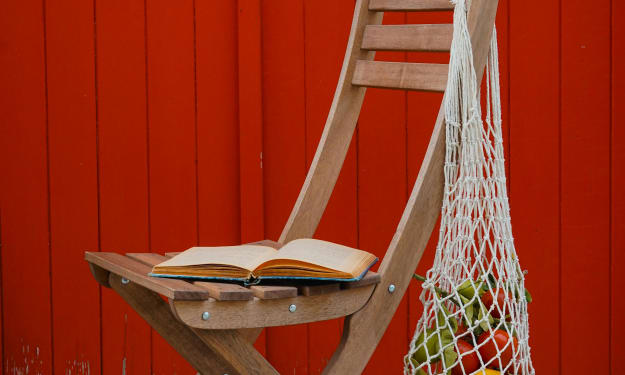
The Chair by the Red Door
There it stood, as if it had always been there, existing beyond anyone’s recollection of when it first appeared. The wooden chair, sturdy yet visibly worn, sat quietly outside the crimson-red door at the far end of Olive Street. Some townspeople may have remarked on it in casual conversation—perhaps a place to briefly rest a heavy grocery bag or to flip through the pages of an old magazine. But, in truth, few truly saw it; few truly noticed.
By Alpha Cortex11 months ago in Fiction
Belle of the Bayou
Bad move, cher. Not just the slip of her kitten heel on the rainy February cobblestones in the Fourth Ward. She got caught snooping. Detective Deleon clucked and strutted like a rooster in his rush to clear her from the scene, waving cigar smoke to and fro as he gesticulated amid the thick air of the speak easy. An experienced crime reporter, Marie knew better than to let the coppers catch her on the wrong side of the line, but curiosity had gotten the better of her.
By Maia Gadwall the metAlchemist7 days ago in Fiction
The Sweetness of Cinnamon
In the earliest days, before the rivers learned their names and before the moon chose her shape, the world was held together by flavors. Every emotion had a taste, every truth a scent, every secret a spice. Among them all, cinnamon was the most powerful. It carried warmth, memory, longing, and the ache of things both lost and found. It was said that cinnamon could soften the hardest heart, awaken the oldest grief, and call the wandering soul back to itself.
By Julie O'Hara - Author, Poet and Spiritual Warrior2 days ago in Fiction
Trickle Them Down, But Not Out
The thing about smart people is that they should know better, but alas, intelligence is not the same as wisdom. Not only do the mistakes of experts too short on vision—when they are not corrected—have the potential to do great and far-reaching damage, but they also undermine public confidence in the very notion of expertise. This is particularly so when expertise is wielded in defence of the rich and powerful as a cudgel against those laid low. As an academic, this lack of faith in “so-called experts” is painful to see as it plays out in the spread of dis-/misinformation, conspiracy theories, and anti-intellectualism writ large. But it is also an understandable impulse given the catastrophic failure of an economic ideology pushed by certain economic experts. Supply-side economics has shaped a broken system for the last half-century and has arguably done more to undermine the fabric of the American Dream than any policy framework of the past century.
By Cory Wright-Maley5 days ago in Humans


Comments (1)
A great tale! Also mustangs are my favorite car! Great work!