
The reviews and full story of well known ghost story "The Turn of the Screw"
Interesting aspect of “The turn of the screw”

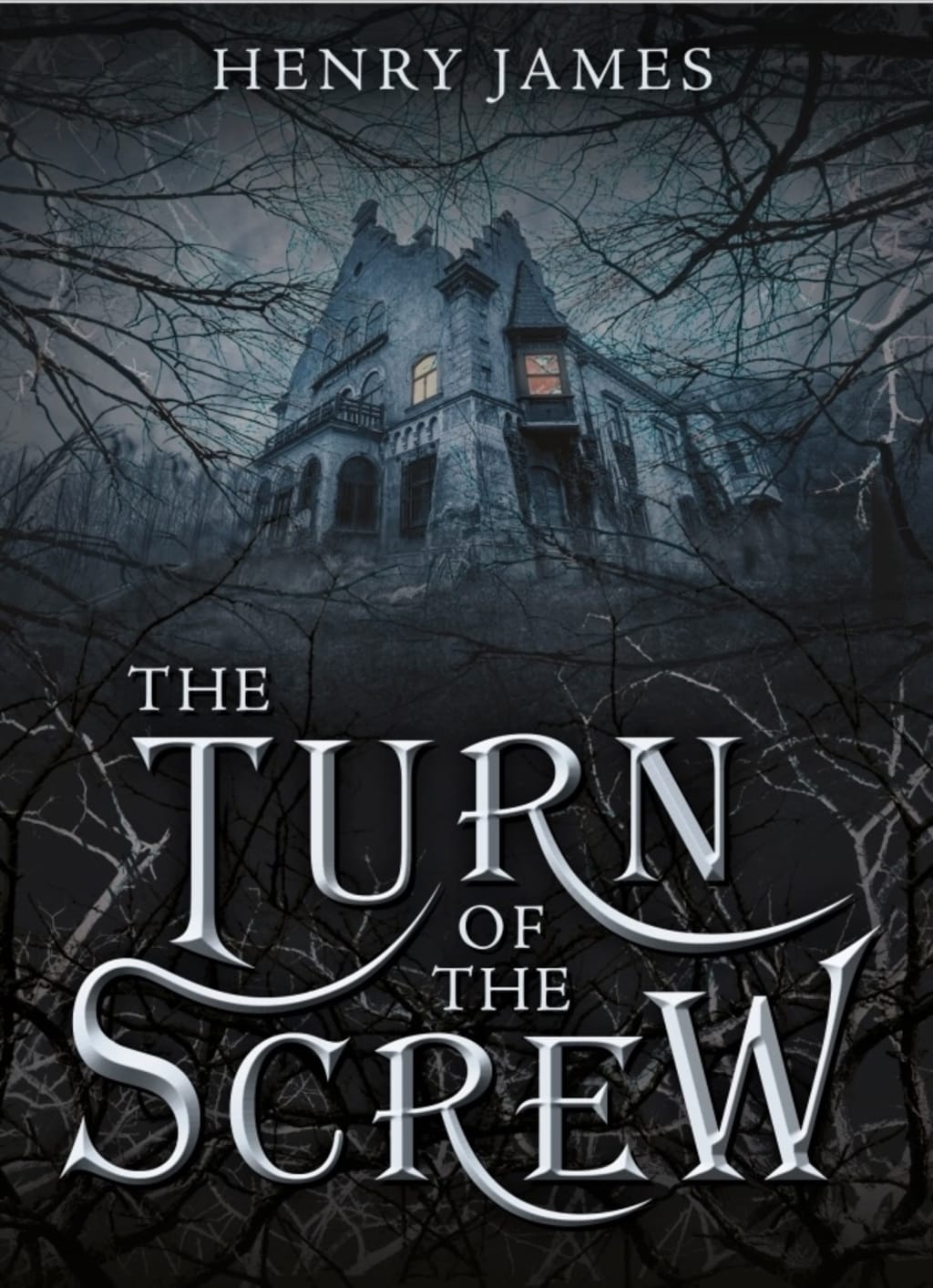
here is a review of a well-known ghost story: "The Turn of the Screw" by Henry James.
"The Turn of the Screw" is a classic ghost story written by American author Henry James, first published in 1898.The novella is a masterful example of psychological horror, and has been adapted into numerous stage productions, films, and television series. The story follows a young governess who is hired to care for two orphaned children, Flora and Miles, at a remote English estate. However, as she begins to settle into her new role, the governess becomes convinced that the house is haunted by the ghosts of the former governess, Miss Jessel, and the estate's former valet, Peter Quint.
The story is narrated by an unnamed visitor to an old manor, who is given a manuscript written by the governess that details her experiences. The governess becomes increasingly obsessed with the idea that the children are in danger from the malevolent spirits of Miss Jessel and Peter Quint, and begins to see them everywhere she goes. The children, however, deny seeing the ghosts, and the governess begins to suspect that they are complicit in the hauntings.
What makes "The Turn of the Screw" so effective as a ghost story is the ambiguity of the ghosts' existence. The reader is never quite sure whether the ghosts are real or merely a product of the governess's imagination. James's prose is dense and highly psychological, and the story is filled with intricate characterizations and complex relationships. The governess herself is a fascinating figure, at times sympathetic and at other times deeply unsettling. Her obsession with protecting the children from the ghosts borders on madness, and the reader is left to wonder whether she is a hero or a villain.
One of the most interesting aspects of the story is the way in which it explores the relationship between the living and the dead. The ghosts of Miss Jessel and Peter Quint are not just specters, but rather a manifestation of the past that continues to exert a powerful influence on the present. The children are caught in the middle of this conflict, and the governess becomes a kind of mediator between the living and the dead. The result is a haunting and deeply unsettling meditation on the nature of existence, memory, and the afterlife.
Overall, "The Turn of the Screw" is a masterful work of horror fiction that continues to captivate readers over a century after its initial publication. James's subtle use of psychological terror and ambiguity make the story a classic of the ghost story genre, and its exploration of the relationship between the living and the dead continues to resonate with readers today. Whether you are a fan of horror or simply enjoy a good ghost story, "The Turn of the Screw" is an essential read that will keep you on the edge of your seat until the very end.
Scroll down for Full Story.
The Turn of the Screw" is a novella by Henry James, first published in 1898. It is a ghost story that has captivated readers and scholars for over a century. The story is told through the perspective of an unnamed governess who is hired to care for two orphaned children, Miles and Flora, at a remote country estate in Essex, England.
The governess is initially excited about her new position, but she soon begins to notice strange and unsettling things around the estate. She sees a mysterious man and woman on the grounds, and she becomes convinced that they are the ghosts of Peter Quint, the former valet of the children's uncle, and Miss Jessel, the previous governess, who both died under suspicious circumstances.
The governess becomes increasingly obsessed with the idea that the ghosts are trying to possess the children. She believes that Miles, in particular, is under the influence of Peter Quint's spirit. She confronts Miles about his behavior, and he denies any wrongdoing. The governess becomes convinced that Miles is lying and that she must protect him from the ghosts at all costs.
As the story progresses, the governess becomes more and more erratic. She sees the ghosts with increasing frequency and becomes convinced that the children are in grave danger. She becomes increasingly isolated from the rest of the household and starts to lose touch with reality.
Eventually, the governess's obsession with the ghosts leads to tragedy. Miles dies in her arms, and the governess is left devastated and alone. In the final scene of the story, the governess sees the ghost of Peter Quint at the foot of Miles's bed, and she realizes that the ghost was not a figment of her imagination but a real presence in the house.
The ambiguity of the story has led to much debate among scholars and readers. Some see it as a straightforward ghost story, while others interpret it as a psychological thriller about a woman's descent into madness. The novella's themes of innocence and corruption, repression and desire, and the dangers of obsession and unchecked imagination continue to resonate with readers today.
One of the key elements of the story is the relationship between the governess and the children. The governess becomes obsessed with protecting Miles and Flora, but her methods are often misguided and harmful. She sees the children as innocent victims who must be shielded from the corrupting influence of the ghosts, but her own behavior has a damaging effect on them. Her strict rules and harsh punishments are not in their best interests, and her obsession with the ghosts ultimately leads to Miles's death.
Another important aspect of the story is the ambiguity of the ghosts themselves. Are they real spirits, or are they products of the governess's imagination? Are they malevolent forces trying to possess the children, or are they simply lost souls seeking redemption? James intentionally leaves these questions unanswered, leaving it up to the reader to interpret the story's meaning.
The novella is also notable for its use of unreliable narration. The story is told entirely from the perspective of the governess, whose mental state is questionable. As the story progresses, it becomes increasingly clear that she is an unreliable narrator, and that her perceptions of the events around her may not be entirely accurate. This adds to the sense of unease and ambiguity that pervades the story.
In conclusion, "The Turn of the Screw" is a haunting and thought-provoking tale that has captivated readers for over a century. Its themes of innocence and corruption, repression and desire, and the dangers of obsession and unchecked imagination continue to resonate with readers today. The story's ambiguity and unreliable narration add to its unsettling effect, making it a classic of the horror genre and a masterpiece of psychological fiction.
About the Creator
Echoes in Her Eyes
I was staring at my aunt’s photograph again, the one I always kept on my desk, the one where her eyes seemed to hold both fire and sadness, when a strange pressure filled the room as if the air itself was listening to my thoughts. The light from the window bent strangely across her face, catching in her eyes like trapped sparks, and the room felt tight, as though the walls had inched closer. Dust floated slowly in the air, frozen in place, as if it were afraid to move. I whispered her name, wondering what she felt on the day she chose to stand up for herself and for all Iranian women. The world around me shattered into silence. The silence rang in my ears, loud and absolute, swallowing every sound I had ever known.
By Audrey Sabetfard6 days ago in Fiction



Comments
There are no comments for this story
Be the first to respond and start the conversation.