
THE QUIET WAY OF MEN: I
OP On Medium: https://medium.com/@brandontbrasson/the-quiet-way-of-men-8100d1f52340

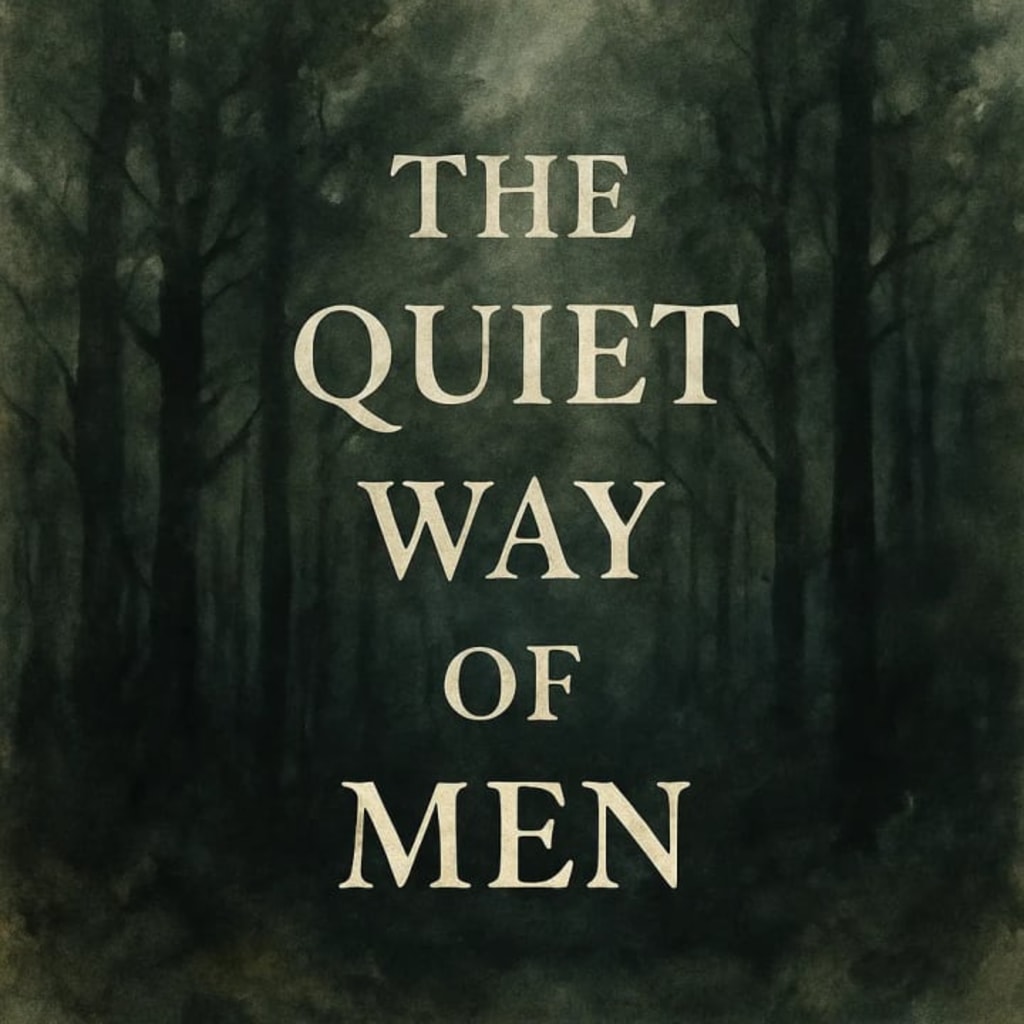
The boy was born in smoke.
His mother died in childbirth beneath a collapsed lean-to in the Carolina backwoods, snow still caught in her hair. The ground was too frozen to bury her, so his father burned the body with a bundle of sage and never said her name again. He wrapped the boy in hides and walked east without a word.
The boy grew up on the move, in the hush between rivers and pines. His father taught him silence first, then traps, then how to break a man’s nose with the butt of a musket. They lived without calendar or Sabbath, slept under soot-colored skies, and bartered fur to men with gunpowder eyes and fingers chewed short by frost.
The world was at war, though no armies marched here. Not formally. The French pushed south with silver and gunpowder, allying with tribes eager for revenge. Settlers vanished by the dozen. Missionaries were found scalped, gutted, or nailed to chapel doors. The forest kept no records and left no witnesses.
The boy’s only companion was Elian a wiry, half-French boy with a pistol too old to fire and a grin too crooked to trust. His mother hanged herself in winter. His father was shot by Redcoats for spying. Elian had learned to survive by vanishing into brush, into lies, into other people’s fires.
They traded with whoever would not shoot first. French smugglers. Tuscarora scouts. A toothless trader named Greene who sold blackpowder and bad dreams. The boy learned to listen with his eyes. Men lied with their mouths but told the truth with their hands.
Then they came upon the ruined village.
Smoke draped the rooftops like rotting sailcloth. The cabins were torn from the inside out. Doors burst. Chimneys blackened. Not burned ripped. In the square they found a man speared upright on a post. His boots were missing. A child’s rattle was tied to his belt. His tongue had been split like a reed, not by blade but by something cruder. No birds circled.
The boy stared. Elian spit and turned away.
The father said only,
“Waya’s hand.”
They scavenged what little hadn’t been spoiled a cracked cooking pot, a pouch of cornmeal, a strip of birch bark marked with a symbol the boy didn’t recognize. When asked what it meant, the father looked at the trees and said,
“Not ours to name.”
They made camp by the creek. That night, the wind came warm. Too warm for March. It did not smell of weather. It smelled of meat left too long in the sun.
The boy woke before dawn. His traps had been tripped, but nothing was caught. The bait was missing. The snow was marked with circles not tracks and small piles of teeth left in place of footprints. Not animal teeth. Not whole.
He asked Elian what it meant. Elian said nothing.
The father sat by the dying fire with the musket across his lap. He spoke slowly.
“I’ve seen this before. North of the river. During the raids. A trader’s camp found hollowed like a fruit. No signs of fight. No blood, but something worse. All the eyes were gone. They say Waya walks with the French, but it ain’t just war he brings.”
Later that day, they found Ruth.
She was curled beneath the floorboards of a collapsed chapel, her dress torn and blood dried at her collarbone. She hadn’t spoken in two days, but when they touched her, she screamed like something trying to remember how. It took hours to calm her. The father did not ask questions.
But that night, Ruth spoke on her own.
She said the French had come with rifles and coats that reeked of wine. Behind them, the Tuscarora, with red paint across their eyes. They made no demands. They simply cut. They killed the priest first, then the men, then the rest.
All except her.
“They spared me,” she said. “Because of this.”
She lifted her blouse. A spiral had been cut into her skin jagged, uneven, still scabbed.
“They said the land wanted me. That something waits.”
The boy stepped outside. He walked through the low pine fog, sick with unease. Then he saw it.
A tree. Large. Split with age. At its center, carved with a knife of some age and depth:
CROATOAN
The word pulsed faintly, like it breathed with the earth. The boy stepped back. He heard nothing no wind, no frogs, not even the creek. The silence was not peace. It was watching.
When he returned to the fire, the father’s eyes were wide, fixed on the coals. Elian sat with his pistol drawn. Ruth rocked in her blanket like she was praying without sound.
The boy said nothing.
And then, without turning his head, the father spoke:
“It’s here.”
About the Creator
Brandon Brasson
https://paypal.me/BrandonBrasson IT professional over seven years of experience in technology, security, and business development.
Keep reading
More stories from Brandon Brasson and writers in Fiction and other communities.
Hilaree Nelson: The Summit Beyond the Snow
Hilaree Nelson Hilaree Nelson was more than her records. Born December 13, 1972 in Seattle, she learned to ski at age three at Stevens Pass and grew into a ski-mountaineer who combined boldness with thoughtful respect for the mountains. She lived in Telluride, Colorado, and was a mother of two boys, but also a lead figure in high-altitude skiing. Among her many achievements:
By Brandon Brasson2 months ago in Humans


Comments
There are no comments for this story
Be the first to respond and start the conversation.