
The Quantum Odyssey: Unraveling the Mysteries of Parallel Universes
Journeying Through the Veil of Possibilities

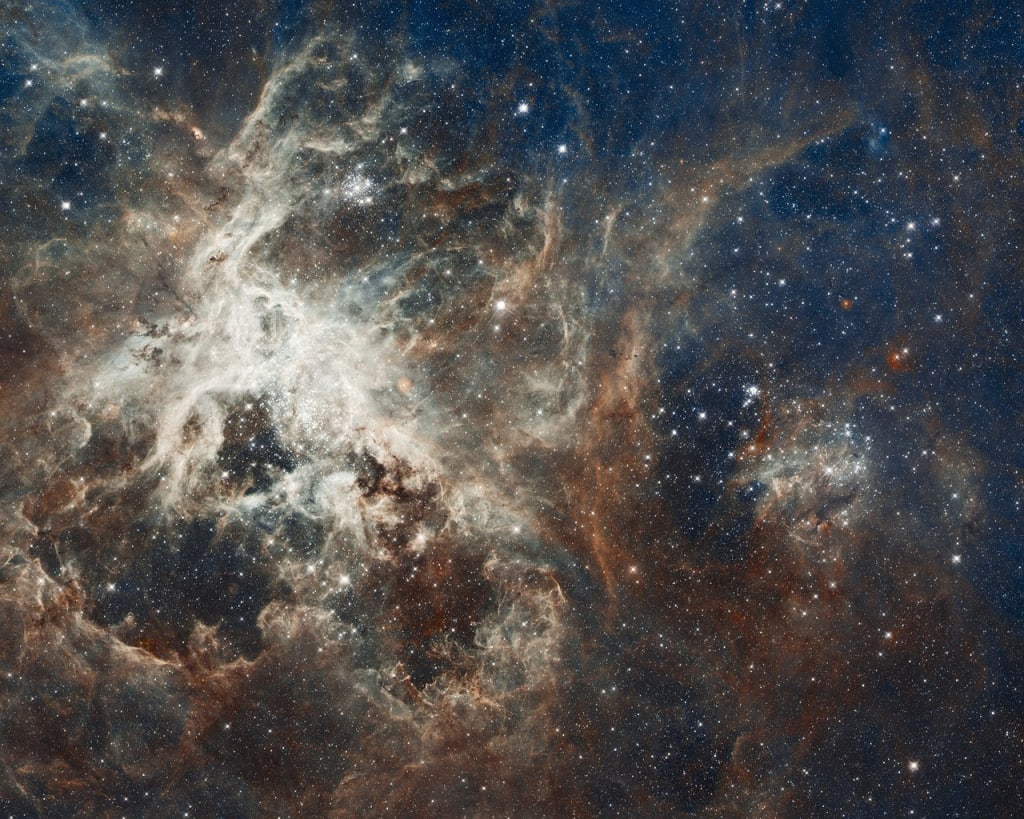
Throughout history, humanity has constantly sought answers to the unknown, delving deeper into the cosmos to quench its insatiable thirst for knowledge. Among the enigmas that captivate the imaginations of scientists and dreamers alike are the possibilities of parallel universes. Long confined to the realm of science fiction, recent advancements in quantum mechanics have sparked new debates and opened doors to the idea that we might be on the verge of uncovering the secrets of parallel realities. In this quantum odyssey, we embark on a journey to explore the tantalizing possibilities of parallel universes, where mind-bending concepts and cutting-edge science converge.
The Multiverse Hypothesis
The concept of the multiverse posits that our universe is just one of an infinite number of parallel universes, each existing in its distinct reality. According to this hypothesis, these parallel universes could be vastly different from our own, with variations in physical laws, constants, and even fundamental particles. The notion of parallel universes is not without its critics, as some argue it falls more into the realm of philosophy than empirical science. However, proponents point to the remarkable success of quantum mechanics, which has consistently defied classical intuition and proven the weirdness of our universe, hinting at the potential existence of other realms beyond our comprehension.
Quantum Superposition and Entanglement
Key to understanding parallel universes is grasping the phenomena of quantum superposition and entanglement. Quantum superposition allows particles to exist in multiple states simultaneously, only resolving into a specific state when observed. Imagine a coin tossed into the air: until it lands and you look at it, it is both heads and tails at once. Entanglement, on the other hand, describes a mysterious connection between particles, where the state of one particle is instantaneously correlated with the state of another, regardless of the distance between them.
Experiments in quantum physics have repeatedly verified these phenomena. However, the implications are staggering. If particles can exist in multiple states and instantaneously affect each other, could it be that they are interacting with their counterparts in parallel universes? Some theorists suggest that the existence of parallel universes is the only plausible explanation for such phenomena, as it would require the particles to interact across different realities.
The Many-Worlds Interpretation
Proposed by the physicist Hugh Everett III in the 1950s, the Many-Worlds Interpretation (MWI) is a leading hypothesis that embraces the idea of parallel universes. According to MWI, whenever an event with multiple possible outcomes occurs, the universe branches off into multiple parallel copies, with each outcome realized in a separate reality. For example, in a quantum experiment where a particle could spin up or down, both possibilities occur in different branches of reality, each creating a separate universe to accommodate the different outcomes.
While MWI offers an elegant solution to the question of quantum measurement, it leads to an almost inconceivable number of parallel universes. Every decision ever made, from major life choices to the seemingly trivial ones, spawns a new universe for each potential outcome. Critics argue that MWI lacks empirical evidence and veers too close to science fiction. Nevertheless, it remains an intriguing theory that has stimulated further research into the nature of reality.
Quantum Computing and the Multiverse
Quantum computing is another area where the idea of parallel universes holds relevance. Traditional computers process information in bits, represented by 0s and 1s. Quantum computers use quantum bits or qubits, which can exist in multiple states simultaneously due to superposition. As a result, quantum computers can perform complex calculations at speeds that would take classical computers an eternity.
In a quantum computer, parallel universes are effectively harnessed to explore different possibilities simultaneously. Algorithms are designed to manipulate qubits and navigate through the multiverse of potential solutions, with the most likely outcome revealed once the computation is completed. While quantum computing is still in its infancy, its potential applications are vast, ranging from optimizing logistics and cryptography to unraveling the mysteries of the universe itself.
The Quest for Experimental Evidence
At this stage, the existence of parallel universes remains speculative and beyond the reach of current experimental verification. Nevertheless, scientists are exploring ingenious ways to test the multiverse hypothesis. One such avenue is through the detection of gravitational waves. These ripples in the fabric of spacetime are produced by cataclysmic events, such as the collision of black holes. Some theories propose that these events might create observable effects across multiple universes, leaving imprints in the gravitational wave data.
Another line of research involves studying the cosmic microwave background radiation, the afterglow of the Big Bang. Patterns or anomalies in this radiation could potentially offer hints of interactions between our universe and others. However, these lines of inquiry are speculative, and technological limitations currently hinder our ability to explore the multiverse directly.
The idea of parallel universes has captivated humanity's imagination for generations. From the earliest myths and legends to modern science fiction, the notion of other realities has tantalized the human mind. While the concept of parallel universes remains speculative and elusive, recent advancements in quantum mechanics and computing have brought us closer than ever to understanding the mysteries of our universe and the possibility of other realms.
As we continue our quantum odyssey, we stand on the precipice of discovery, ready to embark on a journey that could redefine our understanding of reality. Whether the existence of parallel universes is eventually confirmed or refuted, the quest to explore the deepest secrets of the cosmos drives us forward, pushing the boundaries of human knowledge and imagination. The quantum odyssey has just begun, and the destination, however distant, promises to be a fascinating revelation for the future of science and our place in the vastness of existence.
About the Creator
Junior
I like to write about many things that I find interesting.
Ludacris and Nelly draw backlash over bookings at MAGA-coded music festival
Ludacris and Nelly headlining a mostly right-wing event is good for them. It’s also great for the genre of hip hop. The two rap veterans have showcased their talents on other stages. Why can’t they perform for mostly MAGA folks and grab that bag?
By Skyler Saunders4 days ago in Beat



Comments
There are no comments for this story
Be the first to respond and start the conversation.