
The Pursuit of Justice:
Unveiling the Hunt for Nazi War Criminals and the Legacy of World War II

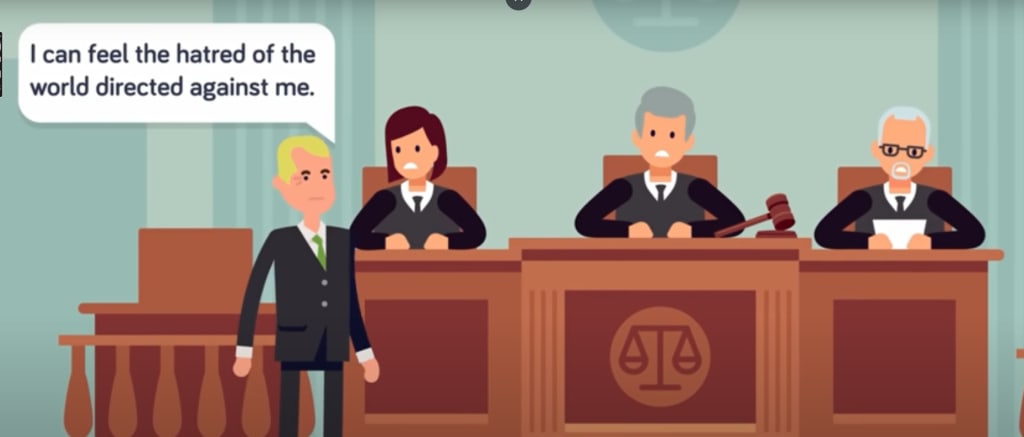
Did you or your parents grow up with a Nazi war criminal living on your street, a dithering old man who was once a ruthless mass murderer in Germany or Poland? After all, some of you out there lived among those war criminals, more than you might think. Let's delve into this intriguing piece of history.
In the spring of 1945, as Berlin burned and the Red Army marched in, the highest-ranking Nazis began to flee Germany like rats escaping a sinking ship. With assistance from unexpected sources, these criminals sought refuge in various parts of the world. But what if there was a chance for Adolf Hitler himself to escape? Hitler's private pilot, Hans Baur, pleaded with him to leave the bunker and fly to safety. Baur had a light plane waiting, ready to whisk Hitler away to Bavaria and beyond. However, Hitler stubbornly refused, unwilling to spend his life on the run. Instead, he chose to die in the bunker, leaving behind a legacy of destruction and hatred.
As the war came to an end, the Allies embarked on a relentless hunt for the surviving Nazis. The Soviets, like the Americans and the British, wanted to capture these criminals alive, to extract information, and to bring them to justice. It was a secret war, a clash between ideologies: capitalism versus communism. The top Nazis became prime targets, and their captures were significant victories for the Allies.
One by one, the key figures in Hitler's inner circle fell into Allied hands. Hermann Göring, head of the Luftwaffe, surrendered to the Americans, only to meet his end in a prison cell. Heinrich Himmler, the mastermind behind the Holocaust, attempted to negotiate peace with the enemy, enraging Hitler and sealing his fate. He was apprehended by the British but took his own life before revealing his true identity. Reinhard Heydrich, another architect of the Holocaust, had met his end earlier in 1942 at the hands of Czech resistance fighters.
Other prominent Nazis faced their own trials and judgments. Albert Speer, the Minister of Armaments and War Production, played a crucial role in the Nazi war machine. Joachim von Ribbentrop, the Minister of Foreign Affairs, received the death sentence. Field Marshal Wilhelm Keitel, Chief of the Armed Forces High Command, also faced execution. Erich Raeder, the grand admiral of the Kriegsmarine, and Karl Dönitz, who briefly replaced Hitler as head of state, were sentenced to prison.
For those Nazis implicated in the Holocaust, justice was swift and severe. Hans Frank, the Governor-General of Occupied Poland, showed no remorse and passed the blame upwards. Ernst Kaltenbrunner, an ardent anti-Semite, faced charges connected to the Gestapo and the concentration camps. The evidence against these individuals was overwhelming, and their attempts to deflect responsibility were futile.
The hunt for the Nazis revealed the true extent of their crimes and marked a turning point in history. The trials at Nuremberg exposed the horrors of the Holocaust and sought to hold the perpetrators accountable for their actions. The world witnessed the fall of Hitler's inner circle and the dismantling of the Nazi regime. The legacy of these war criminals serves as a reminder of the darkest chapters in human history.
So, did you or your parents unknowingly live alongside a Nazi war criminal? The answer might surprise you. The pursuit of justice and the need to confront the past continue to shape our understanding of the atrocities committed during World War II. It is through education and remembrance that we strive to prevent such horrors from happening again.TI
About the Creator
EVERYTHING INTERESTING
Read more, Learn More: Be Smart. Be Bold: Be Rich, Be Free
Keep reading
More stories from EVERYTHING INTERESTING and writers in Fiction and other communities.
Title: The Hidden Nazis: Escape, Pursuit, and the Ratlines
"The Hidden Nazis: Escape, Pursuit, and the Ratlines - Unveiling the Hunt for Notorious War Criminals" Introduction: Unveiling the Hunt for Notorious War Criminals: The Hidden Nazis' Escape, Pursuit, and the Intricate Ratlines
By EVERYTHING INTERESTING3 years ago in Fiction
The Path to Salvation
The late autumn evening air filled the monk's lungs, but it wasn't the season that chilled his bones. The heavy-handed presence of evil he had sensed upon entering the woods surrounding this mountain village had not bothered to conceal itself from him.
By Made in DNA4 days ago in Fiction


Comments
There are no comments for this story
Be the first to respond and start the conversation.