
The metal burns where it lies on her sternum—the weight can barely be felt, but the breaths remain heavy. Bodies stand side by side as the humming of either someone sizzling in the sun or the feedback from the combined anxious energy fills the air.
A number is called out, and there’s silence in the crowd. Eyes sweep across one another, the air gradually thickening with time. Then, a sharp cry and the drop of a body. The ensuing half-hearted applause is familiar as the collapsed person is assisted out of the masses.
It takes less than a minute for the town square to empty.
Paper squares litter the sidewalks, and she adds to the collection, stamping each of the five pieces with her weathered boot. They integrate instantaneously into the ground below—a papier-mâché after years of the weekly tradition.
She enters her house, the dilapidated but sturdy stonework a testament to the labour of those before her time. The familiar sound of the ventilator welcomes her, almost comforting with its rhythm steadier than anything she’s known.
“Better luck next time.”
Her mother sits up on the bed, removing the mask from her face and proffering it.
“I’m fine.” An abrupt cough immediately follows, an amusing prank by the Gods.
“You really shouldn’t be working in those mines anymore.” Her mother’s worry is brushed aside quicker than the time taken to reach her bedside.
“We need the tickets.”
“What will tickets matter if you’re killing yourself down there?”
She feels the mismatched urgency between them as always, and there’s a sting in her throat.
“Time’s running out.”
“How many times have I told you? You have time. The Prize is presumably effective enough to cure even me. You have time.”
All she can do is sigh, knowing it’s a losing game. “I’m counting on that.”
It’s not long before her mother is fast asleep, exhausted merely from a short conversation, let alone hard labour. She brushes away the hair from her mother’s face—once as lustrous and dark as hers, now withering and losing its pigment.
This is her future.
The week is harsh as usual, but the motivation is unwavering. A dark mine is all she has known for years, pushing the depths of the Earth’s core until one day, nothing will be left to exploit. She can only hope to be long gone by then.
Despite the heavy deposits settling in her lungs, the only thing she truly despises is the beacons atop the Hills dimly lighting her way home. They gesticulate the 0.1 percent, and if it’s quiet enough, she can almost hear the boisterous châteaux mocking her—an accessory to their wealth.
The day before the next Draw always sparks hopeful energy among the workers. Anticipations of their hard work finally paying off permeates the air.
She removes her grit-covered jumpsuit and tosses it into the large communal bin on her way out. The man at the reception post is different this week.
He barely glances at her as she walks up to the desk.
“Number.”
It’s not posed as a question.
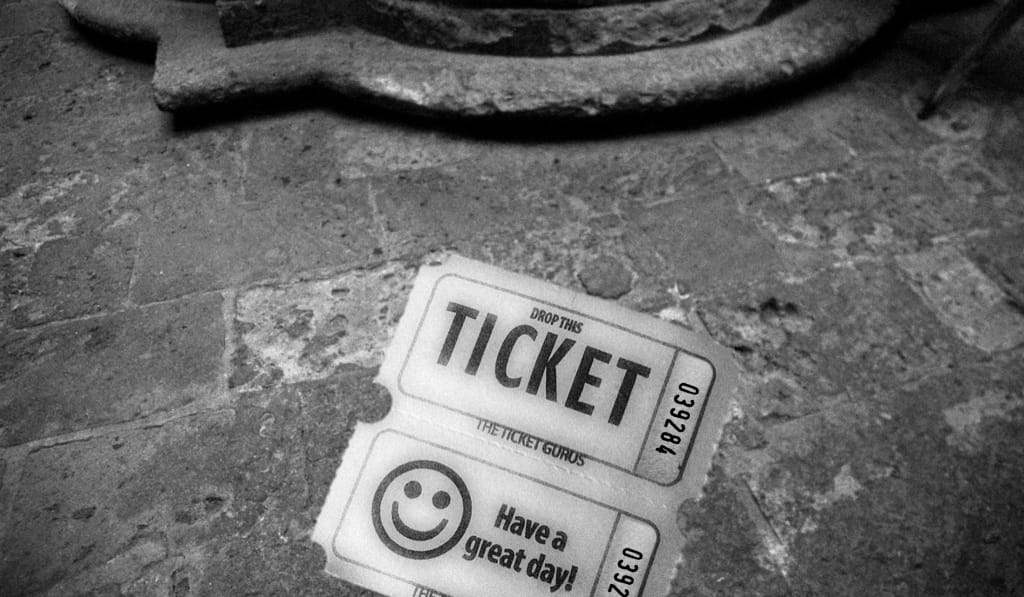
“39284,” she responds immediately.
The man grunts before he rips off some paper and hands it to her.
“Two?” She frowns at the lone pair of tickets. “Last week, we got six.”
There’s not a single movement in his expression. “You get what you get.”
She knows any argument is futile, may even be seen as insubordination. She takes a strangled breath and the tickets.
Over the years, they’ve learnt to live on a single ticket a week, leaving the rest for the Draw. It doesn’t buy much, but they need all the chances they can get, even if the odds are slimmer than her portions of food.
She’s almost grateful for the mild coughing fits that anguish her throughout the night, subduing the feeling of a hollow stomach.
A single ticket is all she holds as she stands in the crowd. A bout of irritation begins to crawl up her throat, starting low from the metal on her sternum. It’s suppressed in a practised manner, but the burn remains strong.
A number is called out, and there’s a familiar silence. Then, the volcano in her lungs erupts, and hot lava scorches her chest. She doubles over, coughing out dark powder as her palms meet stone. A crowd surrounds her, and she’s promptly flanked and assisted out. The way home is on the right, but she’s guided left.
“Where are you taking me?” Her voice is guttural.
“Congratulations.” The guard holds up a ticket—one she was holding moments ago. “You’ve won the Draw.”
There’s barely a second to process the information before she’s escorted into a van. The first few moments of the ride are bumpy; a wave of nausea threatens to empty an already empty stomach. Then, the quick transition into smoother roads signifies that they’ve entered the Hills.
“Seems like your luck turned at just the right time.” The guard snickers. “We almost lost you before you even got the Prize.”
The Prize. She lets out a small chuckle. “Seems like it.”
The van eventually pulls up outside a hospital. A doctor greets her as she enters the immaculate glass building—pristine beyond anything she’s ever experienced.
“39284?” It takes her a moment to realise that the doctor had been speaking.
“Yes, sorry. What was the question?” They make their way into a bright room, a table in the centre.
The doctor smiles at her as they sit on opposing chairs. “I can understand that this might be a surreal moment. I was asking whether you have a lung condition, given the information I was told.”
A few glances are cast around the room before she looks back at the doctor, biting her lower lip.
The hesitancy is recognised. “Don’t worry, this room is unmonitored, and all information is confidential,” the doctor reassures. “We are well aware of people hiding their conditions in fear of occupational termination, and we respect your privacy.”
Finally, she nods. “It’s an autoimmune disease affecting the lungs,” she recites what she heard years ago in a less fluorescent room. “It’s genetic.”
“I’m sorry.” There isn’t a hint of ingenuity, and it’s unfamiliar. “Luckily, all we need is a small DNA sample, and you’ll be as good as new.”
She smiles at the doctor, hoping it doesn’t look as forced as it feels. “I can’t wait.”
She’s left alone in the room with a booklet, similar to one given on the ride—similarly untouched.
The doctor enters the room with a case, gently placing it on the table. “Did you have the chance to read through the pamphlet?”
She nods. The doctor looks slightly sceptical but doesn’t mention anything.
“So you’re aware that each person can only redeem the Prize once.”
She nods—everyone was well aware as they placed tickets into the Draw box each week.
“And that the Prize is non-transferable and any attempt to use someone else’s DNA, whether or not for financial gain, is a criminal offence.”
She nods—how could anyone forget the headlines made when they discovered people were selling their one chance at the Prize to the highest bidder, future illnesses be damned.
“Excellent. Once we have your sample, the stem cells will be generated within a day. You will be allowed to stay overnight in one of the rooms, and you must take the pill before leaving.” The doctor collects a few items out of the case. “Any last questions?”
She shakes her head. All of this information was well-known by virtue of the grapevine.
“Great. I’ve laid out a few different tools to collect your sample; this can be from your skin, hair, inner cheek, or urine. The choice is yours.”
“I’d like to use my urine.”
The doctor nods. “No problem. Here is a container, and there’s a bathroom through the door just behind you.” The vial is proffered and met with shaky hands. “I’ll be here when you’re ready.”
The door closes behind her, and she places the container on the closed toilet. She walks over to the sink, clutches the countertop, and bends over it. Her breaths are thick as she slowly looks up at the mirror, the locket hanging from her neck. A few more moments of hesitation is all it takes before she’s ready to give a sample.
As promised, the doctor is still sitting in the chair. “Was everything alright? I heard some heavy breathing.”
She nods. “I just got a bit nervous and couldn’t give a urine sample.” Her voice only shakes slightly, and she’s grateful. “Is hair alright instead?” She holds up the container to the doctor, hair as dark as hers contained within.
Something crosses over the doctor’s expression, eyebrows furrowing ever so slightly before vanishing a second later. “Sure, that works fine.”
She’s taken to a patient room and given blankets for a comfortable overnight stay. The nerves keep her awake regardless.
For a groundbreaking stem cell therapy that targets specific organs to cure diseases, it doesn’t feel all that significant when she’s simply directed into a cold room full of half-conscious patients and handed a paper cup containing a small pill.
It will never cease to amaze her that when all the world’s technology was destroyed, they managed to redevelop this and not renewable energy sources. The 0.1 will pay anything to embezzle years from the Earth for themselves, she supposes. At the very least, the Draw was created as charity to fuel their boundless altruism.
“Here’s your seat.” It’s a nurse this time—the doctor probably busy treating another Prize winner from another town. “Water’s over there. Sit in your assigned seat afterwards until you’re cleared to go. If you notice side effects, ring the bell and don’t get up.”
The nurse is gone a moment later, and only patients are left in the room. She looks down at the pill, and the tingling in her throat begins bubbling to the surface once again. She walks over to the water dispenser and places a cup under the nozzle. Her hand reaches for the cold piece of metal hanging from her neck, tracing the rounded curves of the heart shape. She sets the pill down and opens the locket. It’s empty, as she had expected, but it’s still a sight she’s not accustomed to—the contents of it once held close to her chest for years on end.
But lockets are made to be filled, so she respects its purpose.
After closing it, she drinks the cup of water and sits in her seat. It isn’t long before the nurse is back, checking each of the patients one by one. The nurse is as succinct as ever when it’s her turn.
“Cup.”
The empty pill cup is handed over, and the nurse looks inside.
“Open.”
She opens her mouth and lets the nurse press down her tongue with a wooden depressor. Once satisfied, the nurse tells her to wait until the next round of checkups.
A few quiet moments alone is a small price to cure a lifetime of suffering. Before long, she’s being cleared to leave and ushered towards the exit.
There’s a guard at the front of the hospital. A thorough pat-down is performed, and each pocket and crevice meticulously perused. The same van awaits her, and she’s promptly dropped off in the empty town square.
It’s not a long walk home, but she’s impatient. The sun burns upon her skin, and her breaths are suffocating as she sprints, the metal locket thumping against her chest with each stride.
Her lungs are aflame—the heat almost sufficient to generate energy from the deposits settled deep inside—and eventually, she has to stop lest she collapses again. Regardless, it’s a sensation she’s been long prepared to live with.
The metal burns where it lies on her sternum, but all she can do is laugh as she opens the locket and sees the Prize inside.
About the Creator
Keep reading
More stories from writers in Fiction and other communities.
The Path to Salvation
The late autumn evening air filled the monk's lungs, but it wasn't the season that chilled his bones. The heavy-handed presence of evil he had sensed upon entering the woods surrounding this mountain village had not bothered to conceal itself from him.
By Made in DNA6 days ago in Fiction
Dinner
Whiskey tango foxtrot. Would you look at the seating chart my brother just handed me? It was a nightmare worthy of Phobetor and Phantasos. I swatted him with it then told him he could seat the ladies. That should fix his little red chariot but good. “And tell Aphrodite to dress for dinner. I won’t have her at my table in cut offs and a tube top.” I noticed Hermes glancing at the chart. “Any table.” If there’s a loophole, he’ll find it. If there isn’t, he’ll make one.
By Harper Lewisa day ago in Fiction



Comments
There are no comments for this story
Be the first to respond and start the conversation.