
The Prince Who Came for Tea and Left with Nothing
A tale of a son’s desperate visit, a king’s cold tea, and a stepmother’s silent stare.

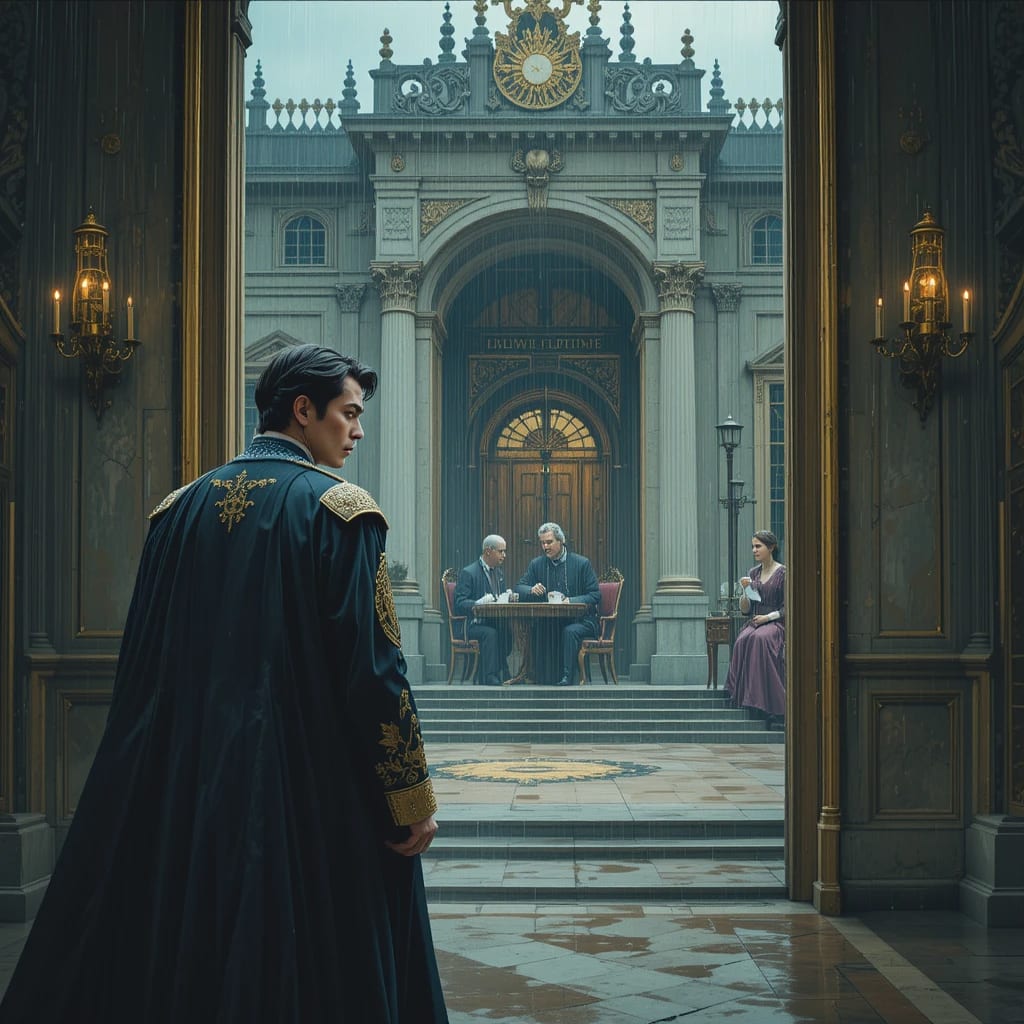
The carriage clock in Clarence House ticked loudly, as if mocking the man who sat stiffly on the velvet chair. Harold, once a prince, now just another weary traveler with too many demands, waited for his father. He had come with a purpose. Money, titles, security, maybe even sympathy—his wish list was long.
The king entered with the ease of someone who had seen it all before. His robes were not grand, only a simple suit, but the crown of authority rested invisibly on his shoulders. Beside him came the Queen Consort, her eyes sharp, her teacup already balanced delicately in her hand.
“Father,” Harold began, his voice wavering somewhere between desperation and entitlement. “I thought perhaps we could… talk.”
Talk. That single word carried all his hopes. Fifty-five minutes were granted, but nearly half of them vanished with guards checking his coat for hidden devices. By the time he finally sat across from his father, only twenty minutes remained. Twenty minutes to heal old wounds, to make new deals, and to rewrite his future.
The king poured tea slowly, the steam rising like a barrier between them. “Milk? Sugar?” he asked politely. Harold nodded, though what he truly wanted was more than tea. He wanted restoration. He wanted power. He wanted to belong again.
But the king only sipped, his silence speaking louder than any speech. Each nod was courteous, each glance cool, each word carefully measured. When Harold mentioned titles, the king murmured something about tradition. When money was raised, the king’s eyes flicked briefly toward the window. And when apologies were hinted at, the silence was deafening.
Then there was her—the stepmother. She sat across the table, sipping Earl Grey, her gaze steady and unforgiving. Harold remembered his own words, printed and bound in a book, sharp as knives aimed at her. Now, faced with her presence, he felt the weight of his own betrayal. How could he ask for millions while the woman he mocked stirred her tea with quiet amusement?
By the time the clock chimed, the tea had cooled. Harold rose, his face pale, his jaw tight. He had come for rescue, but left with nothing. No promises. No cheques. No grand reconciliation. Only the bitter taste of rejection clung to his lips.
Outside, the rain streaked against the car window as he sat silently in the backseat. His expression told the story better than any words could—this was not the face of a prince triumphant, but of a man denied. The world would later see the photo: his clenched jaw, his burning eyes, his fury barely contained.
And across the ocean, a phone would be ringing. His wife, sharp as ever, would demand answers. Did you get the money? Did he agree to security? Did he beg for forgiveness? Harold rehearsed excuses in his mind, each one weaker than the last. He knew the storm waiting for him was fiercer than the one outside.
The irony, of course, was that the story would not end here. Soon, whispers would emerge in glossy magazines, tales of reconciliation and tender moments between father and son. Anonymous insiders would claim the king had “opened his heart.” But the truth lingered in that photograph—the truth of a man walking out of Clarence House with empty hands and heavy shame.
The king had given him tea. Nothing more.
And so, Harold the hapless boarded his cab, knowing that the world he longed to re-enter had no place for him anymore. The palace doors had closed, and with them, the chance for redemption. What remained was spin, stories, and the endless ticking of the clock—counting down to his next desperate move.
About the Creator
Keep reading
More stories from Norul Rahman and writers in Fiction and other communities.
The Banquet and the Concert
The castle glowed like a dream. Silver chandeliers hung above the banquet hall, their light falling on polished marble floors that had seen centuries of footsteps. At the center of it all stood Lady Eveline, dressed in a gown that seemed sewn from the night sky itself. On her head rested a tiara, its gems catching the candlelight and scattering it across the hall like fragments of stars.
By Norul Rahman6 months ago in Fiction
Bomb Scare
It was 2027, and the world never thought it would happen. A missle hit the United States, but it wasn't where they had anticipated. A little town in the northeast was hit by a missile strike, they didn't know why, and they didn't know exactly where it hit, but they did know it was a coastal community, somewhere between Maine and Delaware.
By Gregory Payton7 days ago in Fiction




Comments
There are no comments for this story
Be the first to respond and start the conversation.