
THE PRICE OF HOPE
Their home, once filled with the quiet laughter and dreams of a young man, was now a place of shadows and silence.

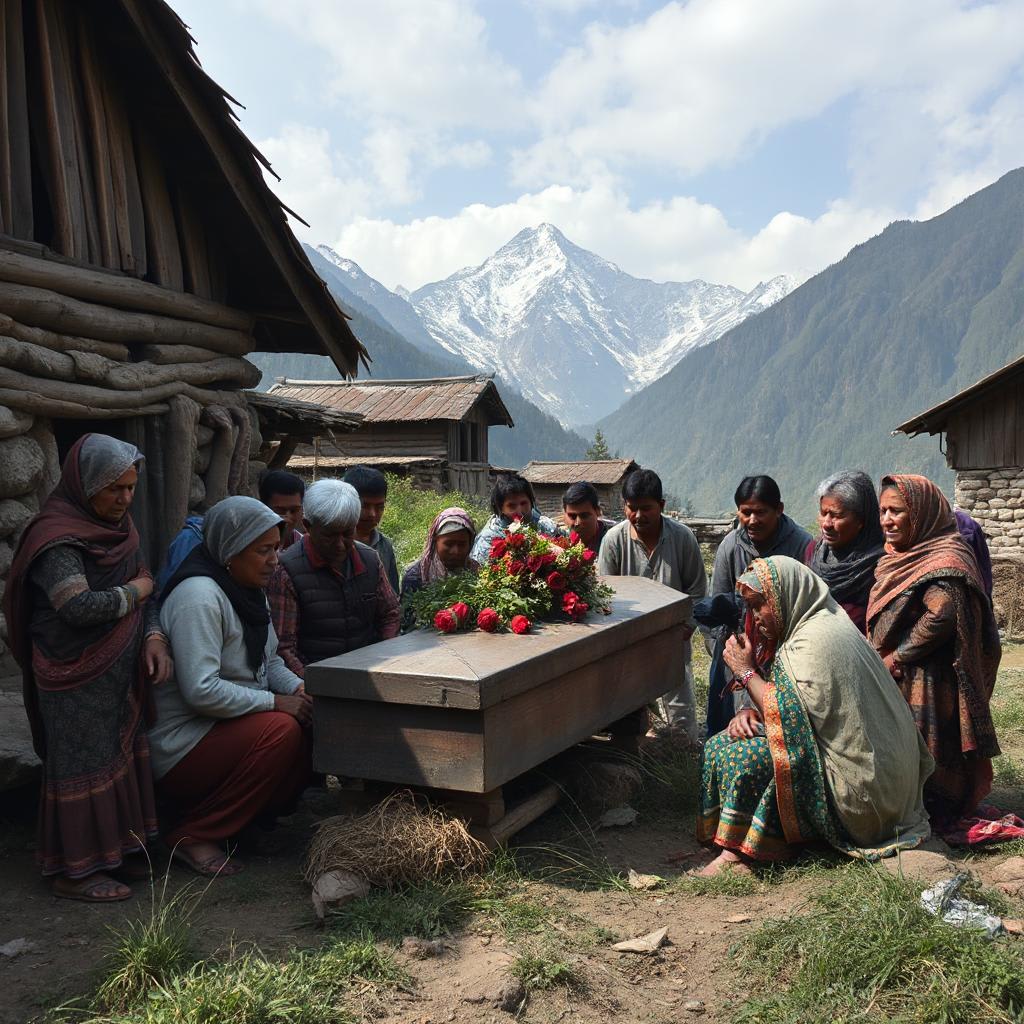
The morning sun bathed the terraced hills of the village in golden light. Fields of ripening maize stretched across the slopes, and small houses made of stone and mud dotted the landscape. The village, isolated from the bustling cities of Nepal, was quiet except for the occasional chirp of birds and the soft breeze that swept through the valley. For as long as anyone could remember, this land had been a place of toil, of simple living, and, for many, of silent despair.
Among these small homes stood the house of Ram Bahadur, a young man in his mid-twenties. He sat by the doorstep, his gaze fixed on the small patch of land that his family had relied on for generations. The land had shrunk over the years, its fertility waning with each harvest. It could no longer provide enough food for his family — his aging parents, his younger sister Meena, and his wife Sita. Every day was a reminder that no matter how hard they worked, it would never be enough.
Ram sighed heavily, wiping the sweat from his brow. His father, frail and hunched from years of backbreaking labor, joined him.
“This land… it’s all we have left,” his father muttered, his voice tinged with both pride and sorrow. “But it’s not enough anymore, son. We need more than just hope to survive.”
Ram nodded. He knew what his father was hinting at, and he had been thinking the same for months. There was no future here. The soil had turned to dust, and the opportunities in the village were as barren as the land. His friends had already left for foreign lands, chasing the dream of better wages. Some had sent money back; others had vanished, leaving behind only whispers and rumours of hardship and loss.
The decision was inevitable.
“I’ll go to the Middle East,” Ram said finally, his voice steady but heavy with the weight of responsibility. “It’s the only way.”
His father said nothing, his silence an acknowledgment of the painful truth. Ram stood up and walked toward the house, his mind already racing ahead to what needed to be done. The only way to afford the journey was by mortgaging the family’s land. It was a gamble — if he failed, they would lose everything. But if he succeeded, he could pull them out of poverty, and maybe, just maybe, they could start a new life.
Within a month, the papers were signed, and Ram had taken out a loan against the land. His mother wept silently as the moneylenders left, knowing that their future was now tied to Ram’s success in a foreign land. His wife Sita, a quiet woman with soft, knowing eyes, held his hand as they sat beneath the village’s only tree the night before his departure.
“I’ll work hard, Sita. I’ll send money every month, and soon we’ll build a new house, and bring happiness in our family.” Ram tried to sound confident, but he could see the worry etched into her face.
“I believe in you,” she whispered, though her eyes betrayed the fear that gripped her heart. “Just… come back to me.”
Ram’s journey to the Middle East was long and arduous. The city he arrived in was nothing like his village. Towering buildings cast long shadows over the crowded streets, and the scorching heat pressed down on him like a weight. He found work quickly, a construction job that paid just enough to cover his expenses and send a little money back home. But the conditions were brutal. The hours were long, and the safety measures were minimal. Workers like him were disposable — a fact made painfully clear when he saw men collapse from exhaustion, only to be replaced by others.
Every night, Ram lay on the thin mattress in the crowded dormitory, thinking of home. His mother’s smile, his father’s tired eyes, Sita’s soft touch — all seemed so far away. He wrote letters when he could, though words felt insufficient to describe the life he was now living. He told them he was fine, that the work was hard but manageable. He didn’t tell them about the dangers, the constant fear that something might go wrong.
Months passed, and Ram’s family back in the village grew accustomed to his absence. The money he sent kept them afloat, but they missed him terribly. Every evening, Sita sat by the window, staring at the path he used to walk, waiting for the day he would return.
Then one day, the letters stopped.
It had been three months since they last heard from Ram when a message came. It wasn’t from Ram, but from one of his coworkers — a fellow Nepali migrant. The words were cold, almost clinical.
Ram Bahadur was involved in an accident at the construction site. He did not survive.”
The world seemed to crumble around his family. His mother collapsed to the floor, wailing in despair. His father, always stoic, stood frozen, unable to comprehend the finality of the words. Sita, who had clung to the hope of his return, felt her heart shatter. The land, the loan, the future they had dreamed of — it all meant nothing now.
Two weeks later, a wooden coffin arrived in the village, flown in from a distant land. It was carried through the dusty roads by somber men, each step a reminder of the dreams that had died with the young man inside. The entire village gathered to pay their respects, but there was no comfort to be found in their presence.
Ram’s mother threw herself onto the coffin, her cries piercing the silent air. His father knelt beside her, his hands trembling as he touched the wood, as if he could feel his son’s presence through it. Sita stood a few feet away, her face pale, her eyes red from days of weeping. She felt hollow, as if her soul had left her body, following Ram to wherever he had gone.
The land that Ram had mortgaged was gone now, taken by the creditors who had little sympathy for the family’s loss. The future they had envisioned was buried alongside him, leaving only the cruel reality of survival. His family, once hopeful, now stood on the edge of despair.
In the days that followed, the village slowly returned to its usual rhythm. Life, as it always does, moved on. But for Ram’s family, time had stopped. Their home, once filled with the quiet laughter and dreams of a young man, was now a place of shadows and silence.
And in the hills of rural Nepal, where so many young men had left for distant lands, another family mourned, another dream was shattered, and another coffin came home.
About the Creator
Roshan Chauhan
Writer chasing meaning through story. I share fiction, personal musings, and ideas that linger. If it makes you feel or think, I’ve done my job.
Keep reading
More stories from Roshan Chauhan and writers in Fiction and other communities.
Bomb Scare
It was 2027, and the world never thought it would happen. A missle hit the United States, but it wasn't where they had anticipated. A little town in the northeast was hit by a missile strike, they didn't know why, and they didn't know exactly where it hit, but they did know it was a coastal community, somewhere between Maine and Delaware.
By Gregory Payton8 days ago in Fiction
Peace
Something's happening 'round here. Some folks just seem to be gettin' happy ever since Captain Groovy decided to run for public office. He decided to run as an independent on the Peace ticket and name the party the Groovy Party. The Groovy Party was the laughingstock of the political arena, their views on hate and violence were seen as ridiculous. No one took the party seriously, that is, until Captain Groovy became the party leader.
By John Scipioa day ago in Fiction
Hottest in the Office
Dear Rafi, You’re very distracting to work around. For the first second I saw you the other day, I thought you were some type of executive. It took a moment to realize no, you were just the new guy, dressed up for the job he wants. Be still, my heart.
By Gabriel Shames3 days ago in Pride



Comments
There are no comments for this story
Be the first to respond and start the conversation.