
The Pillar of Sand and Salt
In a world built on shifting sands and bitter seas, “The Pillar of Sand and Salt” reminds us that faith, loss, and memory are never as solid as we think.

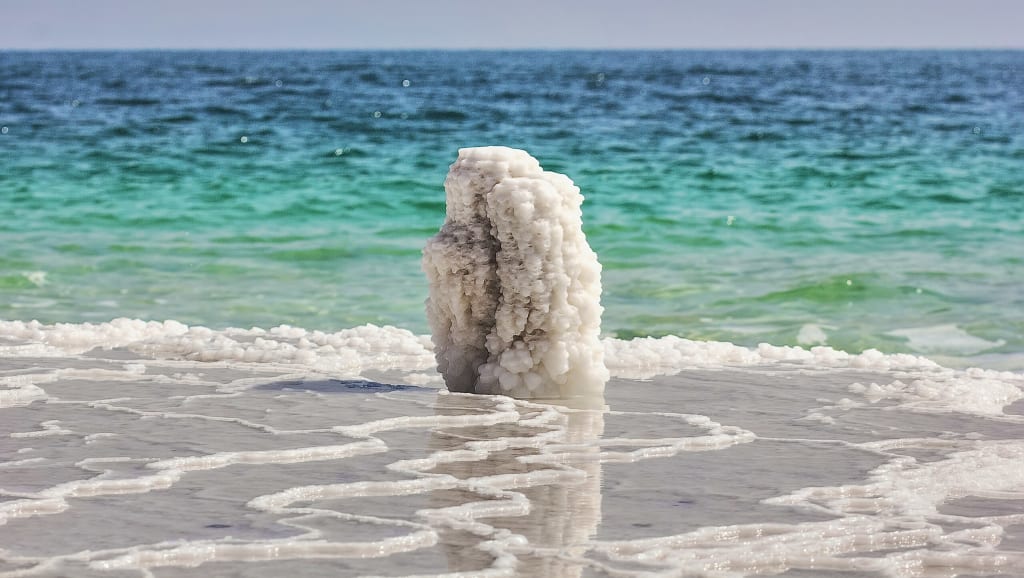
There are phrases in literature that stay with you, echoing long after you’ve closed the book or scrolled past the page. “The Pillar of Sand and Salt” is one of those — a phrase that carries weight, sorrow, and mystery. It’s not just an image; it’s an allegory. A reflection of how fragile strength can be, how endurance often hides beneath layers of vulnerability.
This symbolic expression draws inspiration from ancient tales, modern spirituality, and the human experience itself. Whether read as a biblical echo, a poetic construct, or a philosophical meditation, “The Pillar of Sand and Salt” invites readers to ask a fundamental question: What does it mean to stand tall in a world designed to wear us down?
A Story Buried in Time
The phrase “pillar of salt” immediately brings to mind one of the oldest cautionary tales — the story of Lot’s wife from the Book of Genesis. When she looked back at the destruction of Sodom, disobeying the divine warning, she was turned into a pillar of salt — frozen between past and present, regret and survival.
Salt, in this sense, becomes both punishment and preservation — a monument to the consequences of looking back. But when you add “sand” to that equation, the imagery deepens. Sand, like time, shifts constantly. It symbolizes impermanence, erosion, and change.
Together, sand and salt form a paradox: something that appears solid, yet is destined to crumble. A pillar that can’t last — yet stands long enough to remind us of what once was.
The Modern Interpretation
In modern discourse, “The Pillar of Sand and Salt” has come to represent the instability of human certainty. We build our lives — our beliefs, careers, relationships — as if they are monuments meant to stand forever. But life, like sand, is rarely still.
Perhaps the “pillar” is our ego. Perhaps it’s our memory. Perhaps it’s hope.
We stand tall, facing storms, convincing ourselves that our foundations are strong. But even the most confident among us can be undone by time, loss, or truth. The metaphor reminds us that being human is to be caught between permanence and dissolution — like salt hardening against the wind while sand slips away beneath it.
In this sense, “The Pillar of Sand and Salt” isn’t a symbol of failure, but of resilience. It’s the act of trying to stand — knowing you might fall.
From Myth to Metaphor: The Emotional Core
There’s also a deeply emotional core to this phrase. Think of grief. It makes statues of us all — immobilized by memory, preserved by pain. Yet beneath the surface, our emotions are shifting like sand.
When someone says they feel like “a pillar of sand and salt,” they may be describing that inner conflict — wanting to stay strong while slowly dissolving inside. It’s poetic, but also painfully real.
Salt represents tears. Sand, the passage of time. Together, they become the embodiment of human sorrow — fleeting but unforgettable.
---
A Reflection of Our Times
In today’s hyperconnected world, the metaphor takes on new meaning. We live in an era where identities are public, relationships are transient, and truth often feels unstable. We try to stand firm in an age that erodes certainty.
“The Pillar of Sand and Salt” could describe modern society itself — tall but temporary, beautiful but brittle. Our digital monuments (social media, reputations, even fame) can vanish in an instant, leaving only echoes behind.
And yet, the very awareness of fragility makes us more human. It forces us to seek authenticity — to find meaning not in permanence, but in presence.
---
Lessons in Fragility
What can we learn from this symbol?
That strength isn’t about being unbreakable. It’s about continuing to stand even when the ground beneath us shifts.
That looking back isn’t always weakness — sometimes it’s how we learn what to leave behind.
And that sometimes, even as we dissolve, we leave traces that matter — grains of memory, crystals of wisdom, salt of experience.
Life doesn’t ask us to be monuments. It asks us to be aware, adaptable, and awake.
---
The Final Image
So, what remains of the “pillar”?
Maybe nothing. Or maybe everything. Perhaps the pillar was never meant to last — it was meant to remind us that beauty often lies in impermanence.
As the winds of time scatter sand and salt into the horizon, what endures is not the monument itself, but the story of how it stood — fragile, shimmering, and human.
---
In the end, “The Pillar of Sand and Salt” is all of us — trying to stand tall, even as the world shifts beneath our feet.
About the Creator
Fiaz Ahmed
I am Fiaz Ahmed. I am a passionate writer. I love covering trending topics and breaking news. With a sharp eye for what’s happening around the world, and crafts timely and engaging stories that keep readers informed and updated.
Keep reading
More stories from Fiaz Ahmed and writers in Fiction and other communities.
Arise Fair Leaf: The Awakening of Nature’s Silent Poem
In the gentle hush of dawn, when the first rays of sunlight stretch across the earth, something miraculous unfolds — the rise of a single leaf. “Arise Fair Leaf” is more than a poetic phrase; it is a reminder of renewal, growth, and the quiet resilience that defines all living things. It’s about how even the smallest act of nature carries profound lessons for our own human journey.
By Fiaz Ahmed 5 months ago in Fiction
Divided By Our Skin
We climbed as far as we could go; it was impossible to reach the top. Obstacles stood out in every way; we never stood a chance together.alone, it all felt so right. Our families said it was wrong, as two people from different countries could never get along. But every step we took, side by side, made the struggle worth it. We laughed when we stumbled, sharing simple smiles that warmed my heart. Each moment together felt like a secret world, just ours, away from what others thought.
By George’s Girl 2026 5 days ago in Fiction
Hottest in the Office
Dear Rafi, You’re very distracting to work around. For the first second I saw you the other day, I thought you were some type of executive. It took a moment to realize no, you were just the new guy, dressed up for the job he wants. Be still, my heart.
By Gabriel Shames3 days ago in Pride



Comments
There are no comments for this story
Be the first to respond and start the conversation.