
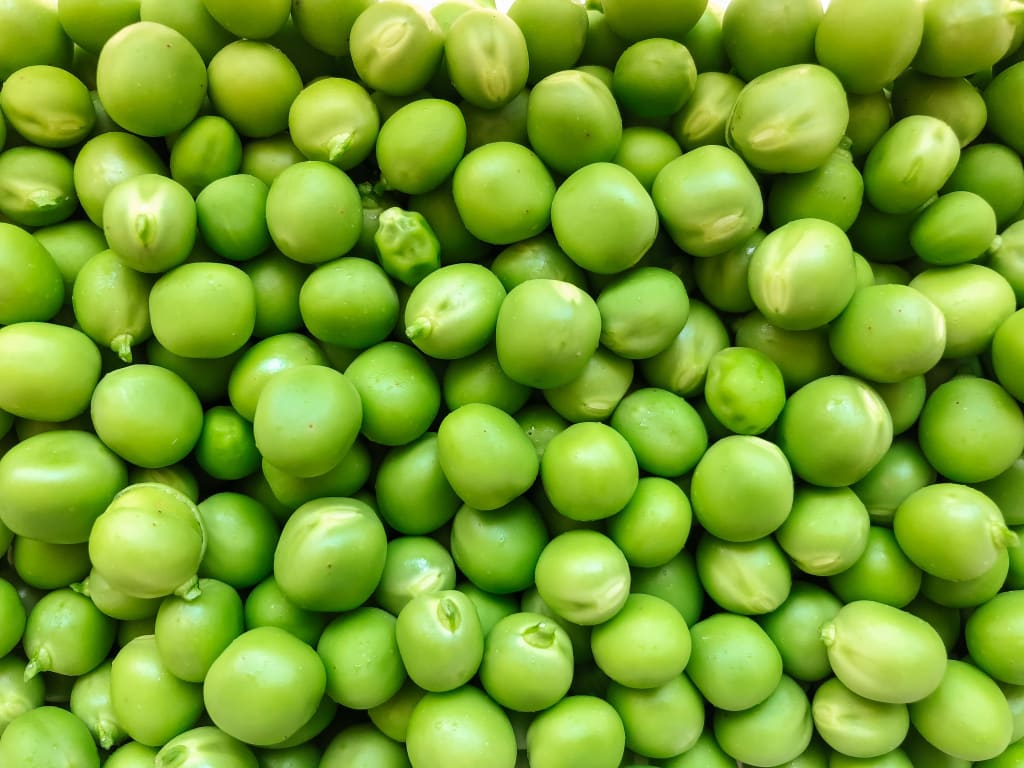
You can buy fried peas and fried peas at the stall selling smoked fried goods at the north market entrance, and at Wang Er's stall in my novel "Bizarre Bing". You can buy a small packet of them for twenty yuan, sprinkle a little salt on them, and eat them on the way to your home, and when you get there, you're done.
Not far from my home next to the Viet Tong open space, there are often a few pairs of snacks sold stretcher. Selling peanut candy. Large peeled peanuts, fried still snow-white, spread flat on the oiled white slate, icing sugar boiled, evenly poured on the peanut rice, waiting for cold, shovel up. This peanut candy crystal clear, no knife cut, large, placed in a glass box, to buy, take out a piece, now about, at a price. Icing sugar is extremely crisp, peanuts are very fragrant. Tofu brains for sale. Our tofu brain there is not like Beijing pouring mushroom dregs mutton marinade, only pour a little soy sauce, vinegar, add a drop of sesame oil - a chopstick tied to one end of a money, a dip in the oil pot, drop in the bowl, really only a drop. But add a lot of bits and pieces of ingredients: small shrimps, chopped green onion, garlic paste, squash, medicine celery minced - we do not have dry celery there, only water celery that is medicine celery, I really like the smell of medicine celery. I think this kind of bean curd brain is refreshing and better than the thickened sticky mutton marinated ones in Beijing. Sugar pea congee is sold. The fragrant japonica rice and peas are boiled together in a copper pot, and a spoonful of sugar is added after serving. Drink a bowl in the shade of the willow in summer. The taste is not bad. I have been away from my hometown for more than 50 years, but I still remember the aroma of pea porridge.
The most famous food made from peas in Beijing is "pea yellow". This thing is actually very simple, peas boiled, peeled, clarified out of the fine sand, add a small amount of sugar, spread flattened, cut into 5 inches x 3 inches rectangular pieces, and then add a knife to cut out the four quadrants of small pieces, divided but not separate, to toothpicks to take and eat. It is said that this is a "court snack", which used to be sold in small restaurants and was very cheap, but now it is only available in big restaurants like Imitation Cuisine, and is sold at a very high price.
In summer, when it's rainy, they sell boiled peas. The whole peas are boiled, add a little salt, put two garlic cloves on the floating head, and sold in a green tea bowl.
There is a fool in Hufangqiao who sells boiled peas and gives a lot of money. There is a hysterical saying around Hufangqiao: "A fool's peas - give more". There is no such hysterical saying in other areas of Beijing. When you think of boiled peas, it reminds you of the summer rain in Beijing.
In the early years, there were pea molds. The peas were boiled into mud, pressed into wooden molds carved into patterns, and knocked out to become one small gadget, a kitten, a puppy, a rabbit, a piglet. Buy all the children, also played, also ate.
The above mentioned are dry peas. New peas are eaten as a vegetable. Braised peas are a fresh dish in season. A little bit of diced ham or chicken is naturally good, and even a vegetarian stew is very tasty. It is not a good idea to cook the peas for a long time, as the soup will be gray and opaque.
The country's rise in eating Dutch peas is only the last few years. I have eaten the best Dutch beans in Xiamen, wide and tender. Xiamen's soup rice noodles have to add a few pieces of Dutch beans, can solve the fishy taste of seafood. The Dutch beans eaten in Beijing are shipped from the south. I saw Dutch peas growing in a field on the outskirts of Xiamen, hitching a small frame, with small aqua flowers and tender green leaves, sweet and lovely.
The tender heads of peas, which are called pea heads in my hometown, are pronounced as "an" in the word "pea". The name is called pea tip in Yunnan and pea upside down in Sichuan. My hometown is usually fried in oil and salt. Yunnan and Sichuan add it to the top of the noodle soup. It is called "Piao" or "Qing". Do not add peas, called "free floating"; "more green heavy red" is more peas and peppers. Eat tripe hot pot, in the shabu after a variety of meat ingredients, thick soup to promote a large plate of peas upside down, the beauty can not be said.
Peas can be used in paintings. I once saw a booklet by Qian Shunju in Shandong, painting peas, and I can't forget it. Qian Shunju's paintings are delicate but not vulgar, and the brushwork is slightly thin but dashing, which I like very much. I have seen a Japanese painting by Takenouchi Sikaze, in which the pea flowers and leaves are more vibrant than Qian Shunju's, but I don't know why a long ochre snake is painted in front of the peas, which is very realistic. Is it because Japanese people think snakes are beautiful?
About the Creator
Keep reading
More stories from Moxadple ggg and writers in Fiction and other communities.
The mattress
My name is Li Ming, I am a reporter, last month received a mysterious hotel interview assignment. This also starts six months ago. There is a Ruchun Inn in Qiqihar, Heilongjiang Province, where travelers who come to stay here have been missing one after another. The number of missing people has reached 3, but the police could not find any clues, so these cases were shelved. As a result, the business of Ruchun Inn was slow and almost closed down.
By Moxadple ggg3 years ago in Fiction
All Very Straightforward!
Thanks for watering our garden while we’re away. The last person overwatered and several plants died. Here’s the house key, the front lock is a bit tricky. Be sure to check it has actually locked. There’s not much to know… it’s all pretty straightforward. No need to take notes, we’ll show you around. I’m sure you’ll be fine.
By Angie the Archivist 📚🪶6 days ago in Fiction



Comments
There are no comments for this story
Be the first to respond and start the conversation.