
The One Who Stayed Behind
After a devastating flood, one old man refuses to evacuate his home. Through flashbacks, we learn what binds him to the past and who he’s still waiting for.


The One Who Stayed Behind
By [Asghar ali awan]
The water reached the porch steps on the first night. It came slow, like an unwelcome guest who doesn’t knock — just lingers by the door, waiting for someone to make the first move.
Edgar watched from his window as the river swallowed the low road and began creeping across the fields. The television had gone out hours ago. The power lines sagged with the weight of the rain. Somewhere downstream, the bridge had already collapsed, cutting off the last route out of town.
He should have left, everyone said. The sheriff came by twice in his pickup, wading knee-deep through the puddles to bang on Edgar’s door.
“Ed, this ain’t the place to play stubborn,” he’d said, voice barely audible over the sirens and wind. “The shelters still got room. You can ride with me.”
But Edgar just smiled that quiet, wrinkled smile and said, “This old house has seen worse. You go on, son.”
The sheriff didn’t argue after that. He just nodded, dropped off two bottles of water and a flashlight, and sloshed away.
By morning, the porch was gone. The river had become a lake — wide, gray, and heavy with driftwood and memory. Edgar sat in his rocking chair, watching the current tug at the corners of his yard. The garden fence tilted, then sank. The scarecrow — her straw hat slipping sideways — toppled like a drunk and disappeared.
He felt no panic. Just a deep, familiar ache. The kind that comes from remembering too much.
Inside, the house smelled of cedar and old photographs. The air was thick with ghosts: the sound of his wife’s laughter in the kitchen, the way her slippers used to scuff against the wood floor, the hum of her hummingbird feeder outside the window.
Her name was Margaret.
They had built the house together fifty-three years ago, on land his father left him. It wasn’t much — a few acres and a promise that “a man should die where he planted his roots.” Margaret had hated that saying at first. She wanted city lights, not mud and cornfields. But when the first sunrise spilled across the riverbank, painting the water gold, she’d leaned against him and said, “Maybe roots ain’t so bad, after all.”
The rain lightened by noon, though the sky stayed bruised and heavy. Edgar boiled coffee on the camping stove and poured it into her favorite mug — the chipped blue one with the faded daisies. He set it across from him at the table, out of habit.
He drank his in silence.
Sometimes he talked to her — not out loud, but in the small corners of his mind where her voice still lived. He told her about the neighbors, the weather, the mail that stopped coming. He told her about the government men who wanted to buy the land after she passed, offering him relocation money and a smaller place uptown. He told her how he turned them down every time.
“This house was yours,” he whispered once. “And mine. It’s the only place you still smell like lavender and rain.”
He could still see her, that last morning, sitting on the porch with her shawl wrapped tight, watching the mist rise off the river. Her breathing had grown shallow, but her eyes were sharp — always sharp.
“Promise me one thing,” she’d said.
“What’s that?”
“When I go, you don’t leave this place empty. Not right away.”
He’d nodded, thinking she meant the garden, the cats, the chores. But after she was gone, he understood. She meant her. Don’t leave her.
So he stayed.
By the second night, the water had reached the windowsills. The current slapped against the siding, dark and relentless. Edgar moved his things upstairs — a lantern, some dry clothes, the photo albums, her shawl.
He found himself standing before the bedroom mirror, the one Margaret always said made her look too old. He smiled at the reflection: a frail man with silver hair, his face lined like a road map, eyes still carrying the weight of fifty years of love.
He ran a hand through his beard and said softly, “Guess it’s just you and me now, old fella.”
Outside, a dog barked — far off, maybe stranded. Edgar leaned out the window and called, but the sound was swallowed by the wind.
He thought of the town beyond the river: the boarded shops, the church steeple poking from the flood like a stubborn nail. He’d watched his neighbors leave, one by one, loading cars with photo frames and promises to return.
But no one ever really came back.
That night, he dreamed of the flood from years ago — the one in ’79. He and Margaret had spent hours hauling sandbags, laughing every time one burst open. They’d saved the garden that year. When the sun came out, she’d danced barefoot in the mud, her dress splattered, her hair dripping.
In the dream, she looked the same — alive, radiant, unbothered by the storm. She held out her hand and said, “You stayed again, didn’t you?”
He wanted to answer, but the water rose higher, and her voice faded beneath the roar.
At dawn, the rain stopped. The world was silent except for the sound of shifting water and creaking wood. The house had tilted slightly, but it held. It always held.
Edgar sat by the window, shawl draped over his shoulders, watching sunlight shimmer on the flood. It looked almost beautiful — like glass spread across the earth.
He felt her presence then — not in a ghostly way, but as a warmth that filled the room, quiet and certain.
“I’m still here, Maggie,” he said, closing his eyes. “Just like I promised.”
The water lapped against the porch, then the steps, then the door.
Edgar didn’t move.
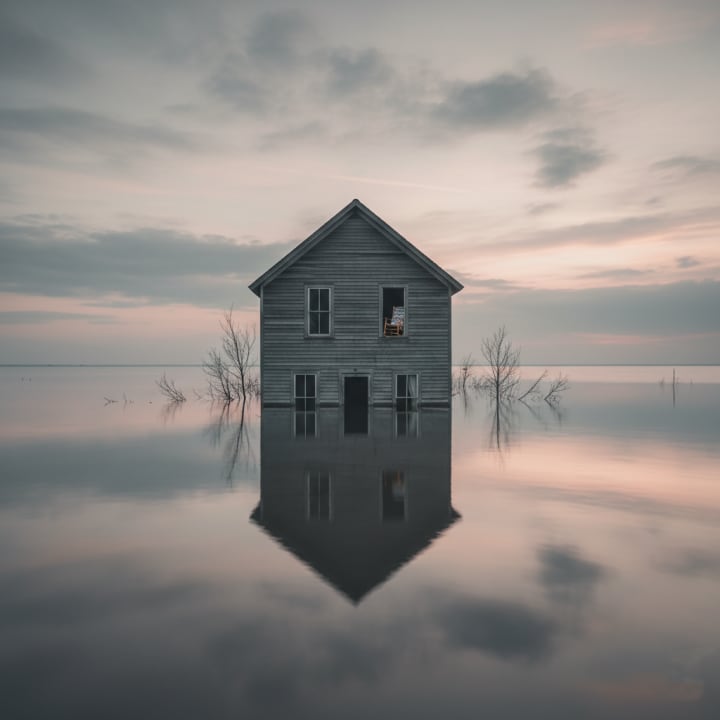
Three days later, when the rescue boat finally came, the volunteers found the house half-submerged but standing. Inside, by the upstairs window, sat an old man in a rocking chair.
A blue mug rested beside him, empty.
And in his lap, folded neatly, was a lavender shawl.
About the Creator
Asghar ali awan
I'm Asghar ali awan
"Senior storyteller passionate about crafting timeless tales with powerful morals. Every story I create carries a deep lesson, inspiring readers to reflect and grow ,I strive to leave a lasting impact through words".
Keep reading
More stories from Asghar ali awan and writers in Fiction and other communities.
The Last Letter Home
The sound of the postman’s boots on the gravel was enough to send Clara’s heart racing every morning. It had been three months since James left for the front, and every letter that arrived carried the warmth of his presence, even across oceans and battlefields. She lived for the scratch of his handwriting, the way he always signed off with “All my love, always — James.”
By Asghar ali awan5 months ago in Fiction
Flower Bloom 369
FLOWER Bloom 2/25/26 Wednesday By Mariann Carroll Karen had been with Tony for 7 years. Tony started acting strangely after her surgery. He would mow the lawn in the rain and be on his cellphone. He started pushing Karen away. Tony came clean about seeing someone. Karen moved out two months later. Karen moved in with a friend. She felt betrayed.
By Mariann Carroll3 days ago in Fiction
A Knight of the Seven Kingdoms Series Review (Season 1)
As one of the biggest properties in fantasy, A Song of Ice and Fire remains immensely popular with audiences. After reaching far into the past with House of the Dragon, a second spin-off was on the cards. A Knight of the Seven Kingdoms serves up a bite-sized slice of action and drama, but it still claims a spot among the best small-screen titles.
By Robert Cain2 days ago in Geeks


Comments
There are no comments for this story
Be the first to respond and start the conversation.