
He always was an odd fellow. Nobody knew his name. Everyone called him the old man. The few times a year he came to town, it was to sell his crops, with which he spent every penny that didn’t go towards rent on liquor. He walked with a limp, with a back hunched over, and a quizzical look in his eye. Mothers would hold their kids closer to their bosom as they passed by the oddity of a man. He used to notice, but had become numb to the looks of fear and damnation of everyone who saw him that it had become completely normal to him. There was only one family in the community who would somewhat tolerate him, the Granburys.
They owned an old plantation about five miles out of town. It had since been split into smaller plots of land after the depression hit. Most of the farmers living in Texas and Oklahoma moved west, searching for work in California, but a few had gone east. Some came upon this small town, and a select few had enough money to buy some land. The Granburys jumped on every opportunity they could. They were a struggling family with too much land and not enough hands. They had three little children. Don and Barbara went through some tough times with their kids. She was pregnant a total of six times, two miscarriages, and one who was born with heart problems. She lived for about two years before her heart gave out. It just stopped beating. The townsfolk thought there was a curse on that family. They also said there was a curse on that land. There was one plot of land in particular that was cursed.
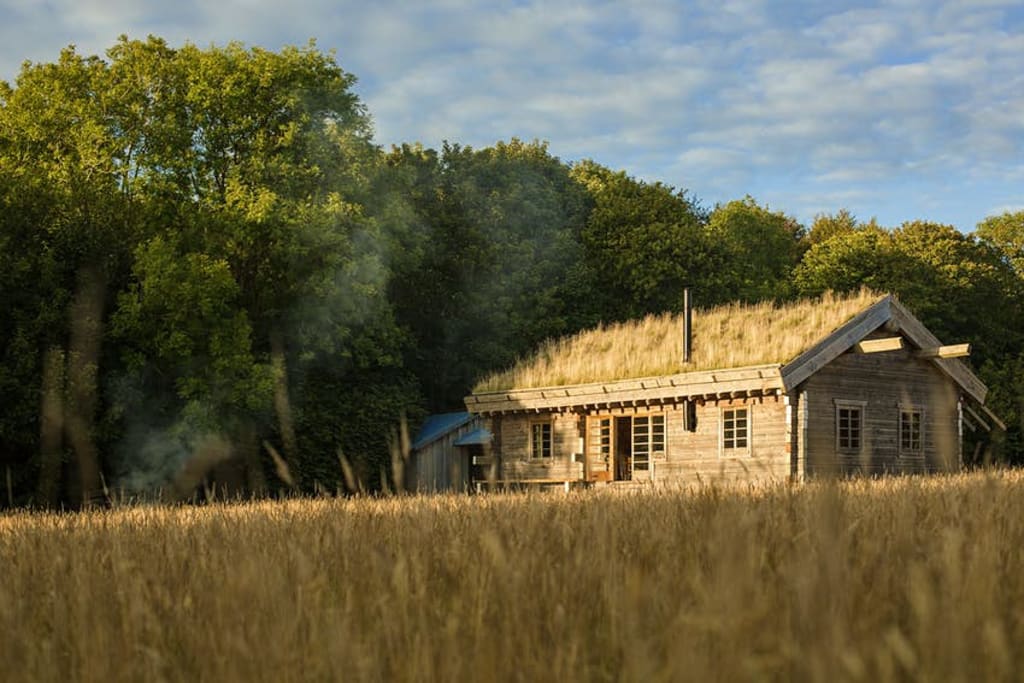
Forty acres, west of the main house, sat an old cabin on the edge of the woods. There was a creek that ran about fifty feet to the north of the cabin. Someone, long ago, had dug a small pond in the creek, if you can call it that. It’s just big enough for a few people to sit in there and bathe. The story was that about 100 years back, a young, poor family lived on that piece of land and couldn’t grow anything, the soil was dry and stripped of its nutrients. The husband was in some serious debt after gambling everything away. One night, he just disappeared. Some say he ran away, others say he was taken out, but either way, he was gone. He left his wife to tend the land. She tried everything to make her crops grow, but she had no luck. Then one day, she made a deal with the devil. She was to take her baby and drown her in the creek, let her float to the river, and once she did that, her land would be the most fertile east of the Mississippi. Nobody knows if she actually drowned her daughter, but the land was indeed fertile, growing the ripest apples, juiciest tomatoes, and fields upon fields of corn and wheat. All this came with a price. A year later, on the exact same day, October 27th, she doomed herself to the same fate as her little girl. She drowned herself in the pond, finishing what she started, bringing things full circle.
This is all speculation, of course, but there are few people who venture there nowadays. The Granburys, which they only visit when absolutely necessary, the young boys and girls of the town, who, against their parents direct orders, look for adventure wherever they can find it, telling a forever growing tale of the poor, young family, and the old man, who lives on and cultivates that land.
The old man has lived there for about twenty years now. Although he’s only just passed fifty, the years of hard labor have taken a toll on his body. This plot of land is the only place for him, since he has basically been shunned from the community, and the Granburys can’t find anyone else who wants the property. Joseph and Lou Anne, the two oldest Granbury kids, stay as far away from him as possible, claiming the old man is scary, that they don’t understand why he even lives there, since the land has the mark of the devil. But Charlie, the youngest, age seven, has grown a curiosity towards him. He spent all of last summer watching, studying the old mans’ movements, mannerisms, the way he talked to himself and whistled a fine tune. Charlie spent that school year trying to whistle, which, at first, sounded like a teapot just before it boils, just before it sings. But eventually, he was able to make a sound, and then, a quite pleasant tune. This summer, he promised himself, he would go up to him and start talking. When the final bell rang of his second grade class, he ran home, excited to have a summer of fun and adventure. He told his parents he was going outside to play. “Be back by suppertime, Charlie.” Barbara shouted from the living room. “Yes, mama.”
He found the old man out tending his crops just south of the creek. Hiding in some bushes, he argued with himself. I’ve gotta talk to him! But what if he really is what people say he is? Let people talk, it’s just words, anyhow. He took a deep breath and was about to step out of the bush, but he second-guessed himself. What do I even say to him?
“Those are some ripe tomatoes, mister.” He didn’t respond. “My name’s Charlie. I just graduated from the second grade.” There was a long silence. “Is it true what people say about you? That you’s hiding from the law? Well, some folk is sayin’ that anyhow. Others say you’s just a drunk. Are you a drunk, mister?” Charlie realised at that moment how inconsiderate that was. “Sorry, mister. I didn’t mean anything by that.”
“Storm should be rollin’ in this afternoon. Better get home before you get all soaked,” he said in a deep, gravely tone. His voice had a sound like no other. You could hear that, through the sound of liquor and tobacco, there was pain in his voice.
“Are you gonna be here tomorrow?” Charlie asked, hopeful.
“I was here yesterday, weren’t I?”
“Yeah, I guess so. I’ll see you tomorrow, then.” He ran off back to the main house with a million thoughts running through his mind. I can’t believe I did it! I actually talked to him! I hope he didn’t take offence to what I said. He decided it would be better if his parents didn’t know where he was, or who he talked to, at least for the time being.
The next morning, he practically jumped out of bed, ran downstairs, and was almost out the door, in his pajamas, mind you, before his father stopped him dead in his tracks.
“Where do you think you’re going, mister?”
“Well, I was gonna go play, pa.”
“Have you done your chores yet?”
“No sir. I’ll go do ‘em now.” He said in a somber tone.
“Well, don’t forget to grab the eggs from the hens, and put some clothes on. I don’t want you getting those pajamas all dirty, now.” Don said somewhat harshly, but with love nonetheless.
“Yes sir.” As he passed by the phonograph next to the staircase, he stopped for a minute. Glenn Miller’s 1939 RCA Victor studio recording of Moonlight Serenade was playing on the phonograph. Barbara had bought the phonograph as a gift a couple years ago, though the family was still struggling at the time. They were doing better now, they had a little cash stored away. They made a bit off of last year's crops, not much, but enough. Don had to find a job in town. He was working at the bank as a teller, a humble position, but it paid the bills. The supplemental income of their sharecropping had allowed them to save enough to give them some sense of financial freedom.
As he reached into the hen’s nest, Charlie was suddenly bombarded by beaks. He managed to grab the eggs, but squeezed one of them too hardly and it cracked, covering his pajama bottoms with yolk. He tried wiping it off the best he could in the dirt, but that only made it worse. “Stupid chicken, stupid eggs, stupid chores. This is my summer. I shouldn’t have to do chores. I’m so sick and tired of Pa always telling me what to do.” Charlie mumbled a few more things as he went along with his duties. He cursed at the chickens as corn kernels were thrown out. He kicked a rock as he walked back to the house when he heard the screen door shut. His eyes darted toward the noise where he saw his mother coming out. She did not look very happy. He assumed she saw him and knew what was to come.
“Come in the house right now, mister!” Charlie’s mom yelled from across the yard. “What did your father say about wearing your pajamas outside?” As she came closer, she noticed just how dirty he was. She grabbed him by the ear and pulled him into the bathroom. She told him about the week’s grounding that would ensue, how there would be no playing or going off on any adventures, and how he would have to help his father in the fields on his days off. “You stay right here, young man. I have to check on the stove. While I’m gone, you need to wash yourself, change into some grubby clothes, and wash your pajamas. You need to learn that there are consequences to your actions.” She closed the door behind Charlie and he listened intently as her footsteps got quieter as she walked down the hallway.
Once he heard his mother turn the corner, he slid open the bathroom window and climbed through, landing on the wrap-around porch. He made as little noise as possible while walking down the porch, but once he hit solid ground, he darted toward the tree line. As soon as he was far enough away, he felt comfortable enough to walk around freely. He made the trek toward the west, finding the old familiar trail leading to the creek, which led to the old cabin. Charlie bent down beside the creek and tried washing off some of the dirt. He didn’t mind being dirty, but hated his mother telling him what to do. He decided to clean himself off. The thought came across his mind that he was doing what mama had said, but he told himself that it was different, that he wanted to clean off himself. He wanted to make that distinction clear in his mind that he in fact wasn’t doing what his mother told him.
He walked down the old trail that ran alongside the creek and put his arms out as if he were a pilot. He imagined himself flying over the very ground he walked upon. He imagined seeing sights yet unknown to man, traveling the world, meeting new people, hearing what life was like in other places. He heard rumours of conflict spreading in Europe. People were saying there may be a war over there. He thought it impossible since his father talked so much about the Great War. He, and many other people, said it was the war to end all wars. Charlie was curious about the world and how there were so many discrepancies in what people said and what was actually happening. He thought about hypocrisy, though he didn’t know the word nor all that entailed. He just knew that some people said things, then did the exact opposite. He questioned if others lied, why shouldn’t he? Simultaneously, he searched for truth. He knew his parents told the truth. He knew that if his parents said they were going to do something, they would. He also thought about how there is both good and bad in people. He wondered why that was. He questioned why bad things happened to people. His little sister died of a bad heart a few years ago, leaving Charlie to be the youngest again. He didn’t quite understand why that happened.
He thought of the neighbors' dog, Cowboy. When he walked to and from school, he always passed that dog. It towered over him and had big, gnarly teeth and a bony structure. His ribs almost popped out of his skin. And yet, when he looked into those big, ferocious eyes, he saw something deeper, he saw good. One day, he snuck an old antler he found in the woods and gave it to Cowboy. Though he barked the whole time, he took the antler from off the ground and gnawed on it all day. That afternoon, he gave Cowboy some of his lunch meat that he had saved. Charlie heard his neighbor yelling inside the house, then out at him. “Boy, you better not be feeding that damn dog, or I’ll have a strong word with your father! I know where you live, son! Come here Cowboy!” He whistled and the dog slowly crept toward him. Charlie noticed how scared of his owner that dog was. He thought about how the dog was a good dog, he just had a mean owner. That made Cowboy mean at times.
Charlie had done so much thinking that he didn’t realise how close to the cabin he was until he walked out of the tree line. He spotted the old timber frame shack that was nearly falling apart just over a grassy mound. He climbed up his favourite tree and looked out over the landscape. He spotted the old man just on the other side of the cabin, kneeling down, tending to his strawberry patch. He planted his feet on the ground and rushed toward him, excited to see where the conversation would lead today.
This time, he was not afraid to be seen. He walked straight up to the old man and asked him what he was doing. “Been dealing with rabbits in the strawberry patch. I’m tryna find a way to fix that.”
Charlie spent the day watching, learning, and talking to the old man. He followed the man around as he worked on building a fence around the patch. The old man listened to stories of Charlie and his school days and his friends and how they always seemed to be getting into trouble. Charlie listened to the way he explained what he was doing, he heard the hints of a painful, crooked past. He often wondered what he went through. Charlie was an observant kid, almost nothing past over his head. He did a lot of thinking. He always had.
“Why are you here, kid?” The old man asked after a moment of silence.
“Why not? I don’t see no harm in it.” Charlie replied.
“Ain’t nobody talked to me like this before. Most people just give me a weird look and move on. What are you doing here? Ain’t ya scared? Haven’t you heard them rumours about me? About this land?”
“Well, I live on this land too, and folks done said things to me that aren’t very nice. Says I’m going to hell ‘cause I live here. I don’t understand how folks can be so surface and so single-minded that they forget we’s people too.” Charlie said passionately.
“That makes two of us, son.” The old man said in a raspy tone. “Ya ain’t bad, kid. Look, suns going down. Your parents probably wondering where you are. Might want to get back in time for dinner.”
“I can’t do that. They says I’m grounded. I figured I’d wait until they was done with my groundin’. I got a good camping spot.” Charlie said, hopeful that would be the end of it.
“Why’s you grounded, boy? What’d you do? I don’t want you upsetting your parents. I don’t want them blamin’ me for somethin’ I was unaware of. Better go home now and tell them what happened. I need this place. I don’t have nowhere else to go.” The old man realised the consequences of having the boy spend time with him that day. He realised that the ignorance of the child would result in him getting kicked out. He became furious with the boy. He yelled at him and told him to run home. He said he’d had enough BS for a lifetime. It didn’t seem to click for the boy that he had caused such pain. He ran home crying. How could that old man be so rude to me? I was nothing but nice to him! I was the only person he talked to in years. I see now why no one likes him! He only cares for himself.
He came out of the woods and started walking toward the house. His mother ran out frantic. “I searched for you everywhere! Where were you? What were you thinking?” As Charlie unraveled the story he knew he had to tell, Barbara became more and more enflamed. His father was out with him by that time as well. Both their faces grew redder.
“It’s about time that old man had stopped causing us trouble. We’ve been condemned and shunned because of him. Do you know how hard it was to find a job because of this forsaken land?” Don went into the house and came back out a moment later with a shotgun. As he started walking towards the cabin, Charlie tried running after him. “Get inside boy. I’ll deal with you later.” He was drug inside by his mother, screaming and fighting the whole way.
It was the first day of school. Charlie walked past the neighbors' dog and barely made eye contact with him. He met up with his old school friends by the old oak tree a mile off from school. As they told him of all the adventures of the summer, Charlie listened passively. Suddenly, his friend, Johnny, turned to him and asked him about the old man. “I heard he walked out of town pulling his donkey and an old wagon. What happened, Charlie? Tom said your father forced him out holding him at gunpoint. What happened, Charlie? Please tell us!”
“Wish I could, boys. But the fact of the matter is, I don’t know what happened.” He walked the rest of the way to school ashamedly. He knew he would always feel guilt for what that had transpired that summer. It made him question a lot of things, and yet, no answers.
About the Creator
Keep reading
More stories from KJ Porterfield and writers in Fiction and other communities.
Field of the Fallen
Sunlight danced softly across the frost-crusted fields, making the little blades of grass sparkle like emeralds. The faraway chirrup of a songbird was the only disruption to the quiet of the morning. An icy chill, the last vestige of the dying winter, clung to the air, settling in a thick white mist at the far side of the open field. The heavy stench of decay hung in that mist, punctuation by the sharp tang of freshly spilled blood.
By A. J. Schoenfeld8 days ago in Fiction
Wake Up
Today is December 4th, the year 2006 I am parked on the covered bridge. It’s nighttime, the bridge lights are out. My car lights fail to come on. In the blackness, I can barely see. Only a few feet ahead and behind. Billie Holiday’s voice crackles through the radio.
By Bride of Sound6 days ago in Fiction


Comments
There are no comments for this story
Be the first to respond and start the conversation.