
The Night the Sky Burned
A gripping story of rising tensions, devastating strikes, and a region caught in the storm of war.

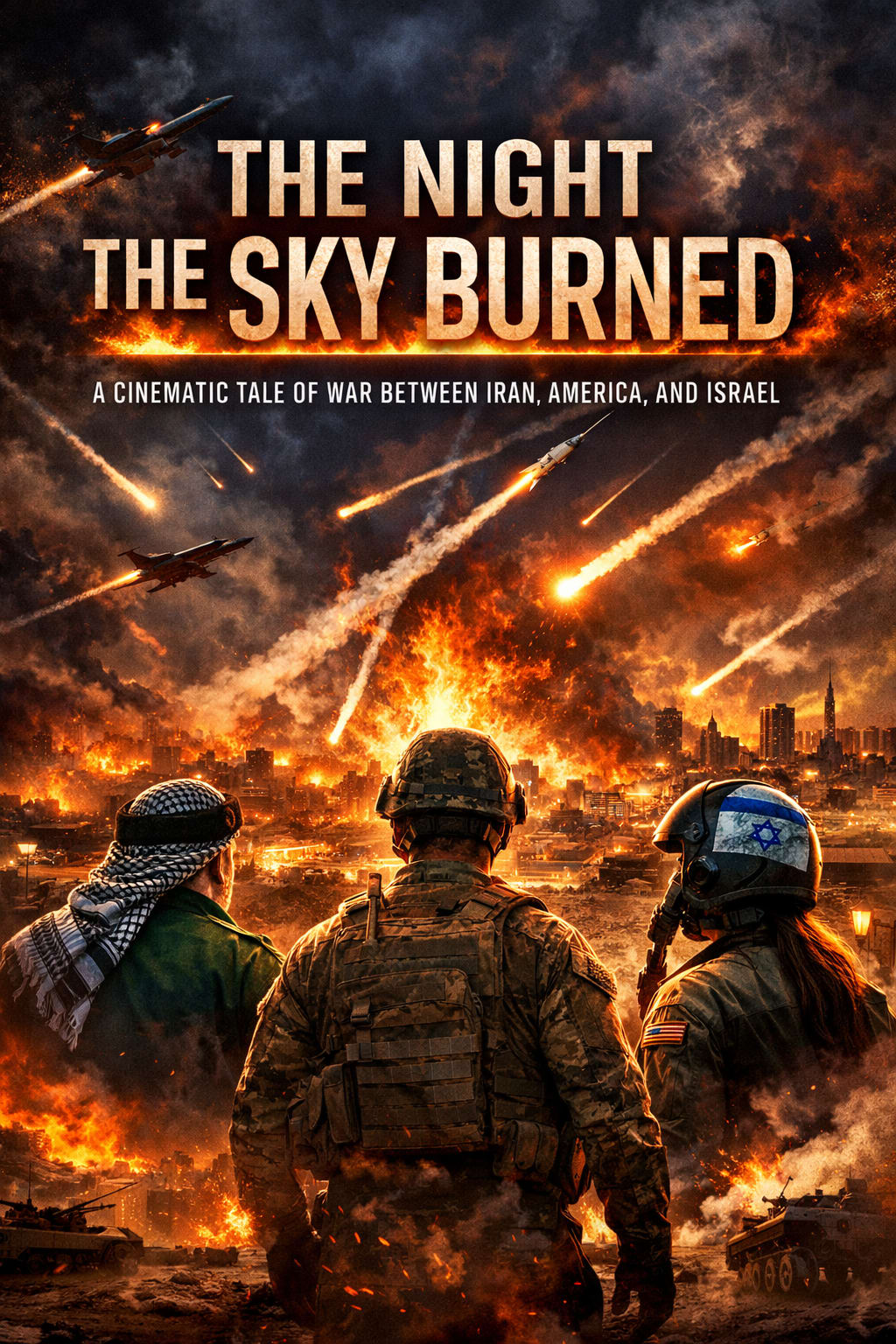
The desert wind howled across the Middle East as the sun dipped below the horizon. In the distance, the lights of cities flickered like fragile stars—Tehran, Tel Aviv, and distant American bases scattered across the region. The world held its breath.
For years, tensions had been rising between Iran, Israel, and the United States. Disputes over nuclear programs, sanctions, and regional influence had pushed the nations closer to the edge of war. Diplomacy had failed. Words had run out.
Now the sky was about to speak.
The First Strike
02:17 AM.
Inside a dim command room in Washington, screens glowed with satellite feeds. Generals watched in silence as the operation countdown reached zero.
Across the world, stealth aircraft sliced through the darkness toward Iranian airspace. Missiles launched from warships in the Persian Gulf streaked across the night like burning comets.
Within minutes, explosions rocked military facilities near Tehran.
The ground shook. Sirens screamed.
This coordinated strike—carried out by the United States and Israel—targeted missile bases, radar stations, and nuclear infrastructure across Iran. The opening attack was massive, involving hundreds of precision strikes.
In Tehran, Colonel Reza Farhadi stood on the rooftop of a command building, watching the horizon erupt in flames.
“This is it,” he whispered.
“The war has begun.”
The Fire Returns
Iran’s response came before dawn.
Hidden missile silos opened across the mountains. Trucks rolled from underground tunnels. Drone swarms lifted silently into the sky.
Minutes later, warning sirens wailed across Israel.
In Tel Aviv, families ran toward underground shelters as the night sky filled with streaks of fire. Iranian ballistic missiles descended toward cities, military bases, and airfields.
Israel’s defense systems roared to life.
Explosions lit the clouds as interceptor missiles smashed into incoming rockets. Some threats were destroyed mid-air. Others slipped through.
A missile slammed into a residential block, sending shockwaves through the sleeping city.
Across the Middle East, the war had arrived.
The Expanding Battlefield
Within days, the conflict spread across the region.
American fighter jets roared from aircraft carriers and Gulf bases, striking Iranian missile sites and military factories. Thousands of targets were hit in the first waves of bombing.
Meanwhile, Iran launched drones and missiles not only at Israel but also toward American installations across the Gulf.
Oil facilities burned.
Shipping lanes fell silent as tankers avoided the Strait of Hormuz, one of the world’s most critical oil routes.
Global markets trembled. Fuel prices surged. Governments urged calm.
But calm was gone.
The Middle East had become a battlefield of fire and steel.
Soldiers in the Storm
On a U.S. aircraft carrier in the Persian Gulf, Lieutenant Marcus Hale stared at the glowing horizon.
Each night, jets launched from the deck with thunderous roars.
Each night, fewer returned.
Thousands of kilometers away, Israeli pilot Captain Yael Ben-David climbed into her fighter jet before dawn.
She knew the risks.
Every mission meant flying into heavily defended skies.
Meanwhile in Tehran, Colonel Farhadi coordinated missile launches from underground bunkers.
Three soldiers.
Three nations.
All trapped in the same storm.
The World Watches
Cities across the Middle East braced for the next strike.
Hospitals overflowed.
Refugees fled burning neighborhoods.
Diplomats raced between capitals trying to stop the escalation.
But the war had taken on a life of its own.
Every attack demanded retaliation.
Every loss demanded revenge.
The Burning Sky
On the tenth night of the war, the sky above the region looked like a storm of fire.
Missiles streaked across continents.
Drones buzzed like metal insects.
Air defenses exploded in brilliant flashes.
From space, satellites captured the glowing scars of war spreading across deserts and coastlines.
Humanity had entered a dangerous moment—one where a single mistake could change the world forever.
And somewhere beneath the burning sky, millions of ordinary people waited for the same thing:
Morning.
Because in war, the greatest hope is not victory.
It is simply survival.
About the Creator
Abubakar220
I am best Stories writer
Keep reading
More stories from Abubakar220 and writers in Fiction and other communities.
What’s Really Happening on Venus?
For decades, the planet Venus was considered one of the most hostile places in the solar system. Covered in thick clouds of sulfuric acid, with surface temperatures hot enough to melt lead and atmospheric pressure crushing enough to destroy most spacecraft, Venus seemed like a dead and unchanging world.
By Abubakar2203 days ago in Confessions
The Apple Gardener
Sally was ready to begin her compulsive schedule of doing an hour of work in the garden. Gardening is good for mental health. Gardening was her time to empty her mind. This was her time of meditation. She decided to do a 21-day challenge and journal her no-thoughts during mindful moving meditation. She noted the irony of this intention.
By Katherine D. Graham7 days ago in Fiction


Comments
There are no comments for this story
Be the first to respond and start the conversation.