
The Night Sky: A Celestial Symphony of Wonders
A Journey Through the Enchanting Beauty and Scientific Marvels of the Cosmos


The Night Sky: A Celestial Symphony of Wonders
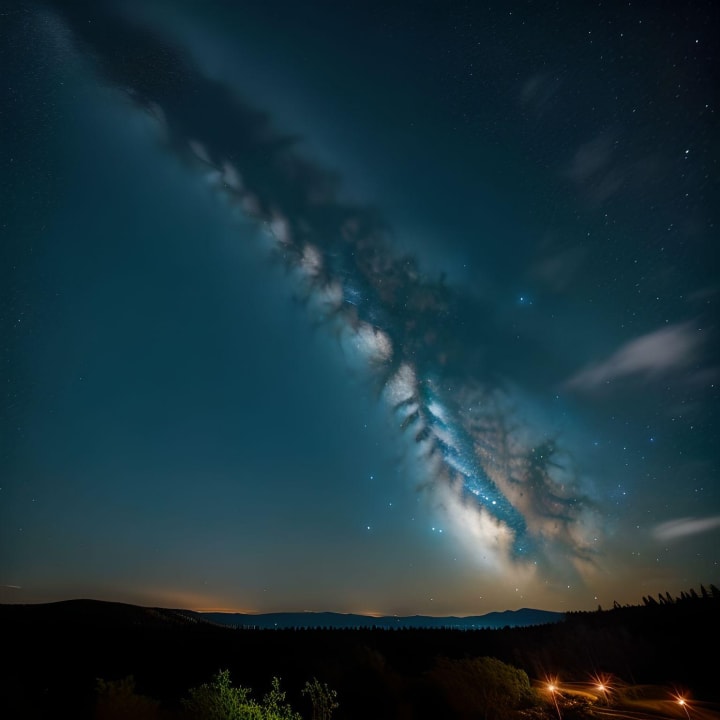
The night sky has been a source of fascination and wonder for humanity since time immemorial. With its vast expanse of stars, planets, and celestial phenomena, the night sky serves as a canvas that sparks the imagination and stirs the soul. Whether you're gazing upon the heavens in the solitude of a remote wilderness or from the bustling confines of a city, the night sky never fails to leave us awe-inspired, connecting us to the mysteries of the universe. Let us embark on a journey through the mesmerizing beauty and scientific marvels that lie above.
The Beauty of the Cosmos: Stars and Constellations
One of the most captivating elements of the night sky is the plethora of stars that adorn it. These distant suns, each shining with its unique brilliance, form patterns known as constellations. Various cultures throughout history have ascribed myths and legends to these constellations, weaving stories that explain their existence and placement in the heavens.
The constellations serve as a celestial map, helping ancient navigators find their way across vast oceans and guiding travelers across deserts and mountains. Today, they still serve as points of reference for astronomers and amateur stargazers alike, fostering a sense of connection to the past and the marvels of the cosmos.
Majestic Celestial Bodies: Planets and the Moon
Beyond the stars, the night sky is also graced by the presence of planets. These bright wanderers, visible to the naked eye, have fascinated astronomers for millennia. From the ethereal beauty of Venus to the mystifying rings of Saturn, each planet holds its allure and reveals unique secrets about the formation and evolution of our solar system.
Perhaps the most enchanting object in the night sky is the Moon. Its waxing and waning phases, brought about by the dance between Earth, the Moon, and the Sun, have inspired poetry, art, and human imagination for generations. The lunar surface, once thought to be a smooth, pristine sphere, is now known to be scarred with craters, evidence of cosmic collisions that shaped our celestial companion.
Cosmic Spectacles: Meteor Showers and Eclipses
Throughout the year, the night sky treats us to spectacular celestial events that bring a touch of magic to our lives. Among the most captivating are meteor showers, as they shower the sky with streaks of light, produced when tiny particles from comets burn up in our atmosphere. These fleeting moments create a sense of unity, as people from all corners of the globe marvel at the same cosmic spectacle.
Eclipses, too, are cosmic phenomena that capture the human imagination. A solar eclipse, when the Moon passes between the Earth and the Sun, darkening the day, is a breathtaking sight to behold. On the other hand, a lunar eclipse occurs when the Earth comes between the Sun and the Moon, casting a reddish hue upon its surface, and reminding us of our place in the grand celestial dance.
The Power of Observation: Astronomy and Science
Beyond its beauty and enchantment, the night sky has served as a profound source of knowledge and understanding about the cosmos. Astronomy, the scientific study of celestial objects and phenomena, has allowed humanity to unravel the secrets of the universe.
From early observations by astronomers like Galileo Galilei, who pointed his telescope at the heavens and discovered the moons of Jupiter, to the modern space-based telescopes that peer deeper into the cosmos, humanity's understanding of the universe has expanded exponentially. Through the discoveries of astronomers and astrophysicists, we have learned about the Big Bang, the formation of stars and galaxies, and the existence of black holes – mysterious and enigmatic regions where gravity is so strong that nothing, not even light, can escape.
The Threat of Light Pollution
Despite the allure of the night sky, one of the most significant challenges we face in modern times is light pollution. The over-illumination of cities and urban areas obscures the natural darkness of the night sky, making it increasingly difficult for people to enjoy the wonders of the cosmos. This not only affects our ability to appreciate the beauty of the stars but also has implications for the environment, wildlife, and human health.
Recognizing the importance of preserving the night sky, various initiatives have emerged to promote dark sky parks and communities. By limiting light pollution, we can safeguard the ability of future generations to experience the profound awe and inspiration the night sky offers.
The Night Sky as a Source of Inspiration
Throughout history, the night sky has inspired not only scientists but also artists, poets, and philosophers. Its majesty has been captured in countless paintings, poems, and musical compositions, all attempting to convey the overwhelming emotions evoked by the cosmos.
Stargazing has a unique way of putting life's troubles into perspective, reminding us of our place in the vastness of the universe. It can foster a sense of unity and humility, as we contemplate the shared experience of humanity beneath the same celestial dome.
Conclusion
The night sky is a living testament to the wonder and beauty of the cosmos. Its myriad stars, constellations, and celestial events offer us a glimpse into the mysteries of the universe. From ancient civilizations to modern astronomers, the night sky has inspired humanity to seek knowledge, wonder, and a deeper connection with the cosmos. As we continue to look to the stars, may we also remember the importance of preserving the night sky for generations to come, ensuring that this celestial symphony of wonders remains accessible to all who seek its magic.
About the Creator
Syed Awais Shah
A skilled article writer with a passion for exploring diverse topics. My writing includes technology, science, health, education, and lifestyle. I aim to provide informative and engaging content that adds value to the lives of my readers.
Keep reading
More stories from Syed Awais Shah and writers in Fiction and other communities.
The Art and Science of Coding: Unleashing the Power of Technology
The Art and Science of Coding: Unleashing the Power of Technology In today's digital age, coding has become a fundamental skill that empowers individuals and drives innovation across various industries. From developing software applications to designing websites and creating intricate algorithms, coding is the backbone of modern technology. It is the language that enables us to communicate with computers and instruct them to perform specific tasks. In this article, we will explore the art and science of coding, its importance, and how it has transformed our world.
By Syed Awais Shah3 years ago in 01
Becca
"Everything is so... flat." Denille said stupidly as she looked around her new neighborhood. She looked around at the muted desert where even the smallest sign of life seemed to have given up. The plant life was shrubs that were half cooked by the heat and where there should have been a lawn, a mess of white rocks laid glistening in the sun. Even the sky looked stretched thin, like the sun had ironed it smooth. She’d moved from Riverside, where at least there were hills, but here in Barstow, everything felt baked and brittle.
By Sara Wilson8 days ago in Fiction



Comments
There are no comments for this story
Be the first to respond and start the conversation.