
THE MYSTERY OF THE DEEPEST LAKE IN THE WORLD
LAKE BAIKAL

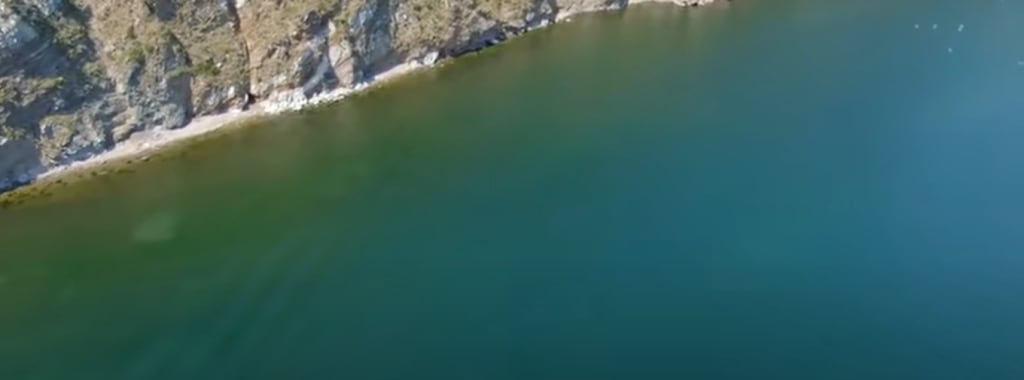
In the heart of Asia, there's a magnificent lake. It holds 1/5 of the world's freshwater, more than the combined Great Lakes. Imagine if all the rivers changed direction to drain this lake, it would take them a whole year! This is Lake Baikal, the deepest lake in the world. Prepare for a thrilling journey of 5,400 ft if you dare to reach its deepest point. The descent takes hours, but the rift floor is even deeper, about 5 to 7 miles below the surface. It might be even deeper than the Challenger Deep, the deepest place on Earth. The water in Baikal could quench the thirst of everyone on Earth for 50 years. This mighty giant replenishes its water every 383 years. Over 300 rivers and streams deliver their waters to Baikal, and only one river flows out, the angara, headed for the Arctic Ocean. Baikal isn't just the deepest; it's also the oldest freshwater lake in existence. Get ready for an adventure like no other!
25 million years ago, the Earth's crust formed a lake and surrounding mountains. It started as a humble riverbed, but earthquakes and fractures caused the shores to move apart. Melting glaciers raised the water levels, leading to the formation of several lakes that eventually merged into one. Bal is one of the few lakes older than 1 million years and provides valuable data for scientists studying climate change. With 2,000 seismic tremors per year, the lake is deepening and expanding. Its shores are drifting apart, like South America and Africa, creating the potential for it to become an ocean. And just like the oceans, Bal has oxygen-rich water.
The lake's depths are home to a rich and diverse fauna. Over 2,500 different animals and 1,000 plant varieties live here. Around half of them are unique to this area. The endemic algae, Bal U fish, and Bal oil fish can only be found here. Bears, elk, and lynx also inhabit the lake's shores. The lake's temperature is always higher than the rest of Siberia due to its vast water mass. Most creatures prefer the lake's bottom, but there is one brave adventurer you can meet if you visit - the Baikal seal, also known as nerpa. It is the only true freshwater seal in the world. Nerpa's cute eyes almost landed it the role of Puss and Boots in Shrek. Nerpa and Boots sound like a good duo. These large eyes help the seal navigate underwater and track its favorite pelagic fish.
It's fascinating how these adorable Bal seals made a historic journey from the Arctic Ocean to Lake Bal around 400,000 years ago, during the Pine Era. They navigated rivers and drainage systems, creating a unique freshwater habitat for themselves. Despite their oceanic origins, they've adapted well to their current environment. With diverse food options, they seem content in their freshwater abode. During winter, they head south and make use of the ice-covered lake as their chill-out zone. Nature's wonders never cease to amaze!
Lake Bal is a true marvel with its mysterious ice rings that have puzzled scientists since at least 1969. These enigmatic rings, sometimes visible from space, sparked various theories, with methane gas bubbles being the most popular, though some appeared in shallower waters where gas emissions weren't plausible. In 2016, an international team of scientists cracked the code by discovering warm eddies flowing clockwise under the ice cover. The currents created thicker ice at the edges, forming the rings. The lake's crystal-clear waters, thanks to surrounding mountains and plankton, freeze into a uniquely transparent layer, allowing for breathtaking views up to 130 ft deep.
Lake Bal's winter winds turn it into a natural ice sculpture workshop, creating frozen bubbles, icicles, and even floating rocks. The rocks become pedestals as the bottom freezes to the ice, while winds sculpt away the surroundings, leaving behind nature's own masterpieces. It's a mesmerizing dance of geography, weather, and water that turns Lake Bal into a canvas of frozen wonders.
The local Buat people weave a captivating legend about the Water Dragon Master residing in Lake Bal, an awe-inspiring creature considered the most powerful on Earth in Asian mythology. According to their lore, Lake Bal represents the North Sea, and ancient petroglyphs on the Cliffs of Bal are said to bear the image of this mythical dragon.
Among the relics, a stone slab resembling a monument from the 3rd to 9th century BCE showcases a mysterious water monster, adding an air of ancient mystique to Lake Bal. The legend recounts a local warrior's pursuit of the dragon, culminating on the largest island, Alon. In an unexpected twist, the dragon transforms into a beautiful girl, leading to their marriage—a unique deviation from the conventional "defeat the dragon and rescue the girl" narrative.
Described as a giant sturgeon with an alligator-like snout and armored body in local legends, the mythical monster aligns with the impressive fish thriving in Lake Bal's oxygen-rich waters. The beluga sturgeon, capable of growing several feet long and weighing thousands of pounds, boasts a remarkable lifespan of 50 to 60 years, ceaselessly growing in the lake's favorable conditions. The legend adds a touch of magic to the lake, echoing the whispers of ancient tales and inviting us to unravel the enchanting enigma of the Bal Cliffs.
About the Creator
Keep reading
More stories from writers in Fiction and other communities.
Magic
Note from the Author: I want to let you know that this is an unusual story, and it has been written purely from whatever is in my unconscious mind, because before I start writing, I get into a flow state that reaches my unconsciousness. I also write in my subconscious mind, which is like a mid-flow state between the conscious and unconscious mind.
By Denise Larkin2 days ago in Fiction
Goodbye, Mr. Duvall
It is turning out to be an interesting year. I was in the middle of teaching a class when a pop-up appeared on the screen announcing the death of Mr. Robert Seldon Duvall (yes, that was his full name). I was in the middle of a discussion on the obsession we have with winning when it comes to sports (the Winter Olympics was a theme), and I felt as though things were coming full circle. We had already lost Gene Hackman last year, and along with that titan, it feels though one particular golden age has closed off to be replaced by...?
By Kendall Defoe 8 days ago in Geeks




Comments
There are no comments for this story
Be the first to respond and start the conversation.