
The Mughal Empire’s WILDEST Tradition:
When Kings Were Weighed in Gold – And Gave It All Away

Introduction: A Glimpse into Mughal Opulence
In the grand courts of the Mughal Empire, where silk carpets unfurled like rivers and gem-studded peacocks strutted beside marble fountains, emperors devised rituals so extravagant they defy modern imagination. Among these, one tradition stands out not just for its audacity but for its symbolic genius: the practice of weighing Mughal emperors, princes, and nobles against gold, silver, or precious goods on their birthdays—only to distribute the equivalent wealth to the poor. This ritual, known as “Tuladan” (Sanskrit for “scale-giving”) or “Jashn-e-Wazni” in Persian chronicles, was more than a display of imperial vanity. It was a political spectacle, a spiritual act, and a social contract rolled into one.
But how did this tradition begin? What did it mean for a king to literally measure his worth in gold? And why did it vanish into the shadows of history? Let’s journey back to the zenith of Mughal power to uncover the story behind one of history’s most fascinating—and bizarre—royal customs.
Chapter 1: The Origins – From Humble Scales to Imperial Theater
The Mughals did not invent the concept of ceremonial weighing. The tradition traces its roots to ancient Hindu Vedic rituals, where kings were symbolically weighed against grains to honor deities or mark harvests. The act symbolized a ruler’s duty to redistribute wealth and ensure prosperity for their subjects.
When Akbar the Great (r. 1556–1605), the empire’s visionary third emperor, adopted this practice, he transformed it into a Mughal institution. For Akbar, Tuladan was a tool of statecraft. By embracing a Hindu ritual, he reinforced his policy of Sulh-i Kul (universal tolerance), bridging divides in his religiously diverse empire. But Akbar also added a twist: instead of grains, he used gold, silver, silks, and spices—materials that reflected Mughal grandeur.
Chapter 2: The Ceremony – A Spectacle of Power and Piety
Imagine the scene on an emperor’s birthday:
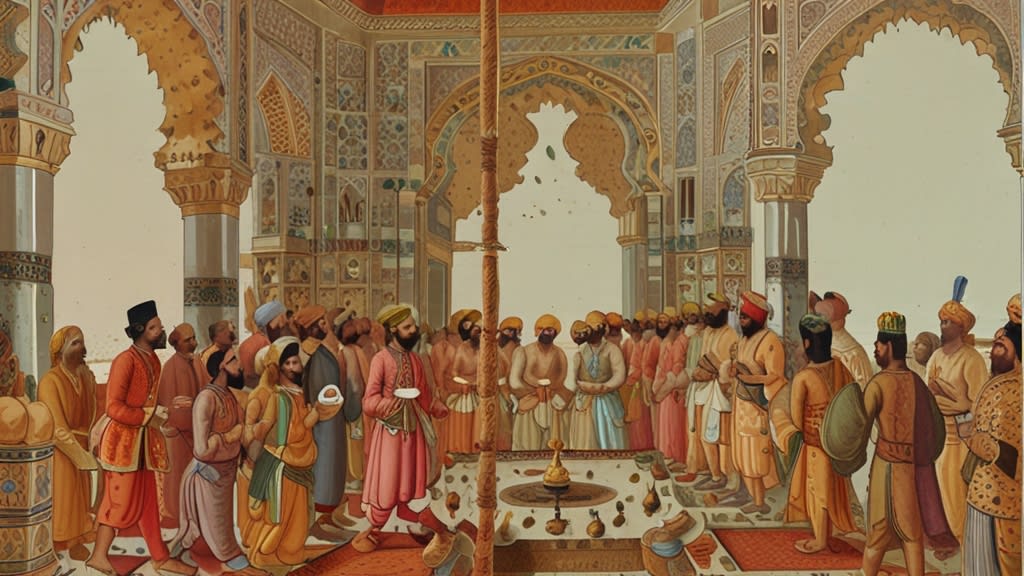
The Golden Scales: A colossal balance scale, crafted of sandalwood and inlaid with lapis lazuli, was erected in the Diwan-i-Khas (Hall of Private Audiences). The scales alone cost more than a village’s annual revenue.
The Royal “Weight”: The emperor, dressed in ceremonial white (symbolizing purity), sat on one side of the scale. On the other, servants piled gleaming gold coins, uncut gemstones, or even sacks of saffron and sugar.
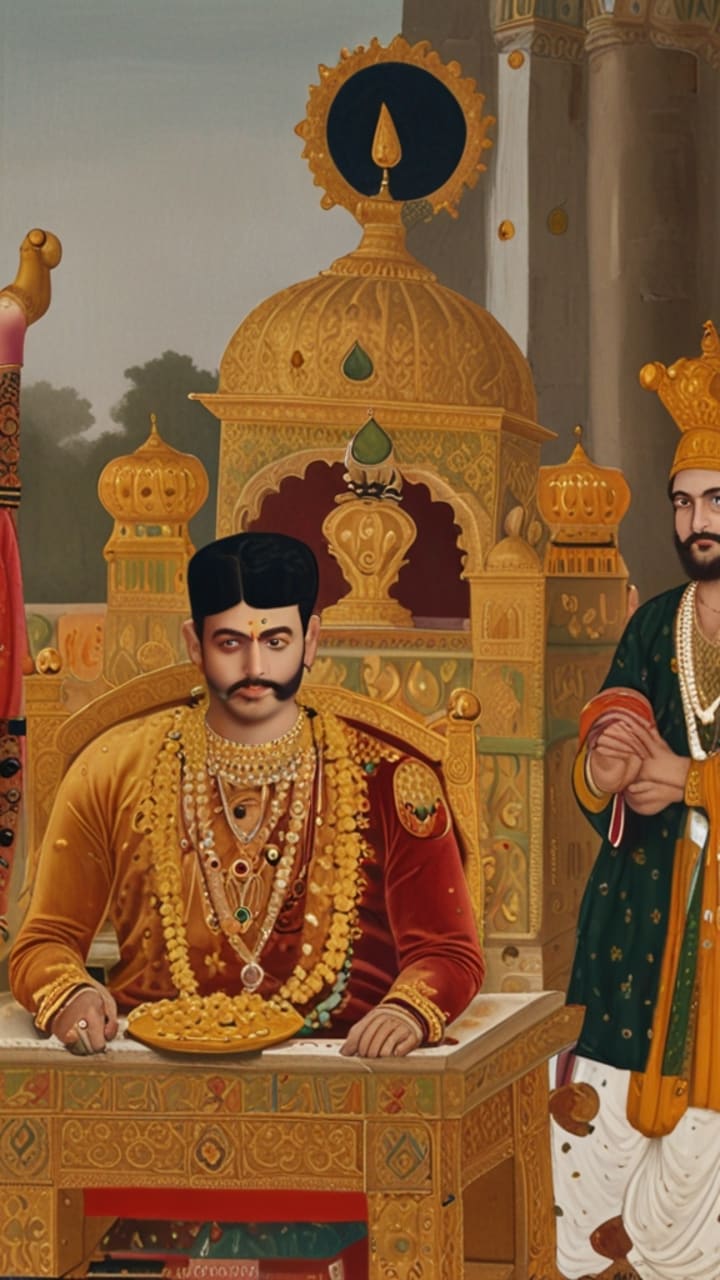
The Calculation: Court astrologers and mathematicians determined the total value, often equivalent to millions in modern currency. For instance, Shah Jahan’s 1633 weighing reportedly matched 200 kg of gold—worth over ₹120 crore ($15 million) today.
The Distribution: The wealth was immediately donated to poets, scholars, holy men, and the impoverished. Chronicler Abdul Hamid Lahori wrote, “The streets of Shahjahanabad flowed with charity, as if the heavens had rained mercy.”
Chapter 3: The Hidden Politics – Why Emperors Played This Game
Beneath the glittering surface, Tuladan served shrewd political purposes:
Legitimizing Rule: By tying their physical bodies to divine wealth, emperors positioned themselves as living conduits of God’s bounty. This ritual affirmed their divine right to rule.
Social Engineering: The public giveaway countered accusations of greed. When Aurangzeb (notorious for austerity) skipped the ritual, critics accused him of “hoarding the empire’s soul.”
Diplomatic Theater: Foreign ambassadors invited to the ceremony returned home with tales of Mughal invincibility. Jesuit priest Father Monserrate noted in 1582: “Even their charity is a weapon.”
Chapter 4: The Dark Side – When Tradition Became Tyranny
As the empire declined, so did the purity of Tuladan. By the 18th century, later Mughals like Farrukhsiyar (r. 1713–1719) exploited the ritual to extort nobles. Governors were forced to “donate” their own wealth during weigh-ins, draining regional economies.
The tradition also faced backlash from orthodox clerics. Islamic scholars like Sheikh Ahmad Sirhindi condemned it as “Hindu idolatry”, while Maratha critics mocked it as “the beggar-king’s game.”
Chapter 5: The Legacy – From Gold Scales to Golden Lessons
The last recorded Tuladan was performed in 1806 by Akbar II, a puppet emperor under British control. By then, the scales held not gold but cheap metals—a hollow echo of past glory.
Yet, the tradition’s ethos endured. Modern India’s birthday charity drives by politicians and celebrities (e.g., PM Modi’s clothes donations) owe a subconscious debt to Mughal Tuladan. Even the phrase “weight of responsibility” finds eerie resonance in this ancient ritual.
Conclusion: The Paradox of Power
The Mughal weigh-ins were a paradox: a act of humility staged as arrogance, a spiritual gesture weaponized for politics. They remind us that history’s “wildest” traditions are rarely just frivolous quirks—they are mirrors reflecting the ambitions, anxieties, and contradictions of their age.
In the end, the true weight of Mughal Tuladan wasn’t measured in gold. It was measured in the hope it gave a farmer in Bengal, the scholarship it funded for a Kashmiri poet, and the legend it left behind—of kings who, for one fleeting day each year, became servants of their people.
Epilogue: A Modern-Day Tuladan?
In 2023, a Mumbai businessman recreated Tuladan for his 50th birthday, donating his weight in rice to slum communities. When asked why, he smiled: “To feel like Akbar for a day.” Perhaps the Mughals’ wildest tradition isn’t dead after all—it’s just waiting to be reinvented.
About the Creator
TaleSpot
I enjoy exploring new ideas and sharing my thoughts with the world.
Divided By Our Skin
We climbed as far as we could go; it was impossible to reach the top. Obstacles stood out in every way; we never stood a chance together.alone, it all felt so right. Our families said it was wrong, as two people from different countries could never get along. But every step we took, side by side, made the struggle worth it. We laughed when we stumbled, sharing simple smiles that warmed my heart. Each moment together felt like a secret world, just ours, away from what others thought.
By George’s Girl 2026 7 days ago in Fiction
Hottest in the Office
Dear Rafi, You’re very distracting to work around. For the first second I saw you the other day, I thought you were some type of executive. It took a moment to realize no, you were just the new guy, dressed up for the job he wants. Be still, my heart.
By Gabriel Shames5 days ago in Pride




Comments
There are no comments for this story
Be the first to respond and start the conversation.