
The Memory Auction
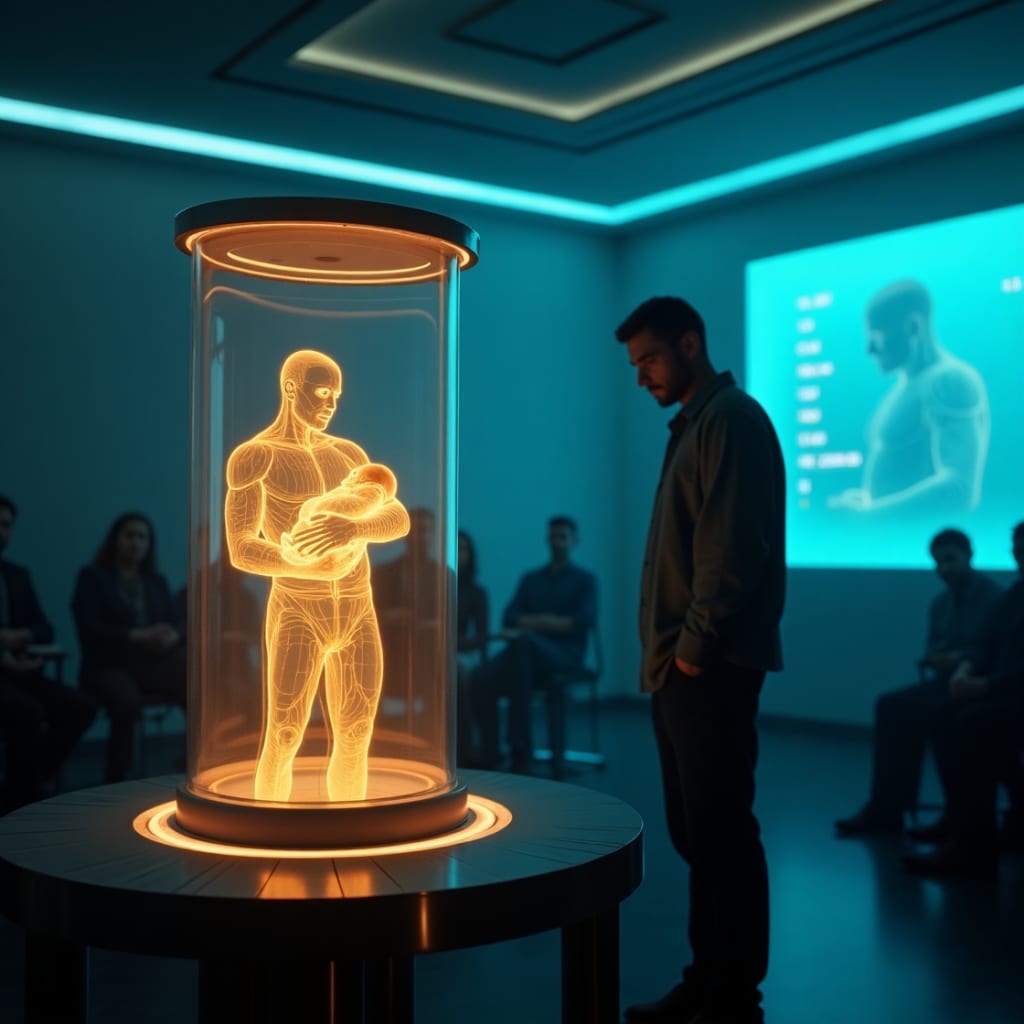
In a future where memories can be sold or traded, a struggling single father considers auctioning off his happiest moment to afford surgery for his daughter.
The Memory Auction
By HAROON YOUNAS
In the year 2136, memories had become the new currency.
They were bought, sold, traded, and stolen. The elite injected them like narcotics, reliving moments they never lived: a honeymoon in Santorini, a child's first word, the ecstasy of a standing ovation. But for people like Elias Trenholm—single father, factory worker, and two months behind on rent—memories were survival.
His daughter, Mira, lay curled in a hospital bed under a sheet that hummed with quiet machinery. Her lungs, both underdeveloped since birth, had finally given in. The doctors offered hope—but only in the form of a black-market nanotech procedure outlawed in most provinces. A single operation that could cost a life’s worth of memories.
Or, in Elias’s case, one particularly valuable one.
“Mr. Trenholm,” the Broker said, steepling his fingers, “you understand that once the transfer is complete, the memory will no longer be yours in any form. Not even a shadow of it.”
“I understand.”
Elias clutched the USB-sized capsule that held the memory: the day Mira was born. Her tiny, furious wail. The way she wrapped her whole fist around his finger. The moment her mother, whom cancer would take just six months later, looked up at him and whispered, “We did good.”
It was the happiest moment of his life. And it had to go.
The Memory Exchange sat in the basement of an old opera house, masked by holographic graffiti and reeked of lavender and antiseptic. Elias sat beneath flickering amber light, memory capsule in hand. Around him, others browsed glowing catalogs of moments—the perfect wedding, an adrenaline-fueled mountain climb, the raw rush of first love.
The Broker plugged Elias’s capsule into the bidding node. A hum filled the air.
"Opening bid: 50,000 credits. One authentic, unedited Level 1 paternal memory, 100% organic. Verified emotionally pure."
Within seconds, the numbers began to climb.
80,000. 120,000. 175,000.
A woman in a silver veil raised her hand, lips quivering. “I never had children,” she whispered, though no one had asked.
220,000. 250,000.
A corpulent man in a velvet jacket grunted approval. “Genuine fatherhood. Rare these days.”
Elias didn’t blink. He just stared at the screen as if watching someone auction off a piece of his soul.
305,000.
"Sold."
The transaction was instant. The Broker handed Elias a slim credchip. Enough for the operation, follow-ups, and two years of recovery. Enough for Mira to live.
But it had cost him more than he could say.
He returned to the hospital while Mira was still asleep. Her face was pale, but her chest rose and fell with a rhythm he hadn’t seen in weeks. Machines beeped softly in tandem with her breath.
He sat beside her and took her hand. It was small. Fragile. Familiar in a way he couldn’t fully explain.
When she stirred, her eyes opened and focused on him. “Daddy?”
“I’m here, bug.”
“Did you bring the book?”
He froze. She meant the book—the one he’d read her every year on her birthday, the one tied to the story of her birth. Only, the details were gone now. He knew he’d loved that day, loved it more than anything, but the contours of it had blurred to fog. He couldn’t recall the color of her blanket or the words her mother had said.
But still, he smiled.
“Of course I did.”
He opened the old cloth-bound book. The words came slower than before, like echoes bouncing off walls he no longer recognized. Mira nestled close, resting her head on his chest.
Halfway through, she looked up. “Why are you crying?”
He hadn’t realized he was. “Happy tears,” he lied. “Just happy to see you smile.”
Later that night, after she’d drifted into a peaceful sleep, Elias stepped outside and stared at the moonlit city. Neon blurred through a drizzle. Somewhere out there, a stranger was now living his memory. Feeling his joy.
And yet, as Mira breathed steady behind him, as her tiny fingers still clutched his from the hospital bed, Elias realized something extraordinary.
He would make new memories.
He would earn new joy.
And some day—perhaps years from now—when he looked at Mira dancing in the rain or laughing at one of his bad jokes, he’d feel a fresh spark of that same happiness.
Not the same memory.
But maybe, just maybe, something better.
About the Creator
Reader insights
Outstanding
Excellent work. Looking forward to reading more!
Top insight
Excellent storytelling
Original narrative & well developed characters
Keep reading
More stories from HAROON YOUNAS and writers in Fiction and other communities.
Dreams Are Expensive Here
Not a metaphorical one—the kind you chase with late nights, rent overdue, and an aching heart. No, I came for the real thing. The kind they grow in labs under soft purple lights. The kind they sell in velvet boxes behind frosted glass, where price tags are whispered rather than written.
By HAROON YOUNAS7 months ago in Fiction



Comments
There are no comments for this story
Be the first to respond and start the conversation.