
The Man Who Walked Beyond Why
A Journey Through Silence, Solitude, and the Search for Meaning

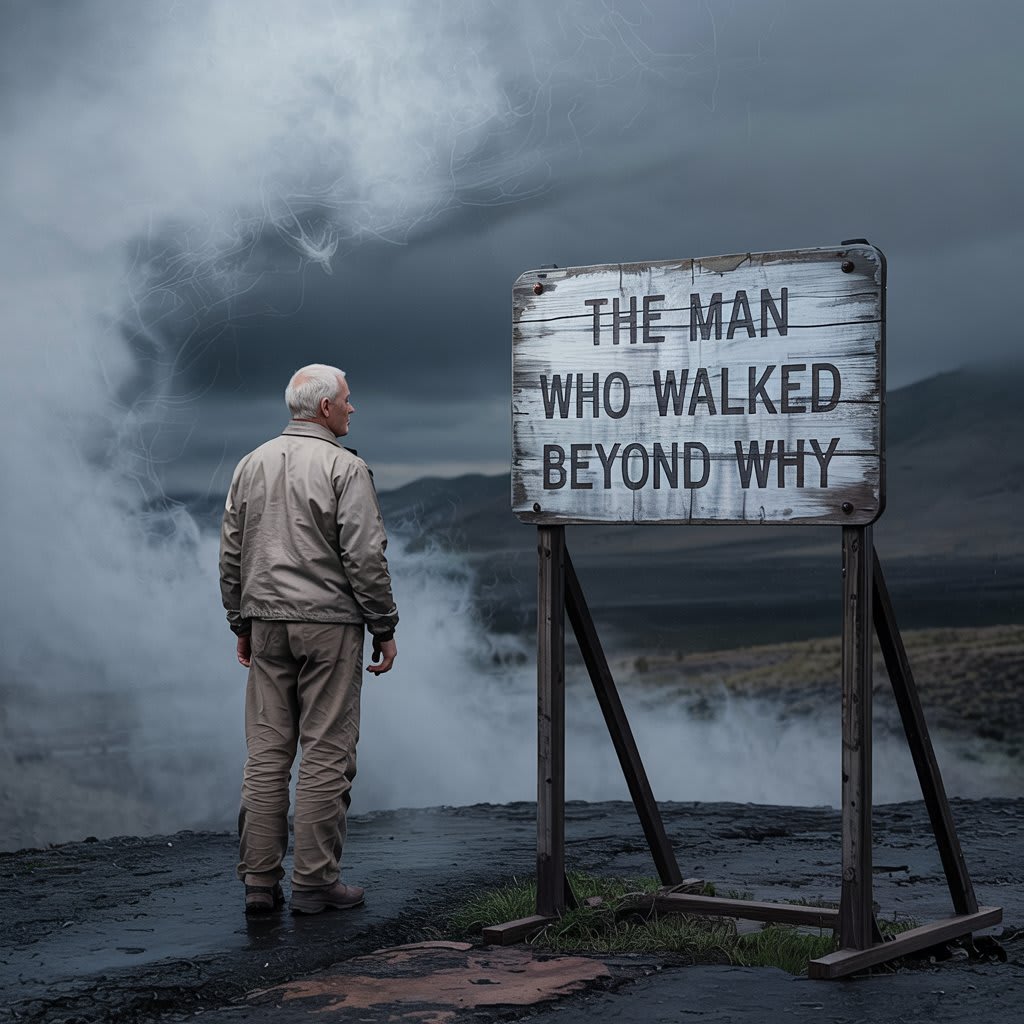
The world had grown too loud.
A man named Elias sat at the edge of his bed, his hands buried in his face. The days felt mechanical — a routine of survival masquerading as life. The city outside his window buzzed with neon distractions, people shouting over each other in conversations that meant nothing. Gossip, anger, greed, loneliness — it all swirled together like smog. And he had breathed it in for far too long.
Elias wasn’t broken. He was simply tired — soul-tired. Not from pain, but from emptiness. Not from sadness, but from indifference.
He walked to work. He walked home. He walked through years. But one morning, something in him refused to rise. Not his body — his “why.” The question that usually pushed him forward felt hollow.
Why go on? Why try? Why pretend?
So Elias did something strange. He packed a small bag and left. No note. No destination. Just silence.
He wandered. At first, he clung to the idea that he might find peace in a simpler place. A village, maybe. A monastery. A mountain.
But the villages had their own noise — gossip under quiet roofs. The monasteries offered silence, but not truth. And the mountains were beautiful but said nothing.
Days turned to weeks. Elias walked through forests, fields, and forgotten roads. His phone died. He didn’t care. The detachment brought clarity — or perhaps just more questions.
And that was when he found him — or rather, stumbled upon an old man by a river.
The man was arranging stones into spirals, lost in the act. Not artfully, not for show. Just movement. Elias sat nearby, watching.
Finally, the old man spoke without looking up.
“Are you running from the world or from yourself?”
Elias didn’t answer. Not at first.
“Both,” he said. “I’m searching for… something. Purpose. Meaning. Or maybe just a reason not to disappear.”
The man smiled and continued arranging stones. “You won’t find it in the noise you left. But you won’t find it in silence either. Not unless you learn how to listen differently.”
The two walked together for a while after that. The old man, whose name was never given, didn’t offer answers. He offered questions — but not the kind Elias was used to.
Not Why are we here?
Not What is the purpose of life?
But instead:
“What happens when you stop needing a reason?”
“Who are you when no one is watching?”
“Can beauty be a purpose?”
These questions didn’t demand answers. They invited Elias into presence. Into stillness. Into seeing.
One evening, as the sun dripped gold into the river, Elias watched the wind ripple across the water and felt something he hadn’t felt in years — awe. Not the dramatic, tearful kind. Just a subtle awareness that he was part of something vast and mysterious, and that maybe the search itself was the meaning.
That night, the old man shared a thought that stayed with Elias forever.
“The world is not meant to explain itself to you. You are meant to meet it, experience it, and become part of its unfolding.”
Elias eventually returned to the world. Same streets. Same noise. Same chaos. But something within him had shifted.
He no longer walked through life seeking answers. He walked with questions he had learned to love. He noticed small things — the pattern of rain on glass, the way strangers looked when they thought no one noticed, the quiet courage in aging faces.
He began writing. Not for fame. Just reflections — thoughts woven with silence. He called his journal The Quiet Between Questions.
Years passed. People never knew where Elias had gone, but those who met him afterward said he spoke less, yet said more. That there was something peaceful about him — like someone who had finally stopped running from the world, and had started walking with it.
And in that walk, he had gone beyond the need for “why.”
He had found wonder instead.
About the Creator
Keep reading
More stories from miraj ud din and writers in Fiction and other communities.
Behind the Curtain
“They promised us light... but left us in the dark.” The night was alive with hope. Streets were filled with people waving flags, dancing to loud slogans, and chanting the name of their “saviour.” The politician stood tall on the stage, his hand raised high, voice filled with confidence:
By miraj ud din10 months ago in Education
Feelings Never Die
It is Valentine's Day again, and it bought back memories that were over fifty years old. It bought me back to 1971, and I woke up and I knew my baby was due today. I was big and pregnant, and I felt like I was about to burst wide open. Imagine my surprise when the doctor told my I had a due date of February 14. I couldn't believe it, and since my baby was due today, I felt I could indulge myself a bit. I had gained a lot of weight, and chocolate was on the no-no list, but I had came to the end of this pregnancy, and I hoped it would be okay, after all I would deliver this baby today. So I walked across the street to the grocery story, and bought myself, a peppermint patty, covered in chocolate, my favorite. Me and my Valentine's baby would enjoy it together.
By Susan Payton4 days ago in Fiction
Rachel Reviews: Lunch Tales: Teagan by Lucille Guarino
Well, I did enjoy this! Sometimes, all you need is just great storytelling and this is what Lucille Guarino delivers here. There's no big message to this book; it's just about folks and families, living their lives and coping with everything that's being thrown at them and finding their way. But when it's done well, like it is here, then you have characters to whom you can relate, tension which leaves you rooting for a better outcome, attraction which has your heart racing and an urge, as a reader, to see the characters happy with the people with whom they belong.
By Rachel Deeming3 days ago in BookClub


Comments
There are no comments for this story
Be the first to respond and start the conversation.