
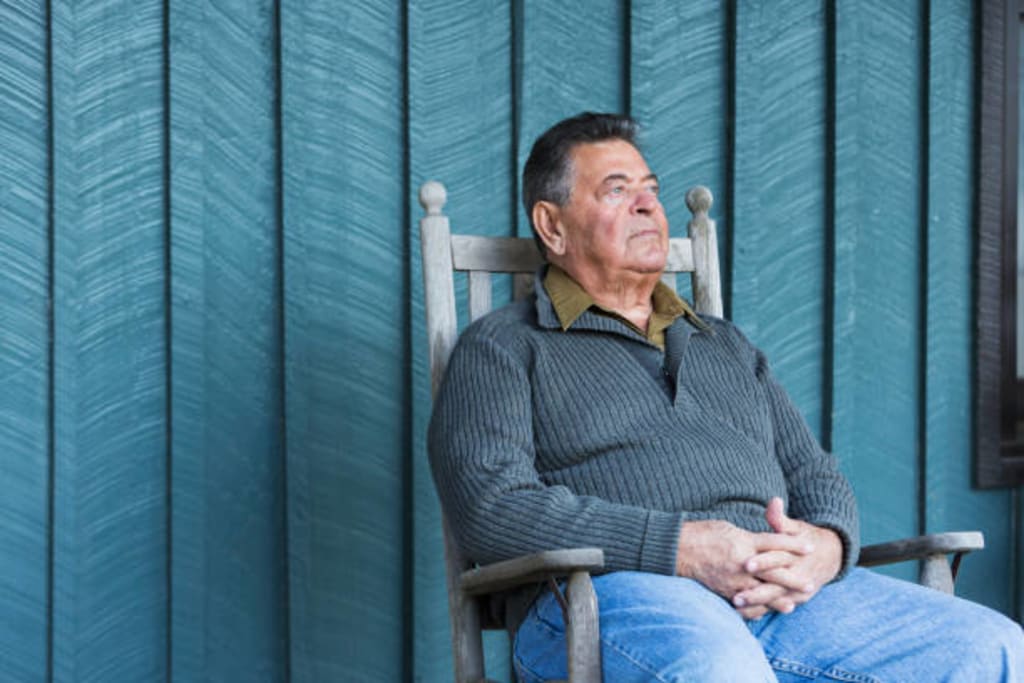
Every town has its tall tales, local lore, and town legends. In Delaware County, there are several local legends that most people swear by, like Satanville (although technically not in Delco), and the ghost of Dog Kennel Road. But none can compare to the man on the porch. Inside a paint-chipped screen-in porch on Bloomfield Avenue in Drexel Hill sat a heavy-set man watching a small 16-inch TV. Now, this sounds like nothing extraordinary or anything but ordinary; however, this man was on his porch from sunrise to sunrise. In all of my years traveling along Bloomfield Road, whether it be dropping my brother off at an early morning ice hockey practice at 5 A.M., coming home late from a party at 2 A.M., or just traveling in my day-to-day activities in the afternoon or morning, the man was always there. The TV would still be on, and he would always be in his white tank-top shirt. It didn’t matter if it was below freezing or hotter than hell on an August day, he was still there. Kids would make up stories suggesting this or that, thinking he was a creeper or not right in the head. But he never struck me as anything monstrous or sinister. Instead, he seemed sincere and genuine.
I lived miles away from him and never met him personally, so I could never speak of his character firsthand. I did have friends who lived near him or whose parents knew him, and they would all make up new tales for others to spread. He was our town's Boo Radley in a sense. It wasn't until I was much older that I was able to find out the answer to the riddle that had puzzled so many of us for so long. Why did he stay on that porch?
The man's name was John Henry, just like the sledgehammer-driving, machine-beating tall-tale character. From what I understand, his body was synonymous with his name. He was stocky and full of muscle, a natural beast of his own. Because of his stature and name, his nickname in the Marine Corps was Big John, a name which would eventually follow him around like a shadow and haunt him with ghosts of his past.
Big John joined the Marine Corps in 1943 in the heat of World War II. He had seen and buried some of his neighborhood friends and family members who were already in the fight, and he wanted a piece of revenge. On his 18th birthday, John enlisted for the Marine Corps and was sent to serve on the Japanese Front. He fought in the Battle of Iwo Jima and the Battle of Okinawa and received the Bronze Medal for his bravery at Okinawa after kicking away a Japanese grenade, saving many of his fellow brothers-in-arms, at least for another day. He also received a Purple Heart for losing a chunk of his leg after the same grenade exploded, causing him to have a perpetual limp the rest of his life. When Big John came home after VJ day, he soon fell in love with a local girl, Edith (or Edie as he called her), and they moved into their place on Bloomfield Avenue. It was a close enough distance to both of their families and yet far away from the city rush. It was quiet and hidden, and just what Big John wanted.
A few years later, John got the news that Edie was pregnant. He was so ecstatic and filled with glee. That summer, he screened in the front porch, so he and his future son or daughter could safely play. To John's delight, Edie gave birth to a healthy 7 lbs., 7 oz. baby boy, on July 7th. His name was David, after John's favorite Bible story.
David grew up, as did the world around John. Big John started seeing the world and the town around him as being invaded. His quiet town was now encroached upon and populated. The world around him made no sense. But, no matter what the world was like or what was going on in it, John did his utmost best to provide for his family. He was a terrific father to David and a wonderful husband to Edie. He worked hard at the Navy Yard every day and made an actual honest day's work doing manual labor, oftentimes working right through lunch so he could spend that extra lunch money on a toy for David. But, David's and John's worlds were both turned upside down when John was reading the Saturday Post, and it read, "At War in Vietnam." A young 8-year-old David was eating his breakfast of Cheerios across from him at the dining room table. He also read the headline.
John's mind ran back to the rust-stained black sands of Japan, watching his fellow soldiers killed on foreign land, calling out to their mothers and loved ones, and how he would lie to their faces, telling them they'd be home in no time. Meanwhile, David was dreaming of glory, fighting the enemy, being a brave patriot, just like his father.
“What’s Vietnam?” asked a young David.
“A country somewhere is Asia,” John answered.
“Oh,” said David as he ate his spoonful of Cheerios. “It’ll be done by the time I’m old enough to fight, I bet.” He jumped out of his chair and pretended to be a soldier fighting an invisible enemy. David was pretending to speak into a radio, “Come in, Rover Ranger, this is Bravo Tango, the enemy is everywhere!”
Big John looked at his son and smiled at the childhood innocence he once had himself.
“Hopefully, son. It’ll be over in a few months.”
But John was wrong. The war continued and was broadcast live in everyone’s home. No one could escape it. Which meant that John couldn’t keep David from it. Just as John did during his youth, David had now also buried family members and friends who all fought in the war. Now, David wanted a piece of revenge that John had once desired himself.
Years later, John once again sat at the dining room table reading through the Saturday Post, and the front page read, “Years later–Still at War in Vietnam.”
"Just a useless war," John murmured.
David, who was sitting across from him reading a book, commented, "Useless? How is protecting the American way useless? You did it, Dad. I thought of all people, you would be glad." David rebutted.
John put down the newspaper and looked David deep into his eyes and said, "Son, there are two things I learned in war, one is that war is fought by brave men for rich fools, and secondly, that war is endless, useless, and there are no real winners."
"But, how can you say that? You fought against the Japanese Empire! You fought for democracy. You got revenge on those Japs for Pearl Harbor. For killing your cousins."
"I was young and dumb back then. I can't take that back, and I'd appreciate it if you dropped it." John was beginning to lose patience with David. John didn't enjoy discussing his time in the war, and would still years later, wake up many nights screaming out and fighting an enemy who was not there.
"But, Dad..." David tried to continue, but Edie supported John.
"You heard your father, David." Her voice was resounding and firm.
Disgruntled and slightly ashamed of his father, David left the dining room table, and nothing more was said of the issue. Until a few months later, when a recruiter stopped by the house.
KNOCK!
KNOCK!
David opened the door to see two young men slightly older than him dressed sharply in their military uniforms, standing with their arms by their side in full attention.
"Hello, sir, we couldn't help but notice your American flag on your porch here. A proud patriot, home, I take it?" The one soldier asked.
"Yes, we are. Can I help you?" David asked.
The man looked at a clipboard and replied, "You certainly can. We are looking for Mr. David Henry. Is he around?"
“I‘m David.”
“Well, David. I am Private First Class Mitch Maddoll, and this is Private First Class Robert Baker. It looks here like you are about to graduate, young man.
“Yes, next month.”
“Well, have you given any thought about your future?” Private First Class Maddoll asked in a fervent voice.
"I'm going to Villanova to study accounting," David responded disappointedly. He felt like he was telling his friends he couldn’t come play because he had homework to finish.
"That is very noble of you, but what if you could do something more?” Private First Class Maddoll continued. “There are a lot of opportunities out there for a young man like yourself in the Marines. It says here that your father served in the Corps. Received the Bronze Medal and a Purple Heart, I believe. Don't you want to make your father proud? Don't you want to make your country proud?" The young man spurred a thought that David had been pondering since he first read the title “War in Vietnam.” He saw his other friends all join the forces, and their families welcomed their commitment and service to the country; whereas, John forbade David to speak of the war and John's military history. It didn't make sense to David. Shouldn't his father be proud of what he had done? He saved people, fought for his country, and killed for his country, but wanted to pretend it never happened.
"Here's my card.” Private First Class Maddoll handed him a crisp cardboard name card that had raised letters U.S. Marines. David ran his fingertips over the bumps as Maddoll continued speaking. “If you are interested and want to make a difference, take the trolley to 69th Street, and our recruitment center is right when you get off." When David looked up, he heard the squeal of tires and brakes coming to a sudden and abrupt stop.
John's size seemed larger than ever when he stepped out of his '64 Starfire. "Can I help you, gentlemen?" The car was still rocking back and forth as John approached the men on the steps. John’s gait was awkward as he was trying to overcompensate for his limp to appear as though he didn’t have one.
"Why, hello. You must be Mr. Henry. How are you today?" Mitchell reached out his hand, but his hand was not met with John's. "You didn't answer my question."
"Well, we're just here to talk to David about his future. See if he wants to follow in his father's footsteps."
"He’s not interested.” John’s voice was stern and seemed to echo loud enough for the neighbors to peer out through their blinds. “He is going to college. That's his final answer. Now I am asking you’s politely to get someone else." David had rarely seen his father speak to anyone with this amount of fury and wrath. Even when David was in trouble, his father never raised his voice.
"Dad, but I want to hear them out," David spoke out..
"No, you live in my house. You live by my rules. You will NOT enlist in a useless war." John's voice quivered. "I will not bury my only son."
"Sir, if I may..." Maddoll, this time, tried to step in, but before he could spit out his last syllable, John grabbed him by the neatly tucked uniform and lifted him as high as he could.
"You find someone else! Get the hell off my property!" John threw Maddoll into Mitchell, and soon both men were running away, shouting "Coward!" as they ran.
"Get in the house! Now!" The neighbors had now gone from peering through the windows to stepping out onto their stoops to witness the altercation. David could see that Mrs. Daniels, who lived across the street, hid her children behind her as she trembled with fear, as she had never seen her neighbor so vexed.
The neighbors all knew Big John and knew of his service. Mostly, through rumors and stories children made up, behind every child’s story is a sense of truth.
Big John grabbed David and pushed him inside the house.
David, disgruntled, said, "Dad! I am 18! I can do what I want! I'm not a little kid anymore!"
"You're MY kid, dammit!" John began to silently weep into his hands as he sat in his porch chair. David didn't know how to respond; he never saw his father so much as get misty-eyed, let alone sob.
After a moment of regaining his composure, Big John stood up and held onto David’s shoulders. "Son, war changes a man. War doesn't make men out of boys; it just makes damaged men beyond repair. You cannot know what it's like to... to take another man's life. To see your friends killed, some of whom aren't even old enough to drink a beer. Son, I was the first glimpse you saw in this world. I can never forget that moment when I stared into your marble-gray eyes and said, 'I promise to always protect you.' I made a promise to myself that you wouldn't follow the path I chose. I made a vow that I would make sure you had the best opportunity possible to live a full and happy life. Why do you think I work the amount of overtime I do? I am trying to provide for you, so you don't make the same stupid mistakes I did. I didn’t go to college, I was forced to work with my hands and live with a broken body as well as a broken mind. That’s why you are going to college. So, you don’t have to live like this.”
“Now, this war that's going on. It's like I'm stuck in a photograph of life before I joined the service. I wish to God it wasn't, but it is. I know what you are feeling, and I can't stress to you the foolishness of it. At your age, you think you know everything, that you are fighting for some just cause that is worthy of fighting. But this war, this chaos, is unwarranted and unnecessary. Please, son, David, don't make the same mistake I did."
John put his heart on his sleeve, but David had already made up his mind before he even arrived to throw out the recruiters.
"Dad, I love you. But, I am going to join.” Big John let go of David’s shoulders and began to pace the living room floor. “I don't want to be an accountant. I want to be a hero like you."
"I am no hero, David. I am a damaged man with scars you cannot see or fathom to understand." His voice was frantic now.
"Dad, but those scars make you who you are. They make me proud to call you my father."
Big John stopped dead in his tracks. His feet stopped, but his heart was still pacing at the rate of a jackhammer. He looked at David, staring deep into his eyes and said, "If that's the case... I have failed as a father."
David lost his patience and self-restraint. "You know what! Those recruiters are right, you are a coward!" Edie’s hands shot to her open-jawed mouth, stuck in shock. She sat down in disbelief.
Big John looked toward the ceiling, choosing his words carefully, "If that means you stay alive, I will be the biggest yellow-bellied coward there is!"
David scoffed, "I thought you were a man of noble cause! I thought you were about doing the right thing! Sitting back and letting the world fall apart isn't right! I'm going to find those recruiters right now and tell them to sign me up." David ran toward the screen door.
Big John rushed to grab him, but his legs weren’t quick enough. His fingertips could feel the cotton on David’s shirt, but he didn’t have enough to pull him back. His legs didn’t cooperate, and he stumbled down toward the living room floor. Once again, even though the war had ended 20 years ago, it was still coming back to haunt him. Edie rushed to John’s side, trying to help him up. But it was like an ant lifting a house. Wincing in pain, he looked toward David, clenching his teeth and holding his leg, "If you enlist, you do not come back to this house, you hear me! You get your things, kiss your mother goodbye, and get the hell out!"
"Fine!" David slammed the screen door shut and ran in the direction of the recruiters.
Edie now ran toward the door shouting David’s name, but it was too late. Even if David heard her, he wouldn’t turn around, no matter how loud or many times she shouted.
"What have you done?" She yelled with tears tearing through her makeup. John was paralyzed with shame as he lay on the floor like an invalid.
John pulled himself up and stayed on the screened porch the whole night, waiting for David's return. The whole time, John ran through his memories of David in this screened porch. He learned to walk on this porch, said his first word, “Dada,” as he crawled toward his favorite teddy bear, which sat on the shelf in the corner. But his memories of David began to intertwine with his memories of the war. The two were never meant to mix in John’s mind, but he sat on the porch fighting off intrusive thoughts of David lying on a foreign land, crying out for John to rescue him, but he was powerless to help. It was actually worse than fighting in the war.
At about 2 AM, John could just make out the tall, thin silhouette of David. David’s hands were in his pockets as he climbed the stairs.
John struggled to stand up and said, "David, I'm sorry. Son, I'm just trying to protect you. Listen, I didn’t mean what I said."
David snapped back, "Dad, I don't need protecting. I am just grabbing my stuff and kissing Mom goodbye.”
John started limping towards him to reason with him, but David would not hear of it.
“Don’t, Dad. I’m going to drop out of school tomorrow.”
“No, son,” John pleaded, “It was a mistake what I said. I was just angry. Forgive me, son. Let’s go inside and talk about it.”
“No, Dad, I don't want to speak to you, because you are not my father.” David’s voice was full of the same vigor and rage John had expelled on the Marine recruiters. “You are... I don't know what you are." David rushed up the stairs to his room and grabbed a small duffle bag of clothes and stuffed them in. Edie came flying down the stairs, curlers still in her hair.
"John... John... he's leaving!"
John stepped in front of the doorway, blocking David's exit.
"Son. Listen to me. You are making a mistake." John continued to plead. “Son, you don’t have to do this!”
"I already took the oath, Dad. I can't back out now. There is a bus picking up recruits tomorrow morning. Get out of the way." David tried to brush past John, but it was useless. John's body was so large that he took up the entire doorway. David put down his duffle bag and said, "Dad, let me out."
"No, Son. I made a promise to myself the day you were born that I would protect you with every fiber of my being. I will keep you safe. Please, son. I know you are like me, but you don’t have to do this. You don’t have to be so damn stubborn. I was so cocksure that I knew what I was doing when I enlisted, but I didn’t know jack from squat. Please, listen to your old man, just this once.” A solicitous smile crept along John’s face, but deep in his heart of hearts, John already knew that it was too late. David was too much like John in the sense of his determination and pig-headedness
David looked back at his mother, kissed her on the cheek, and said, “I love you, Mom.”
Edie hugged David until finally David pried her off him. “No, please, David. Listen to your father.”
David turned around to John, who was still blocking the doorway, and said, “Dad, I’m going to ask you one last time. Please get out of the way.”
John shook his head and said, “No, son. I’m afraid I can’t do that.” John folded his gorilla-sized arms, blocking the door frame.
“Then, I’m sorry I have to do this.”
“Do what?” John responded, but by the time he realized what David meant, David had reached back and struck John in the nose. David was battling Goliath, or in this case, Big John.
Edie screamed out in shock as John fell down the three steps off the porch. The lights in the neighbor's home flashed on. David stepped over his father, as his hands went to his face. Edie raced out the door, again coming to Filled with stifled rage, blood draining from his nose, John said something he would always regret, "I hope something does happen to you over there! Then you'll learn!" David shook his head in disbelief and ran off.
"Wait... David! I didn't mean it!"
But it was too late, David was off. John fell to his knees and stared into the distance, praying that it was another nightmare and soon he would wake up. But while the sun did return the next morning, John's son did not. First time since David was born, John called out of work. He waited on the porch stoop all day and night. John prayed and prayed until he thought God would finally answer him just to shut him up. But David did not walk back down that sidewalk.
Weeks had passed, and while John did leave the porch to go to work, he waited every night on the porch for his return home. It wasn't until after the summer had passed and the frost snuck onto the morning dew of the even cut grass that John and Edie heard anything from David. It was a letter explaining his training, his early promotion because of his performance, and his battalion number, 1st Battalion, 9th Marines. He wrote that he was traveling overseas and would most likely end up in the pits of the jungle in Vietnam. The letter was only addressed to Edie and had no mention of John or that infamous night.
Still, John wrote to him. Three letters a day, at first, and then after about a year of unanswered responses, about one letter a day. While each letter contained a different theme or message, it always ended the same.
"David. I am sorry, beyond belief. Please, come home. I love you, son. I always will."
David wrote a handful of times to Edie to explain where he was, how he was getting along in Vietnam. He wrote of the nonstop rain, humid days, and how he hadn't seen much of any action, other than a stray bullet here or there. He hoped he would leave soon to go closer to the front, to make his country and mother proud. Again, there was no message of mention of Big John in any of his letters.
John cringed every time he saw those words. He stood idly by and waited. Waited for his son's arrival, waited for word that he was okay, waited and prayed that he could fulfill his first promise to David.
John watched and listened to the news on the TV in the living room from the front porch. He waited so many nights that he memorized the exact position of cracks in the sidewalk and the number of branches on the neighbor's tree. The war was getting worse. The TV was producing images John had struggled so hard to forget.
Soon, the letters stopped coming. A year came and went without so much as a word from David. John saw some of the neighbors receive that awful yellow telegram, with the same false words saying that their son had been killed in battle fighting on an important mission, which John knew was nothing more than a bald-faced lie. A small fabrication to make the parents feel just that little bit better, knowing their son died fighting for a "noble" cause.
With no word from David, Edie feared the worst, but John still held onto that tiny shred of hope. Their marriage, however, did not hold on. They refused to speak to one another, eat together, or sleep in the same bed They were no longer husband and wife but roommates. The only thing that brought them together was a news report one cold December night.
"Tonight in Vietnam was one of the deadliest yet." The groomed-mustached reporter announced. John and Edie crowded around the TV, watching images of wounded soldiers being carried on makeshift gurneys, and the roar of Agent Orange and napalm scorching whatever earth it can find. "The Marines suffered heavy casualties and hundreds were wounded, as the Vietcong unleashed a deadly surprise attack." As the images flashed across the screen, John and Edie both recognized one of the soldiers' patches as David's battalion, his body lifeless and limp.
"John... that's David's ba..." Her hand caught what breath was escaping, and before she could even start to cry, John grabbed her and held her against his chest.
"Shhh. He is alright. I know it. I just know it." John did his best to comfort her, but Edie's heart was broken into fragments. John ran from the front porch and four miles to the Marine Corps Recruitment Center. He banged on the door so hard that the glass in the door was splintering and cracking into spiderwebs. There was no answer. He sat with his head tucked into his knees. Remembering his promise, remembering every moment he shared with David.
"Can I help you?" a man's voice echoed into John's ear. When he lifted his head up, he saw it was Private First Class Mitch Maddoll, the young soldier he threw off his front porch two years ago. "Oh, it's you. I remember you. You tossed me like a ragdoll off your stoop. What do you want?" Though it had been what felt like a lifetime ago, Mitchell never forgot that day that John threw him and Private Baker off the steps of the screened-in porch. It was not many times in a grown man's life that you get physically thrown by a war hero.
"My son." John's voice was dry and hoarse from sitting in the cold all night. "He was in the 1st battalion, 9th Marines. They were attacked last night. I need to know if he's okay."
"I heard about the attack. Did you not get a telegram yesterday?"
"No. Nothing arrived."
Mitchell thought for a moment and remembered reading John’s profile of service and being impressed by the valor John showed at Iwo Jima. He decided to do his duty and help out his fellow corps brother. He helped John onto his feet. "Come on, I'll see what I can dig up." John got up, feeling the blood finally fall from the rest of his body, reaching his numb feet. "Thank you. I appreciate it."
"Now, I am only doing this because you are a fellow marine. I still have my values. I wish you remembered yours."
"Kid, you've never been in it, have you?" John asked as he walked with Maddoll to his desk. It was definitely a marine's desk. Everything had a place and was measured out in almost exact measurements.
Maddoll motioned for John to have a seat, meanwhile Maddoll sorted through the correspondence in his file organizer. "Afraid not. Flat feet and asthmatic. Guess the corps is afraid I'll give away our position by taking a puff of an inhaler. No, sir. I am given the duty of recruiting fresh blood and staying stateside."
"Do you have any kids, Private?" John asked.
"Yes, just this year, a baby boy." Maddoll turned a portrait around of a chubby-cheeked infant with bright eyes full of life, and drool leaked out of his cheeks. John could feel the joy and excitement as Maddoll stared down at the picture. “That’s my lil Brian.”
"Then you know,” John answered him, still looking at the infant boy’s picture.
“Know what exactly, sir?” Maddoll asked, putting his son’s picture in the exact position it had been in.
“You know your values change the moment you hold that baby in your hands for the first time. I made a promise, one I’m sure you made to your son the moment you saw him, to protect him through hell or high water.” The earnestness of John’s voice stoked a memory in Maddoll. The memory of him holding his baby boy underneath the bright luminescent lights of the hospital and saying to him that he would always protect him and love him, no matter what.
“You don’t know the hell the men who are in it go through. You don’t know what it’s like. Sure, movies will romanticize the valor and bravery of our brothers in the corps, but it’s only a matter of truth. That promise that you made your son, that I made my son, you took it away. You, Private, are what broke hundreds of promises between fathers and their sons. You may not have seen battle, but you will have a ghost that will forever haunt you just as bad as those that haunt me. Except your ghosts are your people, your brothers in battle. Now, make this right and help me find my son.”
John had said aloud what kept Maddoll up almost every night. The fear that he was doing the wrong thing. The fear that one day he would have to tell his baby boy what his father did in the Marines.
"Yes, sir. What was your son's name, again?" Maddoll asked as he reached for a yellow legal pad and pen.
"David William Henry, date of birth July 7th, 1948." John began as he watched Maddoll scribble his name down and what other information he could spew out from his recollection.
"Mr. Henry, I will do my best and contact all the resources I can. Understand, though, I can't make any promises, but I can promise you I will do my utmost best. It may take a couple of days, but I will reach out to you. Are you still at the same address?"
John nodded his head and stuck out his hand, and said thank you.
"Listen, I'm sorry about the ‘coward’ comment I said after you so kindly threw my ass off your porch." Mitchell smiled and watched John walk out, but right before John made his exit, he stopped in the frame of the door and looked back at Mitchell.
"Private?”
“Yes, Mr. Henry?”
John cleared his throat and looked down at the backside of the frame of Maddoll’s baby, Brian.“You know what real courage is? Courage isn't marching up a battlefield with a gun in hand, bullets flying. It’s not following the orders of those above you. Son, courage is saying no when everyone else is saying yes. Courage is getting up every day and doing what is right by you and your family, and not giving a rat’s ass what anyone else is doing, regardless of the amount of gold plates they have on their chest. It takes not even an iota of courage to pull a trigger. But it takes true, honest courage to do the right thing. I hope you remember that."
John walked out and took the trolley back home, where Edie was waiting for him in the living room. "Where did you go? How could you just leave? Why didn’t you take the car?"
"I went to the Marine Corps. on 69th Street and tried to find out what happened to David. The man said he would get back to me as soon as he could." John sat down on the stoop. By now, the neighbors were jaded by the noise of Edie yelling at John and the drama at the Henry household.
"John, our son, might be gone. I think it's time we face facts." Edie's lips were trembling, and her words were barely audible.
"No. He's not.” The screen door slammed behind John.
“That’s it! I cannot take this anymore. Living in this hell. I want a divorce!” Edie’s shouts echoed and reverberated through John’s ears to the marrow of his bones. He had feared this moment, but knew it was inevitable. He knew that night David left, that Edie would never forgive him for what he did. He knew because he himself did not forgive himself for what he did, and he would spend every waking moment atoning for it.
John said nothing. He kissed Edie on the top of her forehead and opened the screen door for her.
“You’re not even going to stop me?”
John shook his head and handed her the key to the Starfire and said, "I have loved you since the day I first saw you back in 1947, and my feelings for you will never change. But it is unfair for me to live this life and for you to suffer. Go, and live your life. Forget me if you have to, but I just want you to be happy.”
Edie’s lips quivered, and her eyes failed to cry, unable to comprehend what was happening. The words of her response jumbled together to form a sound, but her throat wouldn’t allow it to be produced. She said nothing in the end. She took the car, and it was the last time he’d see her again.
From that moment on, John had two things in his life: his life and the sheer hope in God that David was alive and well somewhere in Vietnam. He had no wife, he soon lost his job, and lost all of his close worldly possessions. But, he kept a sofa, chair, and a tiny white dollar store table to put his TV atop, and David’s bear “Teddy,” which John had gotten him one day on his ride home from work. After losing 40 pounds and seeing that he had not maintained his pristine lawn for a while, the local neighbors reached out to him. They begged John to leave, go back to work, and live back in reality. But John would give them the same response.
“This is my reality.” He would yell.
One night, a set of orderlies broke down the screen door and were set on taking him to the loony bin. They sent in 8 orderlies, who looked like former linemen for the Philadelphia Eagles. One by one, they would enter the screen door, and two-by-two, they would be tossed out. Kicks to this day have said that one of the orderlies' teeth is still stuck in the wood of the door frame. After 10 minutes of struggling, two more orderlies came to join the already broken and battered 8 orderlies from earlier. Finally, they got John to the ground after finally bum-rushing him and taking out his bad leg. Together, the orderlies dogpiled. It was an amusing sight to see. With John knocked out, they drove him to the state hospital up in Belmont.
The next day, while one of the neighbors was out cutting his lawn, he saw John walking down the sidewalk and up to the stoop of his house. John went in, pulled the TV out of the living room, and put it on the porch. He ran an extension cord from the living room and turned on the TV, still in his hospital gown. The neighbors all called the authorities right away. John could see the lights and hear the sirens from four blocks away. He didn’t move, even when the cars came to a tire-screeching halt. To John’s surprise, he saw the scarred face of a man he hadn’t seen in years. The man had much less hair than John remembered, and he was less portly: Deputy Bradley Dupont. Deputy Dupont served with John in Iwo Jima. He lost his slim, muscular body and now looked like a bodybuilder who let himself go for a decade or more. John read the paper about Dupont becoming the next Deputy, but never put the two together until he saw the pink scar that ran from his temple down to his chin in an uneven line. It reminded John of a crack in concrete.
The other officers all got out of their squad cars and were ready to have a standoff. But Deputy Dupont held them off by simply holding his hand out. One man unholstered his gun, but Deputy grabbed the man’s pistol and said aloud to all the others, “There is no need for violence. This man is a war hero and is no threat to anyone or anything. Go back to your homes. Boys, pack it and head back to the station.” His voice echoed between the neighbors' murmurs.
“Officer Crupkee,” the deputy called. A skinny, pale-faced, and calloused man stepped forward. “Call Wanda, tell her I’ll be home late. Tell her I’ll be out with an old friend.”
“Sir, this man took out 8 orderlies. And then five more at the hospital, and that was after he was sedated.” The young man was visibly frightened.
“Do as I say, Crupkee, or you’ll be directing traffic in the Fourth of July parade.”
The young officer nodded his head and hastily turned back to his squad car and reversed out and down the street, with the rest of the officers in tow.
Deputy Dupont climbed the stoop and let himself in. John sat with his arms crossed in his chair.
“Major,” John spoke first.
“Sergeant,” the deputy replied.
A tension filled the air but was soon broken by the stifled giggling of the two men. The laughing then went from stifled to uncovered, pervading the air around them in the porch.
John stood up and shook the deputy’s hand, and hugged him.
“It is good to see you, Major. I see you still have your girl repeller on that ugly mug of yours.” John pointed up to the scar.
“When I came home, it was the opposite. Girls were into it, and that was how I met my wife, Wanda.”
John motioned for the Sergeant to sit, and with a very loud sigh, sat down on a small sofa which John had drug into the porch.
“Yeah, Wanda. She wanted to know more about it, and one thing led to another, and now I’m going to be a grandpa.” They both chuckled for a moment, and then were met with a brief moment of tension again, an uneasy silence crept about the room as the deputy looked around the porch.
“You did a great job on the porch.”
“Thanks. I did it right before David was born. I wanted a safe in between outside and inside. I guess this is what my mind thought of.” John noticed that when he mentioned the name David, the deputy looked down at his shoes, almost afraid to look back at John.
“Yes, David. I was sorry to hear what happened to him.”
John nodded his head, and now it seemed it was his turn to look at his shoes as nerves began sweeping through him.
“Are you going to take me back to that nut house?” John asked, still refusing to look at the deputy.
“Well, Sergeant,” He now captured John’s attention. “You see here, I look at it two ways. One: I take you in, we bicker and yell, disturb the peace, and have one helluva fight that will wreck this nice screened-in porch of yours. OR two: we can sit here, crack a beer, and talk.”The deputy stood up and fixed his belt. “Now, I don’t know about you, but I’m too old to be throwing hands with some geezer, and frankly, I’m quite parched. But, I think I can still take your left hook.”
“Ha!” John smiled, and the deputy returned one too. “You knocked me down one time in the ring at boot camp, and you’ve never let it go.” They laughed, and John stood up, hugged the deputy, and asked, “What will you be drinking then?”
That night, the deputy stayed until the early hours of the morning. Together, the men talked and reminisced about good times and filled each other in on their lives, hopes, and thoughts of the future. They complained about the times and how they’ve changed. The kids today have no respect…they don’t listen…no one wants to work anymore… The sun began to peek, and the deputy stood up and said farewell to John. Before he could walk away, he stopped and looked at John, seeing not a man but the man who kicked a grenade away from his face, saving his life.
“Now, John. I, too, am a father. I, too, am a Marine. I know all you care about right now is David. But, sometimes to help others, you have to help yourself first.”
“Yes, Major!” John stood a full attention and saluted his old friend.
The deputy saluted him back.
“You know, John. War was easy; it was living after it that was hard.” The deputy then gave John a quick smile and walked away, leaving his squad car on the street.
John heeded his advice and took care of himself to the best of his abilities. But, every morning and every day, Big John Henry was in his screened-in porch watching TV and waiting for his long-lost son to come home. Unfortunately, being in so much, John developed agoraphobia (a fear of leaving home). He soon relied on his neighbors to pick up his groceries and items he needed at the store. Big John stayed in the house's screen-in porch every day and every waking hour. Waiting for his son to come home. Waiting to say he was sorry. Waiting to say I love you, and I will promise to always protect you.
This routine continued even after the war had ended. John never received a telephone call or a letter from anyone in the Marine Corps to let him know about David’s whereabouts.
The years raged on, and slowly but surely, age caught up with John. He was having trouble walking, eating, and losing his train of thought easily. He was now an old man with undiagnosed dementia. And of all the things he forgot, like how to put on his socks, how to tie his shoes, or how to put on his socks, he never forgot David.
One day in 2005, a middle-aged man was walking down the overgrown sidewalk of Bloomfield Avenue with a small piece of paper locked tightly in his palm. The paper looked like it had been through the washing machine several times over, and then stepped on by muddy boots. The man stopped at a screened-in porch and saw an old man sitting in a white-tank top watching an ancient-looking TV. He gripped his paper tightly, forgetting it was in his hand. He knocked on the door.
Knock!
Knock!
The old man was startled and looked toward the door to see the man. Slowly, the old man wobbled his weight around and got to his feet. The old man had to get around by using a cane. The old man creaked the door open to welcome the stranger.
“Excuse me, sir, but are you John Henry. Son of David Henry.” The man politely asked.
John had not heard the word David in years, and within an instant, his age and dementia had vanished. He popped up and stood straight without the use of his cane.
“Yes…” he stammered, “I am. Do you know David? Is he okay? Where is he?” John had a lifetime’s worth of questions that he was trying to blurt out in seconds.
The middle-aged man was taken back. “Whoa,” He put his hands up to let John know he was spouting out more than he could handle.
“Mr. Henry, my name is Brian. Brian Maddoll. I believe you knew my father.”
Suddenly, a portrait of a chubby-cheeked infant with bright gray eyes full of life and drool leaking out of his cheeks filled John’s mind. “Lil’ Brian?”
Brian’s cheeks crinkled and lips parted as he smiled at Mr. Henry. “May I come in, Mr. Henry?” Brian asked.
“Sure, sure, please make yourself comfortable.” John welcomed Brian as he grabbed him a second foldable chair that was solely used by the few doctors who saw him, and the local neighbors who cared for him. As Brian peered around the porch, he could see that it had not been taken care of. It looked like the living room and even the steps to go upstairs were covered in a thick layer of dust. Except for a small trail of what appeared to be shuffled feet to the bathroom or kitchen.
“How is your father? I hadn’t heard from him in a long time.”
In a state of discomfort, Brian responded with, “He passed on just a few months ago.”
“Oh, I’m sorry to hear that,” John replied. “Well, what can I help you with, Brian. I’m an old man with an old mind, so I’m not much use for memory if you’re here to speak about your father.”
“I’m here as a request from my father. You see, before he died, he went to Vietnam.”
“Vietnam?” Big John thought for a second and then remembered, “That’s where my David is. Is he still over there? Why isn’t he here?”
Brian rubbed the back of his head, unsure of how to proceed.
“So, what can you tell me about my David?” John got right to the stub of the conversation. He leaned in, listening eagerly for Brian to tell him the exact GPS coordinates of David’s precise location. He was still unsure how to begin what he knew would be a difficult discussion. He dawdled around the subject, as a young boy would draw out a story to help lessen the shock of the wrong he did.
“As I said,” Brian cleared his throat, “My father’s last wish–if you will–was to travel to Vietnam. You see, he never felt right after your meeting. I don’t know what you said, but he told me about how a man made him realize what real courage was, and he asked to be reassigned to another position. He never slept easily knowing that he recruited young men to die. About a year ago, he was diagnosed with dementia, and before he died, he wanted to make everything right if he could.”
John was listening intently, happy to know that his words made an impact on Brian’s father.
“When he got to Vietnam, he couldn’t walk, so I had to wheel him around. He never gave up on your son’s case. Even long after his discharge, my father would still take notes of your son's whereabouts. When we arrived in Vietnam, after some digging into archives and interviews with former soldiers of the war, we found David’s battalion’s lost position was at a P.O.W. camp.
“P.O.W.? Camp?... I don’t understand. David didn’t go to a camp. He went to fight in the damn war.” John’s mind was slipping. He held onto key information but missed minor details. He remembered that he was waiting for his son to come home from Vietnam. He remembered he promised he’d always look after him, and remembered the promise to himself to wait interminably, if need be, on that porch until the end of time to find out about David.
Brian continued with the conversation, and he could see and recognize the signs of dementia, just as he experienced with his father. He looked down at the paper and thought it best to just be straight with Mr. Henry. These old school war vets can smell bullshit like a shark smells blood.
“My father got worse while we were over there, and eventually had to be transported back home, where he ultimately passed away. Before he passed, however, he made me promise to find David. To track that P.O.W. camp. After he passed, I did my best to fulfill his promise. I traveled back to Vietnam and found the coordinates of the former P.O.W. camp. While I was there, in one of the holding areas, I found this.”
Brian held out the crumpled, dirt-ridden, ripped piece of paper.
John wanted nothing more than to push Brian over the folding chair and take the damn letter. But, he resisted the urge and continued listening..
“I saw the name and I was compelled to deliver this to you. I thought my father was crazy. But I know now that he was brave and loyal. He wanted to always be a man of his word, a man of courage, a man who kept his promises.” Water began to build up in Brian’s eyes. “As a father myself, I could not live not knowing what happened to my little girls and would live each day waiting for them or at least a response.”
“As I was researching David and the camp, I came across a local village with former members of the Vietcong—many of whom worked at the camp during the war. I showed the men the letter with David’s name on it, and all of the men immediately recognized it.”
“They said that David was there. They told me that out of all the men they had beaten and tortured, David was the only one who never spoke a word. The guards thought he was mute.” Brian let out a soft chuckle as he recounted the look on the old men’s faces.
“One night, there was an escape attempt. David and his fellow soldiers broke out, but unfortunately, David was the only one caught. When they got to a riverbank, the soldiers boarded a boat, but David refused to jump on the boat. He knew that the soldiers were coming and knew he had to do something to stop them so his comrades could escape. They said he fought off as many as he could but ultimately was recaptured.”
“After researching it further, I found that David’s helped over 20 P.O.W.s survive.”
“And, what came of David?” John asked stoically.
“Well,” Brian rubbed his hands on his thighs, feeling uncomfortable with the news he was about to break. A news no one ever wants to hear or tell. “David was killed at the camp after the escape.”
Heartache pierced through John. Despite his size, it only took those few words to bring him down. He held back his tears and motioned for Brian to continue.
“The old guards of the camp told me that the men were so impressed by David’s loyalty and gallantry that after he died, the Vietnamese soldiers buried him with high respect and honor.” Brian reached out to try to comfort John as the tears rolled down his wrinkled cheeks. “I’m sorry to be the one to tell you this news. But I thought it could bring you closure to know the truth about David. How your son was a hero. That is why I brought this.” Brian now extended the dirt-caked, crumpled-up scrap of paper with faded pencil markings. John could barely make out the minuscule letters, but after some straining and checking his glasses, he read:
To: Dad, Love: Lt. David Henry, 1st Battalion, 9th Marines Corps. in minuscule letters.
John’s breathing became erratic. His body was in shock; it had not been in since he was in the foxholes in Japan.
“I’ll leave you be, Mr. Henry.” Brian stood up, but John grabbed his arm. Despite being a frail old man, he could feel the strength in John’s grip as he tightened his other hand around Brian’s wrist. He helped John up, but John fell into his arms. John hugged him and squeezed him with all the might he once had, until Brian finally gave a gentle pat on John, saying that he’d had enough.
“I can not thank you enough for what you have done for me.” He wiped a tear away, careful not to get any moisture on the paper. “You have given this old man an answer to a question that has haunted me for many years. You are a good man, Mr. Maddoll. And a good father, just like your own. Make sure to hug your children when you get home. Tell them you love them every day. If not for yourself, then do it for this crazy old man.”
“You got it, Mr. Henry.” They both smiled and shook each other’s hands. Brian walked through the screen door with a profound sense of love and honor he had never known before. A love and understanding that can only come from doing an extraordinary act for your fellow man for nothing in return.
John stared at the scrap of tarnished paper for a while as it sat on his empty table. He was full of trepidation as he continued to contemplate his next course of action. Here he was with a handwritten note from the very voice he had been waiting to hear from for over forty years, and yet he was hesitant to open it. He thought, what if he wrote about how awful a father John was, it would kill John on the spot. But John knew his time was already limited and couldn’t afford to hesitate any longer. He hastily grabbed the envelope and ran his finger through the lip, and tore it open.
Immediately, John recognized David’s handwriting. John was overcome with emotions and could no longer control his tears. But his tears were not the sorrowful ones of a father whose son was killed, but rather those of a proud father. The words were tiny, as David tried his best to fit everything he could on that small scrap of paper.
Dad,
Well, I guess this is where you tell me I told you so. I’d give anything now to hear you say it, too. My circumstances look grim, but there is still hope. I picked up a piece of broken pencil lead that fell on the floor during my interrogation. Not a day goes by that I don’t think about you and all that you taught me. I made a mistake by not saying sorry to you. Unfortunately, your stubbornness traveled down to me. We’re making a break for it tonight, and the chances of survival are slim. Just know, Dad, I forgive you. I forgave you the second I got to the top of our street. I’m sorry, but I stole one of your medals before I left. I kept it with me and carried it so you could be with me wherever I went. It was one of the first things the bastards took, But no one could ever take the love I have for you. I hope I made you proud, Dad.
Love,
David
John held the letter to his chest. Nothing else mattered. John couldn’t remember his name, but he remembered every memory of David. From the day he was born until that fateful day he left. John grabbed the table and pulled himself up. His fingers never let go of that scrap of paper. To John, that smidgen of parchment was holier than that of the Holy Bible. God had answered his prayers after those interminable days and nights of waiting. David had passed, but John got his answer. John got an answer many parents never got when their son disappeared overseas. John considered himself lucky; he considered himself blessed.
He trotted slowly to the light switch on the wall and pushed it down into the off position for the first time since that night forty years ago. The lights on the porch were out.
The next day, one of his neighbors was walking his dog when he noticed the light on Mr. Henry’s porch. The man had been a neighbor to Mr. Henry for over 25 years, and he never saw that light out. He knew something was wrong.
He walked up the steps and into the screened-in porch. The porch was as it always was, but the insides of the house were almost untouched for what looked like decades. As the morning’s light peeked through the curtains in the living room, the dust danced through the air. So much so that the neighbor thought it was snowing inside the house. The inside of the house looked abandoned. There was only one path that wasn’t fully covered in cobwebs or dust. The trail from the porch to the bathroom, and a small trail towards the kitchen.
The neighbor continued to call out to Mr. Henry, “Mr. Henry?... Are you in here?... Is everything okay?” As he continued his search through the house, he noticed that the steps had accumulated so much dust that he could make out the slow and wobbling gait of Mr. Henry as he climbed the stairs.
“Mr. Henry?” He called out as he followed the footprints to Mr. Henry’s room. He saw John lying on the bed. The room, like the rest of the house, looked abandoned for decades. The style of the room matched the 70s style. Cobwebs covered framed pictures of John and the family, and various loved ones on the two nightstands, a mirror in a small vanity was so enveloped with soot and grime it was unreflective. The neighbor was relieved he found him; however, his worries were uneased when he continued to call out to John, but John didn’t respond. He moved closer and already knew the outcome. John was lying face up with his arms folded on his chest, holding a small bit of paper. As he approached and checked for his pulse, the neighbor could swear John was smiling. John was with David once again.
About the Creator
Ruban Evets
A good writer puts part of their soul into their writing. A great writer puts all of it.
Keep reading
More stories from Ruban Evets and writers in Fiction and other communities.
Mr. Sanderson's Shoes
He always wore his worn-out, tattered leather dress shoes because that is what he did every day since he got them 52 years ago. It was just another day for Mr. Sanderson, who would continue with his usual daily routine. Mr. Sanderson was known to most as the crotchety old man on the street. His house was falling apart; shudders hung crooked, paint chipped off, and there were holes in the roof. He walked past his weed-filled and overgrown garden and past his dilapidated fence. He was always grumbling and complaining about this or that. If anyone found himself or herself walking on the same side of the street, he or she would cross the street just to avoid any contact with the infamous Mr. Sanderson.
By Ruban Evets2 years ago in Fiction
LHS Class of 01 The Reunion
As the venue—a refurbished community hall with twinkling fairy lights draped across its vaulted ceiling—came into view, Joan felt a flutter of butterflies cascade through her stomach. She adjusted the strap of her dress once more, smoothing the fabric as if it could erase any lingering doubts. “Do you think they’ll still have the same punch bowl?” she asked, half‑joking, half‑curious. Scott glanced at his watch, noting the time, then responded, “If they do, I’ll be the first to dive in—just like we used to do at the cafeteria’s pizza day.” Their laughter, low and genuine, echoed in the car’s interior, a reminder that some parts of their teenage selves still lived beneath the veneer of adulthood.
By Forest Greenabout 18 hours ago in Fiction
Thief In The Night
To the thief in the night that took and replicated what once was mine: Honestly, I feel kind of bad for you. It’s funny, because we hardly know each other. I only know of you through the magazines you’ve written and the broadcasts you have televised in the past — as well as through the public mentions of you from your show business connections there.
By Snarky Lisa8 days ago in Humans


Comments
There are no comments for this story
Be the first to respond and start the conversation.