
The Lion Who Lost His Roar
Once upon a time, in the heart of a dense, emerald-green jungle teeming with life, a hunter, known for his cunning and keen eyesight, managed to capture a lion cub. The cub was incre
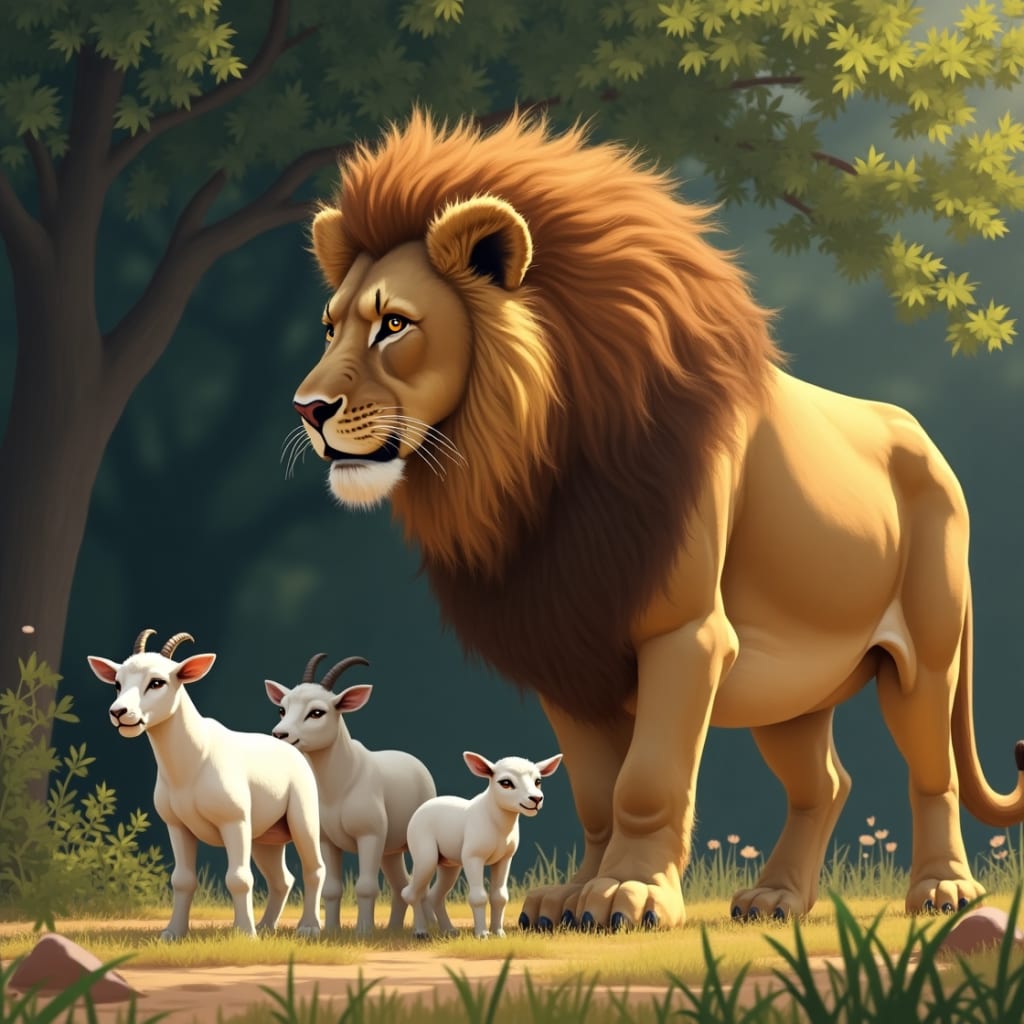
Once upon a time, in the heart of a dense, emerald-green jungle teeming with life, a hunter, known for his cunning and keen eyesight, managed to capture a lion cub. The cub was incredibly young, barely a few weeks old, and still entirely dependent on its mother's nourishing milk for survival. The hunter, envisioning a unique addition to his humble home, carefully brought the tiny, bewildered creature back with him. His own children, a playful and curious bunch, were utterly delighted to see the miniature king of the jungle. Their faces lit up with joy, and they immediately began to interact with the cub, giggling as it tentatively pawed at their fingers. They spent a considerable amount of time captivated by its innocent antics, their youthful energy mirroring the cub's own nascent liveliness.
However, after a period of playful interaction, the lion cub began to whimper, a soft, plaintive sound that indicated a pressing need. It was hungry. The hunter observed its distress and soon realized the predicament: the cub was too young to consume solid food, its delicate digestive system capable of processing only milk. This revelation brought a furrow to the hunter's brow; he knew the cub's dependence on milk was absolute at this tender age. A wave of concern washed over him as he pondered the immediate challenge, thinking, "What should I do now to sustain this little one?" The thought persisted in his mind, causing a moment of genuine worry.
Then, a brilliant idea, a stroke of ingenious simplicity, illuminated his thoughts. He decided to introduce the lion cub to his gentle and nurturing goat, who had recently given birth to her own litter of frisky kids. He carefully placed the small lion amongst them, hoping for a natural integration. To his great relief and satisfaction, the lion cub, guided by its innate need for sustenance and companionship, quickly bonded with the goat's kids. Their playful bleating and innocent curiosity seemed to comfort the new arrival. It was a remarkable sight, witnessing the predator's offspring nestled among its natural prey, an unlikely tableau of interspecies harmony.
From that day forward, a peculiar routine began. Whenever the goat's own kids would gather around their mother, eager for their nourishing drink, the lion cub, driven by its primal hunger, would unhesitatingly join them. It adapted seamlessly to this novel form of sustenance, thriving on the goat's milk alongside its adoptive siblings. As days turned into weeks and weeks into months, the lion cub continued to grow, physically transforming into a majestic beast. Yet, something profound was happening beyond its physical development. It was slowly but surely adopting the mannerisms and characteristics of its goat companions. It began to bleat instead of roar, to timidly graze instead of fiercely hunt, and to follow the herd instead of leading it. It was a lion in appearance, its powerful build and noble mane undeniable, but its spirit and habits were those of a goat. It had, in essence, become a timid, docile member of the flock, a stark contrast to its wild, brave lineage.
Then came a day that shattered the tranquility of their existence. A pack of ferocious wolves, their eyes gleaming with hunger, launched a brazen attack on the village. Given the hunter's house's close proximity to the dense jungle, several of these predatory canines managed to breach his home's defenses. The hunter, unfortunately, was away, having ventured deeper into the forest for his daily pursuits. The wolves, sensing an easy meal, immediately targeted the vulnerable goat kids. Their predatory instincts took over, and they lunged forward.
Suddenly, as they prepared to pounce, their piercing eyes caught sight of the large, golden-maned animal standing amongst the goats. It was the lion, now fully grown. Instinctively, the wolves recoiled, a primal fear seizing them at the sight of their formidable natural enemy. They began to retreat, their initial bravado replaced by apprehension. However, as they observed the lion's peculiar inaction—it neither let out a terrifying roar nor launched a ferocious attack—their courage slowly resurfaced. A growing disbelief turned into renewed aggression. Realizing the lion was no threat, they pressed their advantage, their fangs tearing into the defenseless goat kids, leaving a scene of chaos and devastation. The lion, despite its formidable size and inherent strength, stood frozen, a mere spectator to the brutal onslaught. Its leonine abilities, honed over generations of jungle survival, were virtually non-existent, dulled by its upbringing. It could not, or would not, defend its adoptive family. The wolves, having accomplished their brutal task, retreated back into the shadows of the jungle, leaving behind a trail of sorrow and a bewildered, motionless lion.
When the hunter finally returned home, his heart sank at the horrifying sight. He was utterly dumbfounded to find his goats torn apart by wolves, despite the presence of the powerful lion he had raised. A wave of profound shock and deep sorrow washed over him. He had taken in the cub with the hopeful intention that it would eventually become a protector for his livestock, a formidable guardian against such dangers. Never had it crossed his mind that the very environment he provided—living among goats—would strip it of its inherent capabilities. He now understood with bitter clarity that if the lion had been raised among its own kind in the wild, it would have learned to hunt with precision, to fight with ferocity, and to embody the unwavering bravery that defined its species.
The hunter mused, a heavy sigh escaping his lips, that keeping this lion here was utterly pointless. It offered no practical benefit, unable even to fulfill the most basic duty of protecting his animals. Its presence was now a liability, a sad testament to its lost potential. "What good is it here?" he thought. "Why not return it to its true home in the jungle?" He reasoned that by living amidst its own kind, surrounded by the challenges and demands of its natural habitat, the lion might finally rediscover its dormant instincts. Perhaps then, among its brethren, it would learn the courage, strength, and hunting prowess that were its birthright. With this resolve firm in his heart, the hunter, filled with a mixture of hope and regret, led the grown lion back into the depths of the jungle and released it, hoping for a transformation that nature alone could provide.
About the Creator
Muhammad Saeed
Start writing...My name is Muhammad Saeed. I enjoy writing about real-life stories, social observations, and heartfelt experiences. My writings reflect emotions, truth, and glimpses of life.
Keep reading
More stories from Muhammad Saeed and writers in Fiction and other communities.
The Little Match Girl
The Little Match Girl: A Tale of Hope and Despair It was an evening of **bitter cold**. The twilight began to deepen, eventually giving way to the profound darkness of night. It was the year's very last night, a time when most people sought the warmth and comfort of their homes.
By Muhammad Saeed8 months ago in Fiction
Silken Chains
Silhouettes of the female form were given flesh and bone. Silken skin glistened under the spotlight. Dry ice rose around our Icons as they danced atop their podiums in the Square. Heralded for their beauty, their movements were slight, powerful, and sensual.
By Paul Stewart6 days ago in Fiction
Puphive n.25
Neptune has arrived. Shining white marble institution stands alone in the middle of nowhere, surrounded by green grass and a luscious garden, ridiculous in it’s austerity, an indiscreet display of wealth in a world suffering from drought and famine.
By Taimi Nevaluoma7 days ago in Fiction




Comments (1)
How is my stori?