

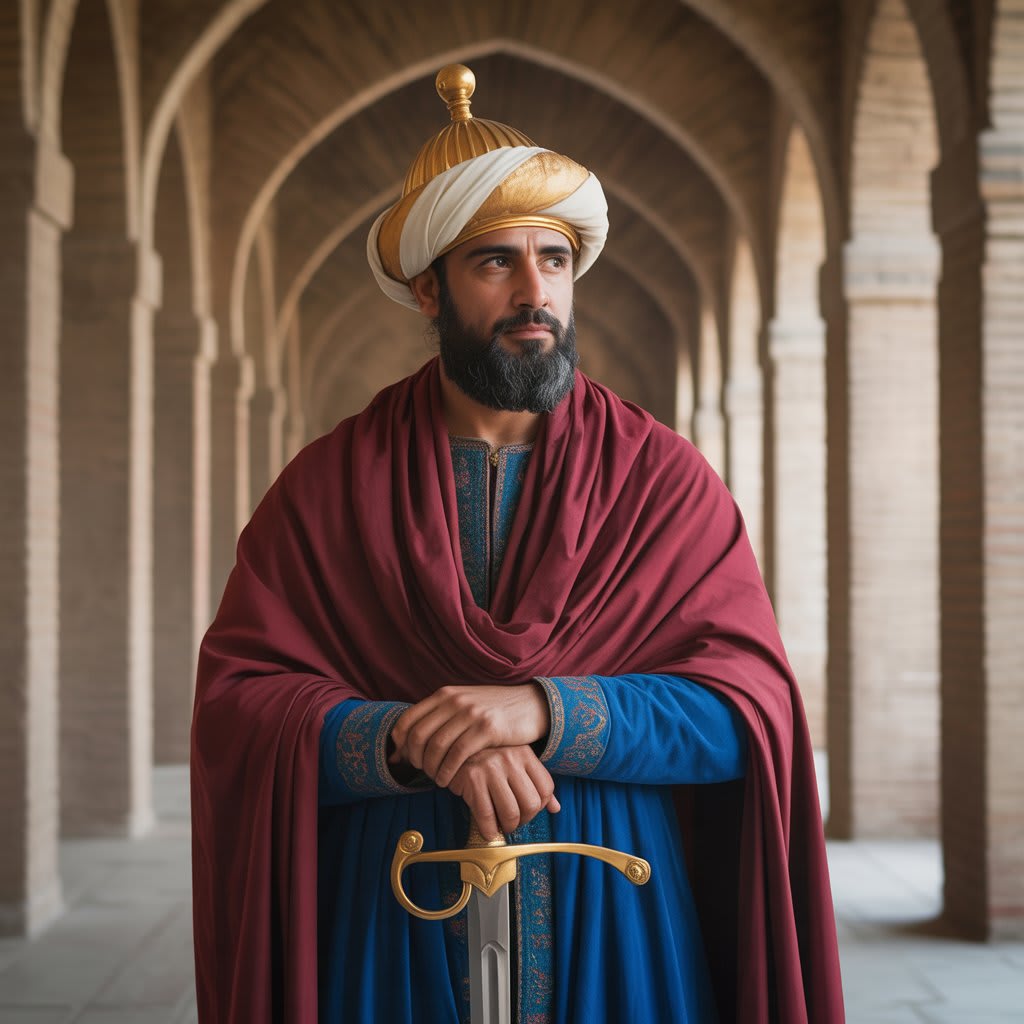
The Lion of Faith
The Legacy of King Salahuddin Ayubi
The name Salahuddin Ayubi—known in the West as Saladin—echoes through the corridors of history as more than just a conqueror. He was a warrior, yes, but also a man of remarkable compassion, humility, and justice. His story is not simply about battles and empires but about the heart of a leader who embodied the balance between strength and mercy.
Born in 1137 in Tikrit, along the banks of the Tigris River, Salahuddin’s beginnings were far from extraordinary. His father, Ayyub, was a Kurdish noble serving under a regional ruler, and young Salahuddin was expected to follow the path of service. In his youth, he was more drawn to study than to war. He immersed himself in the Qur’an, law, and the stories of earlier leaders, building a foundation of faith and discipline that would later shape his rule.
Yet destiny had other plans. By his early adulthood, Salahuddin found himself in the military, serving under the famous general Nur ad-Din. Though initially reluctant, his talent for strategy and his steady character soon set him apart. He was not the loudest voice in the camp nor the most flamboyant knight, but his patience, intellect, and sense of duty made him indispensable.
The defining chapter of his life unfolded during the Crusades. By the time Salahuddin rose to power, Jerusalem had been under Christian control for nearly a century. For Muslims, the holy city was a place of profound spiritual importance. Yet Salahuddin’s vision was never one of revenge—it was one of restoration. His dream was to unite the fragmented Muslim world, not only through the sword but through shared purpose.
In 1187, at the Battle of Hattin, Salahuddin’s forces faced the Crusader armies led by King Guy of Jerusalem. The sun beat down mercilessly that July, and the Crusaders, cut off from water, withered in the heat. Salahuddin, commanding with brilliance, encircled his enemy. The battle ended in a decisive Muslim victory, opening the path to Jerusalem.
When he entered the city, many feared a massacre, remembering the bloodshed of the First Crusade when Christian armies had stormed Jerusalem almost a century before. But Salahuddin chose another path. There was no slaughter, no indiscriminate revenge. Instead, he ordered his men to show mercy. Churches were preserved, civilians were spared, and many were allowed safe passage out of the city. His actions astonished even his enemies. The chronicler William of Tyre, writing from the Crusader side, could not deny Salahuddin’s fairness.
This moment revealed the heart of his leadership. Salahuddin understood that true victory was not just the conquest of land but the winning of hearts. He was deeply committed to the principles of justice, humility, and service. Unlike many rulers of his age, he lived modestly, refusing luxury while his people struggled. He was known to give away wealth in charity, to comfort the sick, and to pray alongside ordinary soldiers.
Even Richard the Lionheart, his great rival during the Third Crusade, came to respect him. The two never met face-to-face, but they exchanged gifts and courtesies during their long conflict. Richard once fell ill, and Salahuddin sent his own physician and a basket of fruits to aid his recovery. It was a gesture that transcended politics, revealing the humanity behind the armor.
Salahuddin’s final years were marked by the same humility that defined his life. When he died in 1193 in Damascus, the man who had commanded vast armies and ruled over great cities left little wealth behind. He had given most of it away. His legacy was not gold or palaces but an enduring example of leadership rooted in faith and compassion.
Today, Salahuddin Ayubi is remembered not only in the Muslim world but across cultures as a model of chivalry and honor. He stood in an age of brutality yet chose mercy; he wielded power but lived with humility; he fought fierce battles but never surrendered his humanity.
His story endures as a reminder that the measure of a leader is not only in what they conquer but in how they serve, how they forgive, and how they inspire. Salahuddin Ayubi, the Lion of Faith, remains a light from the past whose brilliance still guides us in the present.
About the Creator
LONE WOLF
STORY
The Last Message I Never Sen
I typed the message three times before deleting it for good. Each version sounded wrong in a different way. Too dramatic. Too casual. Too late. I stared at the blinking cursor like it was waiting for me to say something brave, but all I could offer was silence.
By Salman Writes5 days ago in Fiction




Comments
There are no comments for this story
Be the first to respond and start the conversation.