
"The Light in the Attic"
Tale of Loneliness, Memory, and Unexpected Friendship
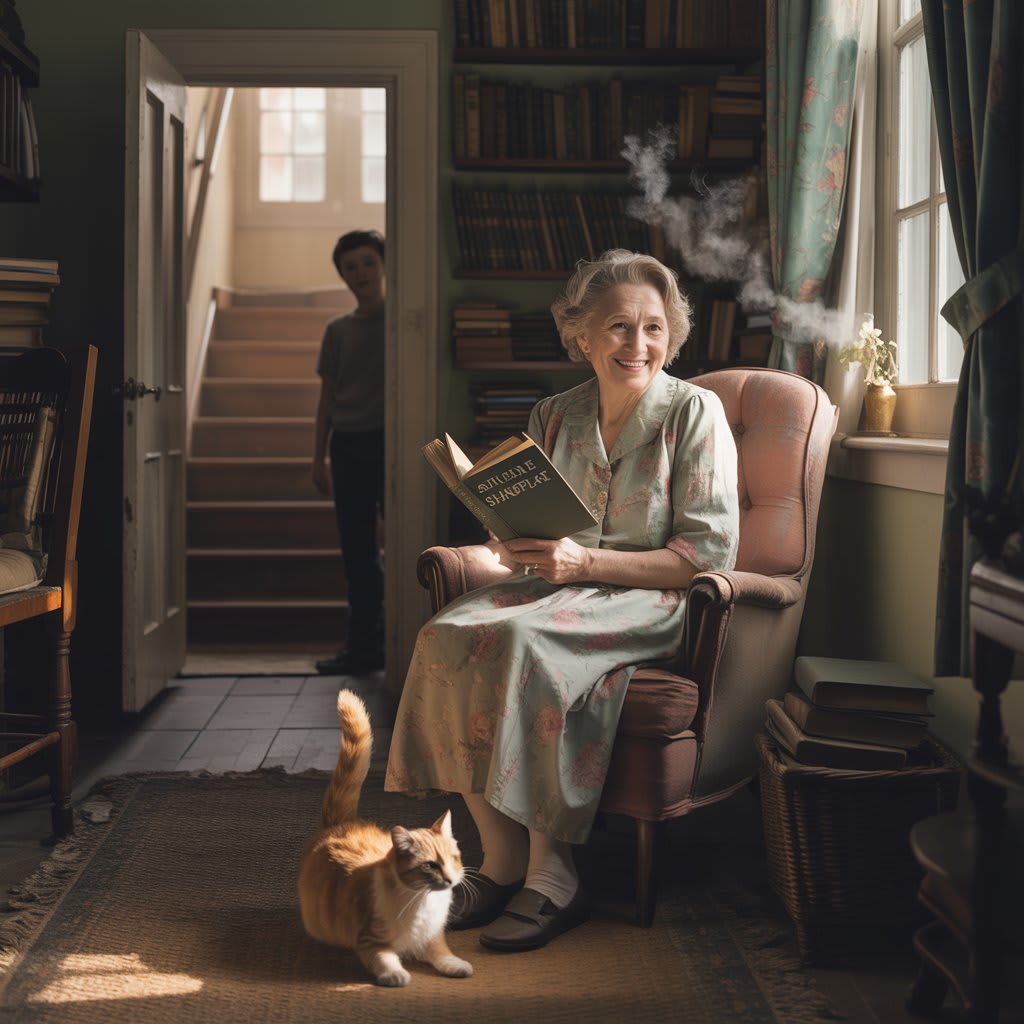
At the edge of the village, past the crooked oak trees and the overgrown path that children dared each other to walk down, stood an old house. Its wooden boards were worn and faded, its windows foggy with time. Most people whispered about the house but never got too close. They said an old woman lived there, alone, never seen during the day, and only a flickering light in the attic window hinted at life within.
Her name was Mrs. Ada Rowe. Decades ago, she had been a schoolteacher, known for her strictness but also her wisdom. Her husband had died young, and her only son had moved abroad and never returned. As the years passed, people forgot about the woman who once walked proudly through the village in her neat gray coat and sturdy shoes. She faded into legend—just a shadow behind the curtains.
Every morning, Ada woke at dawn. She made a cup of tea, sat by the window, and watched the world she no longer belonged to. The children played far away, the market bus no longer stopped near her gate, and the mailman no longer brought letters. Still, she kept her routines. Dusting the photos. Tending to her dried garden. Talking softly to her cat, Whiskers.
One rainy afternoon, something unusual happened. A knock at the door echoed through the house. It was a sound so foreign Ada almost didn’t recognize it. Cautiously, she shuffled to the door and opened it.
There stood a boy, no older than ten, drenched and shivering. “My football rolled into your garden,” he said, pointing behind him. “I didn’t want to go in without asking.”
Ada blinked, surprised not only by the intrusion but by the boy’s politeness. “Come in,” she said quietly. “Before you catch a cold.”
That was the beginning of something neither expected.
The boy, whose name was Liam, began to visit regularly. At first, it was just for his football. Then, out of curiosity. He would sit with Ada and listen to her stories—tales of her teaching days, of a time before smartphones and fast food. In return, he showed her his drawings, helped her water the plants, and eventually brought her groceries from the shop.
As the seasons changed, so did Ada. Her voice grew stronger. She opened the curtains more often. She even laughed. For Liam, who lived with a busy single mother and often felt overlooked, the old woman became a haven of patience and warmth.
Word spread. Other children became curious. Parents waved at Ada when they passed. The village slowly remembered her. The old house didn’t look so abandoned anymore. It had flower pots again. It had visitors.
One crisp autumn evening, as leaves danced in the wind and Whiskers purred by the fire, Ada smiled at Liam, now curled up with a book in her armchair.
“Funny,” she said, “how life surprises you when you think all your stories are over.”
And in that quiet, golden moment, the old woman in the old house was no longer forgotten.
About the Creator
Keep reading
More stories from Muhammad Sanan and writers in Fiction and other communities.
The Secret That Changed Everything
Life has a funny way of presenting us with turning points in the most unexpected ways. For me, that turning point came not through a major event or a planned decision, but through a quiet conversation with my sister—a moment so ordinary on the surface, yet so transformative that it split my life into two parts: before and after the secret.
By Muhammad Sanan8 months ago in Fiction
TUS NUA - ch 49
TUS NUA – ch 49 New Beginnings – Mia and Midnight (*)(*)(*) As Mia spoke on the phone to Ali’s sister, Ellen, Finola slipped quietly away and walked to the stream behind Tus Nua. Carefully, she put a block on her family so no one could know what she was about to do.
By Margaret Brennan3 days ago in Fiction
The Lure
I heaved the last trunk over the lip of the top step, staggering back with it before dropping it to the ground. I sank onto a loose cushion nearby, gasping for breath as I surveyed the damage: crates and trunks scattered across the suite, loose items draped over every bit of furniture, which was just about all askew.
By Phoenixica245 days ago in Fiction




Comments
There are no comments for this story
Be the first to respond and start the conversation.