
🧙♂️ The Legend of the Draugr: Norway’s Undead Mariners of the North
🌊Norwegian folklore

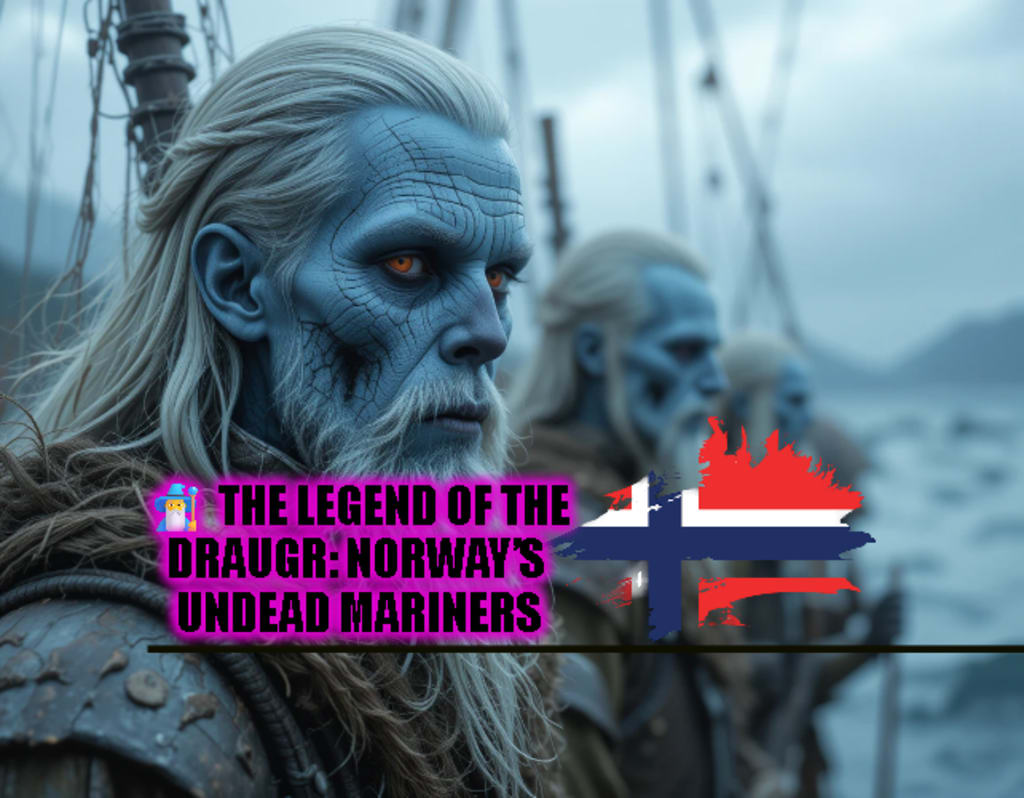
🌊 The Roots of the Draugr Legend — Where Sea and Death Collide
In the ancient Norse worldview, few forces were as terrifying and mysterious as the sea. Cold, vast, and unforgiving, the ocean was not only a means of travel and trade—but also a realm of death. Norwegian sailors and coastal villagers told tales of the Draugr (plural: Draugar), a revenant of the sea. Unlike typical ghosts, Draugar were physical beings—corpse-like, bloated, with pale or blue-tinged skin—and they were known to haunt grave mounds and coastal waters.

🧟♂️ These undead mariners were not mere phantoms. Draugar retained intelligence and malicious intent. In sagas, they often emerged from shipwrecks or drowned graves, terrorizing the living who dared approach the shores or disturbed their burial grounds. Unlike spirits that faded into the wind, Draugar fought with immense strength and sometimes carried ancient weapons.
🪦 The legend likely stems from a fusion of Viking burial customs and pre-Christian beliefs in the restless dead. Viking warriors and sailors were often buried with boats or in burial mounds shaped like ships. The Norse feared that improperly buried individuals—especially those who died violently or in isolation—might return as Draugar to avenge unfinished business or protect their treasures.
The medieval Icelandic sagas, though written centuries after the Viking Age, are rich sources for Draugr tales—some of which were known across Norway. These stories reveal how seriously early Norwegians and their neighbors took the threat of the undead.
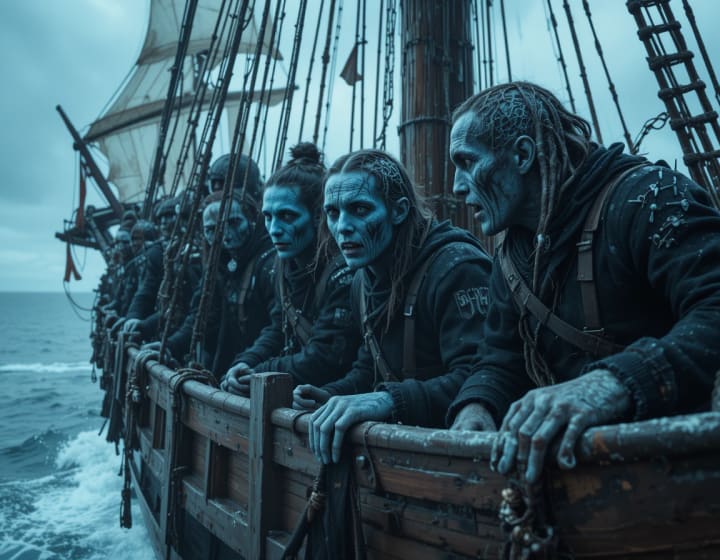
📜 In Grettir’s Saga, one of the most famous encounters occurs when the outlaw Grettir faces Kár the Old, a Draugr who haunts his burial mound. Kár emerges at night, breaking bones and scaring villagers. Grettir enters the mound, wrestles the Draugr, and ultimately destroys it—claiming treasure in the process.
🪓 Another story tells of Thorolf Twist-Foot, a landowner in Eyrbyggja Saga, who becomes a Draugr after death. Thorolf rises from his burial mound and terrorizes his farm, killing livestock and causing sickness. Eventually, his body is dug up, burned, and his ashes scattered into the sea—a drastic but common way of ending Draugar hauntings.
📖 These tales weren't just scary stories—they served as moral lessons. Many Draugar were greedy, cruel, or dishonorable in life. Their return from death symbolized unresolved sins, social disorder, and the need for community justice or spiritual purification.

🪙 Buried with Treasure — The Draugr’s Hoarded Curse
Draugar were often described as guarding immense buried treasures—gold, silver, weapons, and family heirlooms. Vikings believed that the dead had a right to retain their possessions, but the living might disturb the dead out of greed, prompting the Draugr’s wrath.
⚰️ Some graves were built with elaborate traps to deter grave robbers. Corpses were sometimes tied up, pierced with iron, or surrounded by ritual objects to prevent them from rising. In Norwegian folklore, iron was believed to ward off spirits, and nails were driven through bodies to “anchor” them to the grave.
💰 It was said that anyone who took a Draugr’s treasure would be cursed. In stories, those who dared to steal gold from the dead suffered nightmares, went mad, or were dragged into the sea. Yet the temptation often proved too great—especially for desperate or ambitious villagers.
🌘 Over time, the Draugr evolved from a cautionary tale about greed into a broader cultural metaphor: don’t disrespect the dead, and don’t covet what is not yours.
In coastal Norway, Draugar took on a particularly terrifying form: undead sailors known as Havdraug (“Sea Draugr”). These beings weren’t bound to mounds but haunted shipwreck sites, fjords, and lonely cliffs where the waves broke violently against the rocks.
🌊 Sailors feared seeing a pale face peering over the railings or a skeletal hand clutching the mast. In some tales, Sea Draugar rowed phantom boats at night, calling out to fishermen and leading them to wreck their ships on the rocks.
⚰️ These water-bound revenants were often former sailors or pirates who died violently at sea—especially those who betrayed their crew, died with unfinished vengeance, or were denied proper burial rites. According to lore, they would continue to sail eternally, appearing in storms or fog as omens of death.
🪝 Some fishermen left offerings at sea—coins, bread, or rum—hoping to appease the drowned dead. Others whispered prayers when passing certain cliffs or shipwreck sites, fearing the Draugr might follow them home.

🔥 Destroying the Draugr — Fire, Ritual, and Final Rest
The only way to destroy a Draugr, according to Norse belief, was to physically confront and burn its body. Unlike ghosts that could be banished with prayer, the Draugr had a corpse that had to be unearthed, dismembered, and incinerated. This brutal process symbolized a return to the elements and prevented the soul from regathering strength.
🔥 Some rituals involved opening the burial mound during daylight, cutting off the head, and placing it between the Draugr’s legs. The body would then be burned, and the ashes scattered in running water—a sacred act that ensured the spirit’s journey to the afterlife.
🔒 In later centuries, Christian practices replaced these violent methods. Burial traditions changed, and the belief in physical revenants declined. But in rural Norway, the fear of the Draugr lingered. Oral traditions passed the legend down through generations, blending pagan roots with Christian morality.
🧂 Salt, fire, and iron nails—common in burial rites—reflected a cultural legacy that saw death as a dangerous liminal state. One misstep, and the dead might walk again.
Today, the Draugr lives on in popular culture. From video games like Skyrim to TV shows like The Last Kingdom, the undead Norse warrior remains an eerie symbol of Viking lore. But for Norwegians, the tale still holds cultural power—not because they fear Draugar, but because the legend ties them to their past.
🧭 Norway’s stunning fjords, lonely villages, and ancient burial sites still echo with mystery. Folk museums display grave goods, carved runestones, and preserved ship burials that hint at a world where death was not final and the dead could rise in fury.
📚 Scholars view the Draugr legend as part of a broader Norse understanding of the uncanny—that the dead are never entirely gone, and memory, like the sea, has deep and dangerous tides.
🧊 Whether standing beside the grave mounds at Borre, sailing across foggy fjords, or wandering through sagas and stories, one truth remains: in Norway, even the dead still whisper. ⚰️🌬️
About the Creator
Kek Viktor
I like the metal music I like the good food and the history...
Keep reading
More stories from Kek Viktor and writers in Fiction and other communities.
The Legend of Blå Jungfrun
: Sweden, a land rich in natural beauty, ancient history, and folklore, is home to countless legends that have been passed down through generations. Among these, the legend of Blå Jungfrun—the "Blue Virgin"—stands out as one of the most captivating and mysterious stories rooted in Swedish tradition. This island, situated in the Baltic Sea off the coast of Öland, is shrouded in myth, superstition, and wonder, renowned for its striking natural beauty and legendary past.
By Kek Viktor8 months ago in Fiction
Miss Persephone's Manual to a Seemingly Ordinary Life
Miss Persephone was found at the dining table, her blue eyes swollen, her tears arriving and retreating like the tides of the ocean. Earlier that day, her family had visited her in the retirement home where she had lived for eight years. It was her eightieth birthday.
By Imola Tóth4 days ago in Fiction



Comments
There are no comments for this story
Be the first to respond and start the conversation.