
The Legend of Hercules: Strength in the Digital Age
Hercules Modern Battle: Conquering Digital Monsters with Real Strength

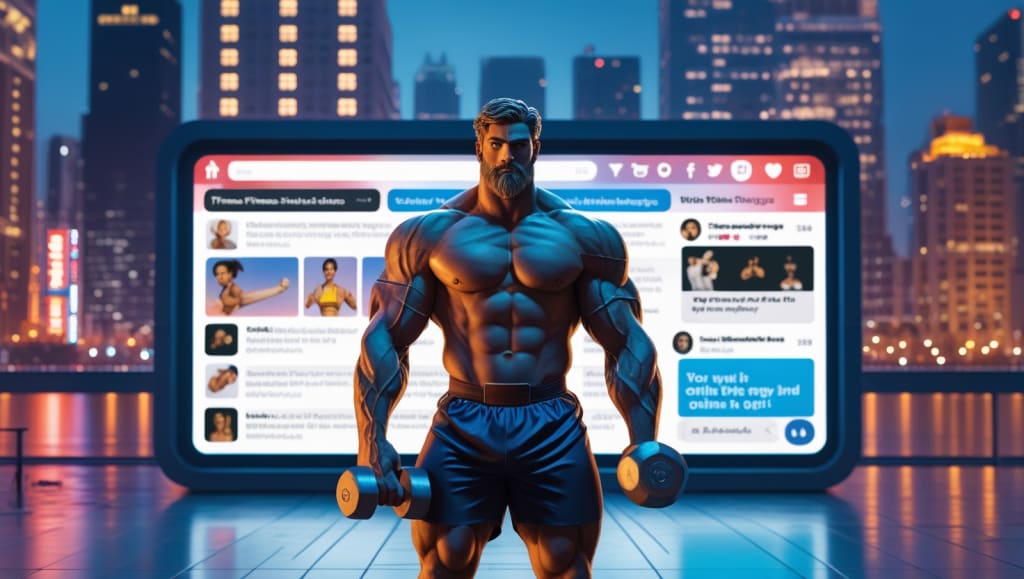
In the bustling metropolis of New Athens, where skyscrapers gleamed like digital giants and neon lights painted the streets, a new hero had emerged. His name was Hercules, but not the one from ancient legend. This was a modern-day Hercules—born in the age of technology, social media, and digital competition. He was a fitness icon, an online sensation whose strength and feats of athleticism were broadcasted to millions. But Hercules wasn’t just known for lifting heavy weights—he was known for lifting spirits, as his followers liked to say.
Hercules had grown up in a small town, training hard in the gym and dreaming of making a difference. However, it wasn’t until he uploaded his first workout video on a popular streaming platform that his life changed. His raw talent and relentless passion quickly caught the attention of the digital world. Before long, he became a household name, not just for his physical prowess but also for his positive messages about self-worth, mental resilience, and the power of community.
Yet, despite his fame, Hercules found himself constantly facing a new, modern-day monster: the pressure of perfection. Social media, with its filters and algorithms, created an image of him that was always stronger, faster, and more flawless than he could ever truly be. The constant need to prove himself on the digital stage began to wear on him. The weight of expectations was heavier than any dumbbell he’d ever lifted.
The First Labor: The Digital Hydra
It started with an innocent challenge: Hercules had been asked by a popular influencer to take part in a "fitness battle" against another celebrity athlete. It sounded like a fun way to engage with his fans, so he accepted. What he didn’t expect was that his opponent would be the reigning champion of the fitness world—an influencer named "Titan" who had perfected the art of digital manipulation. Titan was a master of social media tricks: enhanced videos, staged workouts, and photo-perfect images that left no room for imperfection. His followers adored him, worshipped his digital facade.
The battle began with a series of challenges—pull-ups, sprints, obstacle courses, and strength tests. But as Hercules completed each challenge, he noticed something strange. The crowd's reactions weren’t just based on his performance. Instead, they were based on something else—something beyond his control. People were cheering louder for Titan, not because he was stronger, but because his content was more "perfect" in the eyes of the algorithms. Titan’s videos were edited to perfection. His workout clips had filters, enhanced audio, and slow-motion shots that made every move look effortlessly graceful.
Hercules realized that Titan wasn’t just competing against him physically; he was battling him on an entirely different playing field—one that was based on image, perception, and manipulation. The more Hercules struggled to keep up, the more he found himself trapped in a digital maze, unable to escape the demands of a curated image.
But just when he thought he was defeated, something clicked inside him. The true strength of Hercules was never about perfect image or flawless execution—it was about heart. He stopped editing his videos, stopped trying to compete with Titan’s facade, and instead started showing his real self. The raw, unpolished, gritty truth of his workouts. He posted the sweaty, imperfect moments—the times he fell, the moments of struggle, and the triumphs of overcoming them.
His followers responded. The genuine, human side of Hercules resonated with them. They didn’t need perfection; they needed someone who was real. And slowly, Hercules began to win the true battle—not the one on screen, but the one in his heart.
The Second Labor: The Social Media Minotaur
Just as Hercules began to reclaim his sense of self, another challenge arose. This time, it wasn’t a competitor. It was the social media "Minotaur"—an ever-growing beast of negative comments, trolls, and cyberbullying. With every video he posted, the Minotaur grew stronger, feeding off the hate and vitriol that flooded the internet.
At first, Hercules tried to ignore the criticism. But as the trolls grew louder, the Minotaur seemed to take shape—an enormous, monstrous entity made up of distorted comments, hate speech, and malicious memes. It attacked his confidence, telling him he wasn’t strong enough, that he didn’t fit the image of the "perfect" influencer. It made him question his worth. It made him doubt whether his message of authenticity had any real value in a world obsessed with validation and approval.
Hercules knew that facing this monster required more than physical strength—it required mental resilience. He reached out to others who had faced similar battles—fellow creators, athletes, and influencers who had been targeted by online hate. Together, they formed a support network, a community that countered the Minotaur’s influence with kindness, understanding, and empathy. They encouraged each other to keep fighting for authenticity, to keep sharing their stories and standing up against the hate.
The more they resisted the Minotaur’s grip, the weaker it became. The monster thrived on division and isolation, but the community Hercules built was grounded in support and solidarity. Slowly, the Minotaur dissipated, and the trolls lost their power. Hercules had defeated the social media beast—not with force, but with unity and love.
The Third Labor: The Algorithmic Lion
Hercules’ final challenge came from the most insidious adversary of all: the Algorithm. It was a silent, invisible force that controlled everything. It decided what content was seen, who became famous, and what trends dominated the digital world. The Algorithm was ruthless and unpredictable, rewarding content that adhered to its ever-changing standards and punishing those who failed to conform.
Hercules, now wiser from his previous trials, understood that the Algorithm was a monster that could never truly be defeated. It was a force that could be manipulated, but never tamed. He realized that the only way to survive was to stop chasing the Algorithm’s approval. Instead of tailoring his content to fit its demands, Hercules focused on creating what he loved. He started sharing his thoughts on mental health, self-improvement, and the importance of balance in a digital world that often rewarded extremes.
Slowly, his message began to resonate with a different kind of audience—those who valued depth over surface, authenticity over popularity. While the Algorithm continued to prioritize trending content, Hercules’ true followers, the ones who appreciated the genuine connection, rallied behind him.
Through these challenges, Hercules learned that true strength was not about defeating digital monsters or gaining followers—it was about staying true to oneself. It was about understanding that strength in the digital age didn’t come from perfection, but from vulnerability, connection, and the courage to be real in a world that often valued anything but.
In the end, Hercules wasn’t just the strongest man in the gym; he was the strongest man in the digital world—not because he could lift the heaviest weights, but because he lifted people up, helping them find their own strength along the way.
About the Creator
Vivek Kumar
Passionate about sharing knowledge, inspiring curiosity, and sparking creativity. Explore my world of insightful stories, practical tips, and engaging content to fuel your learning journey!
Keep reading
More stories from Vivek Kumar and writers in Fiction and other communities.
Daily Lemon Benefits
The kitchen component lemon serves more than its role as a zestful citrus food, accompanied by its fragrant aroma. It brings multiple essential nutrients and health benefits to users. The nutritional profile of lemons contains crucial elements that provide great benefits to your health. Daily consumption of one lemon leads to noticeable body changes which improve your health condition. Knowing how lemons help the body makes it important to delve into five significant health improvements that occur by adding lemons to your daily routine.
By Vivek Kumarabout a year ago in Lifehack
The Lesions of Devotion
Every day I set myself down on the freshly cut lawn and strip myself bare. I take my guitar and finger the frets and pick at the strings, listening for dissonance. My life is dissonance. I twist the tuning pegs until each string sounds bright. Then I kneel, calves pointing behind me, kneecaps facing forward. All exposed to the breeze. I close my eyes and play the melody.
By Paul Stewart6 days ago in Fiction
The Fire That Refused to Burn
Kael did not wake to light. He woke to silence so complete it rang in his ears. For a long moment, he couldn’t feel his body. No pain, no warmth, no fire. Just emptiness, like the space left behind after something essential had been torn out. Panic rose in his chest, sharp and sudden.
By Imran Pisani3 days ago in Fiction




Comments
There are no comments for this story
Be the first to respond and start the conversation.