
The Last Serenade
A short story of historical fiction for the Vocal challenge ‘Ship of Dreams’

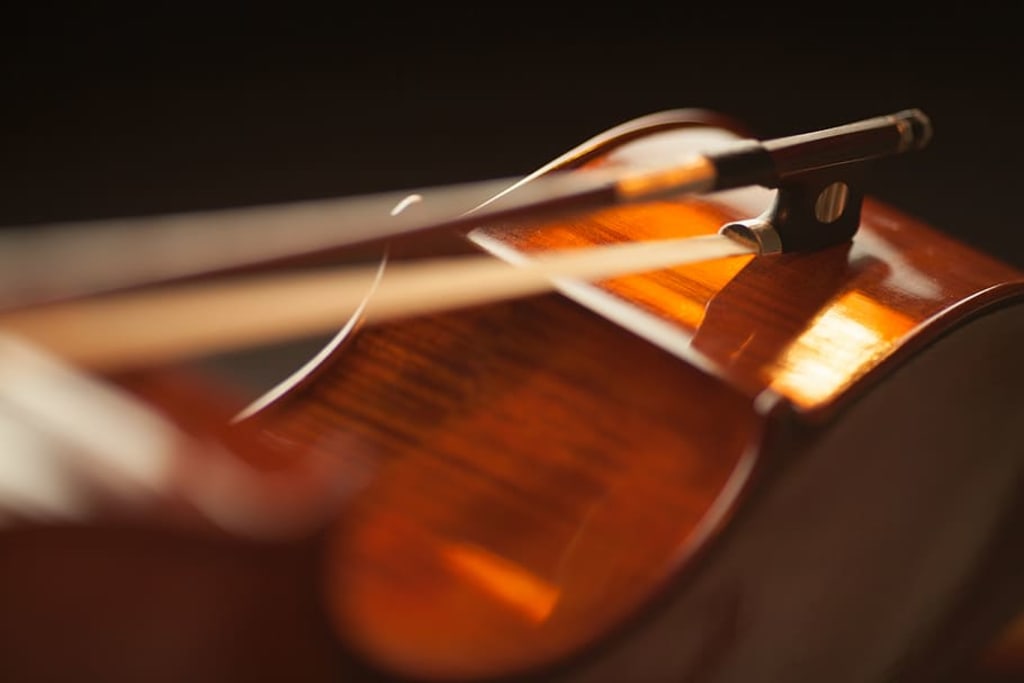
Each day, half an hour before the serving of meals, the string quintet arrived at the first-class dining room aboard the ship. They strode into the grand space, walking past the chandelier fixtures, crystal glass, and ornate china — everything new and in pristine condition. They wore tailored suits of dark fabrics and brought with them instruments in wooden cases. Each day, three times per day, the quintet prepared to perform as the regiments of servants about the dining room completed the last of the table-setting. They spoke quietly among themselves between sets of three-octave scales. They practised the intricacies of complex motifs, playing various measures from their repertoire of classical music.
Many of the patrons in first class never paid much attention to their music. Only those who loved it dearly or were once students themselves listened with pleasure, but these people numbered few among the many dozens. The passengers with first-class tickets tended to ignore their surroundings, concentrating instead on the seafood, champagne, and abundant gossip.
The quintet knew by heart, without the assistance of sheet music, whole canons of work from Europe’s great composers. In the ship’s banquet hall, they played the usual pieces by Brahms, Mozart, Handel, and others: a program that required between two and three hours. In the evenings, they played until the oaken grandfather clock by the bar tolled the 9 o’clock hour.
Upon the culmination of the nine chimes, the quintet took a moment to pause and reflect and regard one another until the first violin struck up the first notes of Nocturne, Op 9. No. 2 by Chopin. The rest of the quintet plucked along with delicate notes and harmonies, accompanying the first violin’s vibrant melody. The piece ended only moments later, thus concluding the evening’s music. Only a handful of patrons remained in the dining room, none bothered by the melancholy of the subdued finale; no applause or recognition ever followed from their performance. Their role was to be heard from a distance like a phonograph record in the corner of an empty salon. The quintet would pack up then, regard one another once more, and return to their cramped cabins in the bottom of the second-class quarters, close to steerage.
The quintet repeated this routine, in the same fashion, for five days. Their contracts with C.W. and F.N. Black of Liverpool required meal time service and afternoon tea time for as long as the ship was at sea. On April 10th, the first day of the voyage, more passengers came aboard in Cherbourg, France; on the 11th, the ship stopped in Queenstown, Ireland to do the same. Once all ticket-holding passengers were settled, the ship steamed west into the endless blue expanse of the North Atlantic, leaving nothing behind her but wake and the stories of those below deck.
Hartley, the first violin and bandmaster, liked to watch the sun dip in the western sky before changing into evening concert attire. The heavenly ball of fire cast long rays upon the sea and ship, turning more golden and pronounced with the passing hours. An Englishman from Colne, a town with year-round cloud cover, Hartley enjoyed the sunshine when it was abundant. Hume, the second violin, was a Scotsman from the southern edge of the country who spent recent years performing on numerous passenger liners. He stood some yards away from Hartley to smoke hand-rolled cigarettes and sip whiskey from a leather-bound flask until the hour beckoned him to join the others. He brought pocketfuls of candies and chocolates to distribute to the children from steerage milling about on the deck. They grasped and snatched and ran off with sneers, thinking they’d bested a high-class gentleman.
Three other musicians rounded out the quintet: Clarke, the bassist, was a polite young man from Manchester; Taylor, the second cellist, was London-born and the eldest of the quintet at 40 years of age; Woodward, the first cellist, had made a name himself in the most prestigious of musical circles throughout England before signing on with C.W. and F.N. Black in 1909. A gifted soloist with an equally strong penchant for chamber music and orchestra, Woodward had distinguished himself as a learned scholar and keen hobbyist. Shortly after coming together, the quintet was quick to regard Woodward as the classic genius of their group. Each member received an invitation to form the ship’s quintet following the winter concert season in England, and they planned to stay in New York for one week before embarking on the ship’s return to Southampton.
During the meal and tea time hours, the quintet did as expected and comported themselves with the exceptional manners of classical music performers. None requested more than was given to him, and all appreciated the relative comfort of their rooms. Porters brought leftover cuisine from the ship’s kitchen to the servant’s dining room three times per day, cheap ale and wine flowed freely, and each man privately relished the opportunity to play aboard the mightiest of all ships in the British Empire.
Each night, in the hours following their music, Hartley would ascend the ship's stairs to a lower promenade and gaze up at the night sky. Thousands of twinkling stars filled the black canvas of the heavens above. Each beacon of light, impossibly distant, shone with a radiant brilliance that offered not only narrative and legend but also an enduring sense of comfort. Aboard the ship, under the crisp and clear sky of an Atlantic spring, Hartley felt a subtle yet undeniable truth swell within his soul. It seemed as though nothing in the world could disrupt the privilege and joy of this particular journey.
On the fifth night, the quintet joined the maids and valets in their dining saloon two levels above the kitchen. There, dozens of ordinary servants relaxed and became themselves. The men undid their neckties and unbuttoned their jackets; the women loosened their corsets and removed their aprons. All lit cigarettes for one another and laughed heartily as two porters in white uniforms distributed bottles of brown ale. Smoke began to layer in the air, and a phonograph somewhere in the space produced the soaring voice of Enrico Caruso. Upon receiving a bottle of the strong beer in his hands, Taylor, the second cello, broke into song and swayed with the music.
The dining saloon took on a celebratory feel that contrasted starkly with the stuffy, orderly manner of the first-class dining room. Hartley placed his arm around Taylor’s shoulder and danced in a see-saw manner with his elder, drawing cheers and emphatic whistles.
The night continued as such until the 11 o’clock hour when a supervising valet, his hair combed and jacket buttoned to the top, entered the boisterous and narrow hall to announce preparations for after-hours service. The musicians, unbothered by the sudden urgency of their fellow servants, stayed for a while longer until they too retired from the hall. On the way out, Hume and Clarke sang lyrics from Nut Brown Maiden, an old Scottish song that harkened back to exuberant, unrestrained nights in highland pubs of the olde country.
While these merry scenes transpired below deck, officers manning the bridge toward the ship’s bow poured tea and donned long coats to warm themselves against the bitter cold of a mid-April night. The great ship, clocking 21 knots, steamed into the vast darkness of the open ocean. The velocity of its course animated the flags above the bridge on an otherwise breathless night.
Hartley stepped into the biting cold of the promenade, holding the door for Taylor to join him. They stood to the side of the third smokestack and watched as their breath froze in the frigid night air. Hartley withdrew two cigarettes from the silver case in his jacket pocket and struck a match, holding it to the packed tobacco at the far end of Taylor’s cigarette.
They smoked and looked up at the night sky above them. Hartley was about to comment on the evening’s music when laughter came ‘round the corner of the promenade. A dashing couple appeared in the harsh light, out of breath from leading a chase of some kind. The young man, handsome yet dressed in an oversized dinner coat —thus betraying his worn boots and loose-fitting slacks— led the girl by the hand and glanced over his shoulder. The girl, wearing a long dress, laughed with delight and allowed herself to be led, the green of her eyes alive and alight with the fire of love. The couple rushed past the musicians without pause, their laughter echoing across the deck of the promenade before the air fell to silence once again.
“Star-crossed lovers,” said Hartley. The men shared a gentle laugh and looked at where the couple had disappeared into the dark. Hartley was about to re-light his cigarette when the ship gave a sudden jolt; his limbs reflexed, bracing his feet to the wooden planks of the promenade. The cigarette in his hand fell to the deck and rolled around as the ship stuttered. A tremendous scrape then sounded across the entirety of the space, its origin unknown and foreboding in the infinite darkness that surrounded where they stood. Strange vibrations rumbled through the ship and reverberated in the bones of their extremities.
“Good God”, Taylor half-shouted, turning to Hartley for an answer, but the bandmaster was already rounding the corner of the promenade. Taylor ran after him.
Across the ship’s starboard side, a dozen sailors and passengers stood in awe of something behemoth passing before them; the darkness beyond their ship curdled and materialised into something colossal. Taylor narrowed his eyes to discern its nature and thought first of another ship steaming in the night. But as the gargantuan object moved past them and lights from their ship illuminated its shape, a white wall the colour of wind-driven snow stood prominent like the sails of a leviathan clipper. Only the glittering stars of the night sky, bright as ever, indicated the end of this massive thing that towered over the ship. None who stood there and witnessed the collision could turn away, let alone draw a breath.
In his confined quarters toward the stern, Woodward stirred from a light slumber. He blinked awake where he lay and listened to the whirring din of the ship’s propellers, constant companions for occupants in the stern, come to a sudden halt. Stillness filled the cabin's air, at once welcome but also alarming and strange. Mumbling voices in the hallway outside his door revealed nothing, so Woodward dressed, poured a small glass of picon bière with ice, and entered the hallway.
Hume and Clarke were still drinking below deck when the ship lurched. They looked about as the hallway around them buckled and swayed slightly, and the distant engines fell silent. Hume raised a pair of bottles to the air, his face contorting into a twisted knot reddened by drink. “Fit’s ‘at aboot!” he yelled into the hallway where they sat. “We dun bin taken by sea rovers! Hurry noo, fetch th’pow’er ‘an erms!”
Clarke shooed him in good humour and jest, reaching for one of the bottles the Scot clutched in his hand. “Oh, do hush now. My single shilling is on an unscheduled inspection and nothing more, surely.”
Back on the promenade, Hartley and Taylor watched as the outline of the enormous object receded slightly and the ship held its course, seeming to slow to a coasting drift. By this time, crew members had emerged from numerous doors along the deck and officers were giving vague orders, their voices cutting through the freezing air as the ship coasted onward through the night.
Taylor spoke first. “That was no ship, Mr. Hartley.”
The bandmaster’s eyes stayed fixed on the looming object past the stern. “It was not, Mr. Taylor.”
Many levels below where they stood, the roiling heat and reddish flames of the boiler rooms were extinguished in an impact so sudden the men who heaped coal by the trowel and laboured for hours each day, their faces and bodies blackened with soot, stood no chance against the jets of icy water that cascaded through the grievous ruptures in the ship’s steel underbelly. The water coursed through the coal bunkers and ‘round the boilers with such impact that it broke bones and swept away the once-sturdy men like fallen branches in a raging river, their brows no longer glistening with sweat and their eyes wide with terror. Some fled through doorways to other boiler rooms less deep in the ship, but none escaped the sealing of the doors that sounded with a final clang, thus dooming all to short-lived peril.
These men were privy to a horrifying reality that no other man, woman or child outside of the ship’s bridge knew at that moment. Atop the bridge, the captain and nearby crew had only just begun to realise the graveness of their situation. The officers and quartermasters turned to their captain for some commentary on the unthinkable, but the captain simply stood in shock. He remained there in the company of his men, still and unmoving save for a trembling hand. After a moment, the officers noticed that their hands were trembling, too.
Clarke, Woodward, and Hume sat in stilted silence in the second-class dining room when Hartley and Taylor stepped in from the cold. The ship had since arrived at a complete stop, and they heard steam escaping from distant orifices.
Hartley spoke first. “Did any of you gentlemen see what happened?”
Hume, still drunk but quickly sobering, spoke plainly. “Nay, we were hol’d up with drink and some vittles jus’ beyond the saloon thir when the ship start’d t’shake.”
Clarke sought to offer a broader perspective. “It’s true what Mr. Hume says, Mr. Hartley. We felt only the shake and the peculiar stopping of the propellers when a young lady somewhere nearby began to scream. We rushed to see what caused the fright and were amazed to find her in a stateroom, surrounded by several porters. A terrific gash had opened up across the wallpaper of the seaside windows, and bits of ice lay scattered across the carpet.”
“Aye, the lass skirled and near fainted from the gluff of what happen’d thir in the stateroom.”
“Thank you, gentlemen,” said Hartley carefully.
Seated on a red cushioned chair between Clarke and Hume, Woodward removed his round spectacles and squinched his eyes shut before speaking. “Suppose we’ve borne the brunt of a long swipe along the side. The damage will be catastrophic. I imagine the architect is now convening with the captain to determine an appropriate course of action.”
It was Taylor’s turn to join the discussion. “Mr. Hartley and I witnessed it mere moments after impact. Its size looked more than twice our own.”
Clarke gave a half-smile and spoke louder than necessary. “It seems that we’ve decided prematurely as to the precise nature of what’s happened. Why not consult the quartermaster for an assessment?”
“My good sir, please believe me when I say that your optimism is appreciated.” Hartley’s eyes were cast downward, his pupils signalling a mind embroiled in deepening thought. The handful of other people in the dining room were second-class passengers who cracked jokes and sipped brandy from stout crystal glasses.
A door in the dining room opened in a hurry and three sailors walked in, their arms loaded with beige lifejackets. One of them, a low-ranking officer with a square jaw and biting lips, called out across the room, “Just a precaution, captain’s orders. Take one, retrieve your coats, and head up to the promenade.” The sailors distributed the lifejackets briskly, much to the bemusement of the passengers. A man with a moustache and matted hair allowed his to fall to the floor. He then squatted over it, pretending to urinate upon the untouched lifejacket. A woman to his side covered her mouth and giggled.
The musicians stood to put on their coats and receive their lifejackets. Each one was pulled taut and in brand-new condition. They were about to file out of the dining room when an old woman seated in the corner, still dressed in black dinner attire, spoke up with a distinct American accent.
“I’ve listened to you boys from outside that glitzy hall for five nights now. Pray to God this won’t be the last, but I’d pay a penny to hear Tchaikovsky or even Wagner as we leave this damned ship.” The old woman shook her head in resignation, the black-and-purple earrings on her ears dangling in the air.
Hartley met the eyes of his fellow musicians, all of whom had turned to him for guidance of their own. “Right. Let’s go quickly to our quarters and fetch our instruments. I expect us to play for no more than an hour while they sort us into lifeboats.” As they departed, he noticed Woodward’s solemn look plead with him silently. In that instant, the two men shared an awakening realisation that neither wished to dwell upon.
When the musicians reached the deck, a crowd of three dozen passengers, nearly all from first and second class, had begun to assemble by a grouping of lifeboats near the railings. Directing them were uniformed officers and sailors, some of whom had started to remove the myriad ropes and lines that secured each lifeboat to its anchorings. Before one such lifeboat, careless handling had risked the integrity of its supports, and it tottered dangerously in its canvas sling. A pair of sailors scrambled to stabilise the davit and wires from which it suspended, but the humble vessel collapsed to the deck with a tremendous crash and demanded the attention of all on the promenade.
Palpable were the nerves emanating from the small but growing crowd of passengers. Women who brought suitcases and other valuables from their quarters and staterooms came up against sailors who responded politely, but with a certain sternness in their manner, instructing them to leave all belongings aboard the ship. In one instance, a high-class woman implored an officer to allow her poodle onto the lifeboat. She cried out and even wailed, provoking the sailor’s ire. Heads turned, and some in the crowd started to eye the situation with increasing alarm. A tense argument between the sailor and a nearby officer resulted in him giving way and her clambering into the lifeboat with the abject poodle in tow, soothing her nerves for the time being.
Suited men who only moments before were chatting among themselves were now at full attention. They eyed the growing size of the crowd and the small allotment of lifeboats in this corner of the ship. Some had begun to edge closer to the front, hoping to make their way onto a lifeboat as the crew readied one for the descent.
The officer in charge called out for order, the breath from his commanding voice clouding under the intense beams of nearby light fixtures and the numbing cold of the North Atlantic night.
“Women and children only! This way, over here!” He pointed to the limited number of seats in the lifeboats, attempting to direct a shifting mass of people that buzzed and shouted and pushed their way to the boats.
Hartley and the others observed the scene unfolding before them and felt deeply disturbed. A moment passed before he snapped to attention and turned to his musicians. "Alright, lads. Like the Captain said: nice and cheery, so there's no panic."
The quintet stood upright in their grey winter coats, shined black shoes, beige lifejacket, and combed haircuts. They played The Wedding Dance, an Italian waltz that soared above the commotion. Their music turned heads and garnered brief attention until the listing of the ship and the swelling crowd reminded all of the impending urgency of the situation at hand.
For five days and nights, they had performed in the dining hall without so much as a glance from the prominent first-class passengers; now, several had turned to admire their music in such a strange and unsettling circumstance. The cruel irony of their performance was not lost on Hartley. The wide-eyed smiles of the women and men who piled together and pushed toward the lifeboats seemed to undermine the music they played.
Hartley saw a trio of sailors lift the old woman with the black dress and earrings into a lifeboat, then motion for it to lower. She fixed her eyes on the quintet until the boat, only half-full, slipped from view. To her side, a first-class boy holding a stitched baseball looked listless as his mother removed his life jacket, tossing it aside with a huff.
By the time the quintet opted for Concerto No. 1 by Vivaldi, a vigorous and lively piece, steerage passengers had moved into the crowd and shoving broke out in pockets. The handful of crew supervising the lowering of the lifeboats struggled to contain the rising madness.
The quintet held steady and played songs as the ship continued to list and the crowd grew more desperate. In the middle of Tchaikovsky’s Dance of the Swans, Clarke lost his footing and slipped to the hard wooden planks below them; Hume stooped quickly to hoist the fallen man to his feet. Hartley called for the quintet to keep their nerve, and they did, their comportment never betraying the deteriorating conditions of those around them. They played on as the first screams erupted across the expanse of the ship’s deck. They played on as men delivered furious blows to their compatriots. They played on as an emigrant father heaved his infant daughter into a lifeboat in a last-ditch attempt to save her life, the little girl sobbing wildly and grasping a doll close to her body. A first-class woman with bright blue eyes overflowing with tears moved to embrace the girl until the wiring of the lifeboat gave way and the vessel turned over, dumping its occupants across the deck.
The quintet played on as a first officer drew a pistol from its holster and waved it at the mass of frenzied people before him. They played on even as the gun sounded and all in the vicinity cowered to the deck, fearing a bullet would take them before the icy water had its time. Once-civil people lost their humanity, and chaos ensued all around the ship’s decks — a ship that only hours before these same passengers had called the ship of dreams.
When the musicians finished the Brandenburg Concerto No. 3 by Bach, each man could see the surging water of the Atlantic overtake their section of the ship. People of all races, classes, and backgrounds ran past them, hysteria dictating their course as the ship's listing became more extreme and the stern climbed into view behind them. Hume, Clarke, and Taylor recoiled at the sight of the raging water and began to withdraw, bidding Hartley and Woodward an abrupt farewell. Woodward stayed to regard Hartley with a soft-spoken goodbye.
As Woodward trotted away, Hartley shut his eyes and searched for the stamina to play another piece. The first notes of the mournful song he bowed across the violin's delicate strings rose above the clamour and chaos around them, leading Woodward to pause. He returned to Hartley’s side and struck up a harmony that resonated deep within the cello’s arched bouts, thus prompting Hume, Clark, and Taylor to stop in their tracks. Each man turned to another and appeared to accept their fate. They rejoined the duo to accompany the sombre tune.
On the slanting decks of the sinking ship, panicked people scrambled to tiers rising out of the water. Others called out for those they loved, knowing they would never again hold them. Masses kicked and screamed and clawed their way over other masses, limbs crushing limbs and hands wielding objects to break the bodies of those before them. Some cut the lines and ropes of the undeployed lifeboats with pocket knives and carpenter's tools. Others heaved themselves and their children over the ship's railings along with pieces of furniture, evaporating into the starry night.
The final notes of the last serenade gave way to the tumult and upheaval of hundreds of people, and the quintet disbanded once and for all. Ice-cold water moved about their shins and flooded the cases that once housed their fine instruments. Hume, Clarke, and Taylor fled for good, the three of them blending into the mobs that retreated up the dramatic incline of the sinking ship. Mere hours ago, they were men Hartley knew and thought of so highly; now, they were anonymous bodies moving in a swollen mass of panic and fright.
Woodward set his cello into the case and let the water take it away. He gave Hartley a final squeeze on the shoulder before shuffling past the advancing bodies to the ship's edge. Upon reaching the railing, he laboured over it and cast himself into the unforgiving sea.
Hartley held his ground and strapped the case of his violin to his lifejacket, tightening it for good measure. Water so cold it paralysed his senses surged around his legs and wetted his drawers. He rummaged in his coat pockets, removing a sepia-toned photograph that depicted him and his fiance in Dover the previous summer. He caressed the image of her with his thumb and closed his eyes. Only then did pain and tragedy seize him. He held the photograph for a moment longer before allowing it to drop into the water, where it quickly dissolved beneath the rushing surface.
His legs and arms began to move mechanically and without thought, directing him toward the crest of the distant stern that protruded above the flooding decks. Minutes of tussling with others stretched on for what felt like hours, and the strain tired him considerably. He continued until he no longer felt his body; he continued until he no longer believed he was even alive.
A sudden grasp of hands around his thighs brought Hartley back to mind and body. An elderly man in a suit had clasped the bandmaster’s legs in a last-ditch attempt to root himself to the deck. The man’s lurching hands tore at his slacks and gripped his limbs. All the while, forlorn sobs wailed from the hole where the man’s mouth used to be. When Hartley turned to pull the man upward, a wretched expression looked back at him. The man had the face of a dying animal.
Not far from where Hartley and the man toiled, a priest had begun to deliver a sermon to a gaggle of people who knelt to the deck, clutching whatever they could for support, crying aloud with terrible lament.
The priest held a bible to his heart and recited in a loud, clear voice, "So we came to a certain place and stayed there all night, because the sun had set. And we took the stones of that place and placed them on our heads, and we lay down in that place to sleep. Then we dreamed, and behold, a ladder was set up on the earth, and its top reached to heaven, and there the angels of God were ascending and descending on it.”
Hartley’s strength collapsed and his body slid down along the planks of the deck, falling into the icy water of the North Atlantic.
The priest cried, “We felt the benevolence of God upon the shores of the alter, and there was no more death for the former world had passed away, and the heavens abounded with light.”
~
Five members comprised the string quintet that played aboard HMS Titanic on its maiden voyage:
- Wallace Hartley, violinist and bandmaster
- John Law Hume, violinist
- John Frederick Preston Clarke, bassist
- Percy Cornelius Taylor, cellist
- John Wesley Woodward, cellist.
On the night of the sinking, the string quintet played music to calm the nerves of the passengers and crew evacuating the ship, playing on until the conditions no longer allowed for it. Each man lost his life in the disaster.
Written in honour and memory of all who perished aboard HMS Titanic.
About the Creator
Hans Pohai Müller
I believe we’re only as old as we feel, and that each person has a story to tell
Northern Michigan // pohaimuller.com
Reader insights
Outstanding
Excellent work. Looking forward to reading more!
Top insights
Compelling and original writing
Creative use of language & vocab
Excellent storytelling
Original narrative & well developed characters
On-point and relevant
Writing reflected the title & theme
Keep reading
More stories from Hans Pohai Müller and writers in Fiction and other communities.
A Westward Stream
"I saw grandma last week." Chelsea spoke matter-of-factly as she lay on the grass, a nearby dandelion catching her attention. She plucked it from the earth, blowing a thousand white bristles into the clear spring air. Each one disappeared into the ether as she reached for another.
By Hans Pohai Müller4 years ago in Fiction
Tuesday Is For Tuna
Tuesday is tuna day. How do I know this? Well, this is sanctuary life where everything is the same every week and I've been here for eight years. Without fail, we've had tuna every Tuesday for each of those eight years.
By Special Little Whiskers Kitten Sanctuaryabout an hour ago in Fiction



Comments
There are no comments for this story
Be the first to respond and start the conversation.