
The Last Passenger – The Blue Light Beneath Tokyo
When the station lights turned blue, the shadows began to remember... and so did the dead.
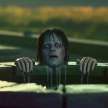

The rain had been falling in Tokyo for three days straight, an endless drizzle that soaked the city in a quiet despair. Neon signs flickered against wet asphalt, their reflections bleeding into puddles like ghosts caught between worlds. The trains ran as always—efficient, punctual, soulless. But deep inside Shinjuku Station, beneath the platforms where the crowds rarely lingered, a strange experiment was quietly changing the way people died.
They called it the Blue Light Initiative.
At first, no one questioned it. The government had announced it a decade ago, after the suicide rates in Japan reached one of the highest levels in modern history. Between 2007 and 2009, the number of people throwing themselves in front of trains had grown so rapidly that the Ministry of Transport could no longer ignore it. Psychologists, neuroscientists, and urban planners all gathered in sterile rooms under buzzing fluorescent lights to discuss the same haunting question:
Why here? Why the stations?
A scientist named Dr. Hiroshi Nakagawa, a man with eyes as cold as surgical steel, had proposed an answer that sounded absurd at the time: “Because of the light.”
He explained how the human brain responded differently to wavelengths of light. Yellow light made people anxious. White light kept them awake. But blue light, that soft spectrum between serenity and sorrow, triggered something deep inside the mind—a balance of calm and awareness. It was the color of twilight, of oceans, of dreams that refused to die. So, the government approved the project. Blue lights were installed in the darkest corners of train platforms.
The results were staggering. Within months, the suicide rates in those areas dropped by nearly 84%. Newspapers called it “the light that saved lives.” But not everyone agreed.
Some passengers claimed that the blue lights were too perfect—too cold, too alive. Late at night, they swore they could see faces forming inside the glow, fleeting expressions of despair pressed against invisible glass. Others said they heard faint whispers when standing beneath them, like the sound of someone breathing just behind their shoulder. The government dismissed the reports as hysteria, side effects of exhaustion and urban stress.
But Yuki Tanaka knew better.
Yuki worked as a janitor for the Tokyo Metro. Every night, when the last train had passed, she walked the empty platforms with her mop and her memories. Her son, Ren, had jumped in front of a train five years ago—one of the reasons the Blue Light Initiative had been expanded. They said the lights would help others like him, but to Yuki, the soft blue glow was a cruel reminder of everything she had lost.
Then came the night she heard him.
It started as a faint hum, like the sound of air vibrating against glass. Then a whisper—soft, hesitant, familiar. “Okaasan…”
Her mop clattered to the ground. She turned toward the nearest lamp, where the blue light shimmered like water. For a moment, she saw her reflection. Then it changed.
Her son’s face stared back—pale, eyes open, lips trembling as though he wanted to speak.
She stepped closer, trembling. “Ren?”
The light pulsed, brighter for a second, and she could feel the warmth of it against her skin. “Why did you leave me?” she whispered.
The reflection smiled. “I didn’t,” it said.
The next morning, Yuki’s coworkers found her standing on the edge of the platform, staring at the light. She didn’t speak for hours. When asked what she had seen, she simply said, “The light remembers us.”
---
Over the next few weeks, more reports emerged. Maintenance workers, security guards, even commuters claimed to see shapes moving within the blue glow. Some said the light flickered when they walked by, others swore they felt something touch their hand in the dark. Then came the disappearances.
At first, the police dismissed them. Tokyo was a city of millions—people vanished every day. But when three bodies were found in abandoned tunnels beneath the station, their faces frozen in expressions of awe, the government quietly shut down all investigations related to the Blue Light Project. They couldn’t afford panic.
Dr. Nakagawa, who had started it all, vanished a week later.
Only one thing was left behind: his notebook. Inside were sketches of neural maps, notes about emotional wavelengths, and a single phrase written over and over:
> “The blue light is not calming the mind. It is remembering it.”
---
By the winter of 2025, Tokyo Metro had replaced nearly all of its old white lights with blue ones. The public believed the suicides had stopped. But those who worked the night shift knew better. The suicides had simply changed form.
Sometimes, security footage showed commuters pausing beneath a lamp, staring into the glow for minutes before stepping away—only to vanish between one frame and the next. No alarms, no screams. Just gone. The lights flickered softly afterward, as if sighing.
Yuki, still haunted by her son’s reflection, began collecting fragments of shattered glass from the lamps that malfunctioned. Each shard, when held under light, revealed faint patterns—like fingerprints burned into the surface. Once, she thought she saw an eye open within one.
And then, one night, the power went out.
For the first time in years, the platform was dark. No blue, no white, only the soft rhythm of dripping rain. Yuki felt relief wash over her—until the emergency backup lights came on. They glowed faintly blue, deeper than before, and the air turned colder.
The lights began to move.
They drifted along the ceiling like slow waves of phosphorescence, and within them, faces began to form—hundreds of them. Men, women, children—all lost to despair, all now part of the glow. And among them, Ren’s face appeared again.
“Join us, Mother,” he said, voice echoing through her skull like a memory reborn. “It’s warm here. Peaceful. The light never forgets.”
Yuki fell to her knees, tears streaming down her cheeks. “What are you?”
“We are what you left behind,” the faces whispered. “The blue remembers. And it wants you too.”
The sound of an approaching train rumbled through the tunnel. The lights flared, casting the entire station in a haunting azure blaze. Yuki stood, eyes wide, tears reflecting the blue shimmer. She took one step forward—and disappeared into the glow.
---
The next morning, commuters reported the usual delays. No one mentioned the faint singing that echoed through the tunnels, or the way the lights seemed to pulse with rhythm—like a heartbeat.
The official reports said another “equipment failure” had occurred at Shinjuku Station. But if you walk there at midnight, when the last train has gone and the rain starts to fall, you can still see them—the faces in the light, smiling faintly, waiting for the next passenger to look too long.
Because in Tokyo,
the blue never sleeps.
About the Creator
Wellova
I am [Wellova], a horror writer who finds fear in silence and shadows. My stories reveal unseen presences, whispers in the dark, and secrets buried deep—reminding readers that fear is never far, sometimes just behind a door left unopened.
The steps to losing a child
Step One: Lose a child. Not what anyone wants to happen and nothing you can do to change it, but you can go through steps to becoming happy again. You can go through steps to loving again. You can go through steps to become a new you because after losing a child you will never be the same person you once were.
By Tabitha Hinkley6 days ago in Fiction
A Quiet Kind of Ache
The dorm room feels hollow. The grey Boston University lamp on my wooden brown desk is the only source of light in the room, casting long and uneven shadows over the empty twin XL bed across from mine. My roommate left to head home for the weekend. Her absence shouldn’t bother me this much, but somehow, it does. The silence has its own presence in the room. The atmosphere feels heavy and dense without her occasional remarks, rustling, and tapping on the keyboard. The quietness is the unspoken proof that I’m completely alone.
By Yamuni Kaijumi7 days ago in Fiction


Comments (1)
I read your story, and I have some cool ideas!