
The Last Letter from Mallow Street
One night that changed everything

The envelope was yellowed now, the edges curling like old bark in a summer fire. It sat alone in the drawer of the hallway table, buried beneath two train tickets, a rusted key, and a bus pass for a route that hadn’t run in fifteen years.
Eleanor hadn’t opened it.
Not in all this time.
She’d found it the day after Thomas left. Folded with care, addressed in the neat, looping script she could still see in her dreams. No stamp. No postmark. Just “El—” on the front. A dash, as though he had hesitated.
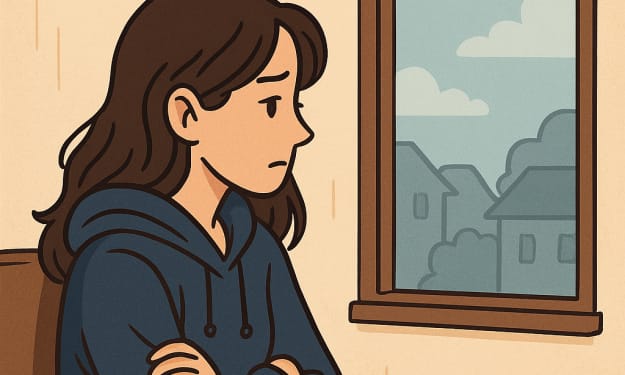
She stared at it again now, as the kettle rumbled in the kitchen. Rain tapped its fingers on the windowpane. The kind of slow, rhythmic rain that makes you remember things you'd rather forget.
Tap, tap, tap.
Eleanor hadn’t lived on Mallow Street in years. That little brick cottage with the ivy-covered fence was long gone—gutted and refitted by the sort of young couple who ordered antique furniture from the internet. She didn’t blame them. Time had moved on, and she had let it.
Except for the letter.
“Nan?” a voice called from the sitting room. “Do you have any more of those sugar biscuits?”
“Top cupboard,” she called back. “Right next to the cocoa tin.”
Her grandson, Lewis, was twelve now. Full of opinions, growing taller than she liked, and just like his grandfather. The way he drummed his fingers when nervous. The way he asked too many questions.
Like Thomas.
He had never liked sugar biscuits, though. Always preferred the almond ones from that little shop near the station. “Too sweet,” he would say, crumbling one in half. “Like a lie you want to believe.”
Eleanor had laughed then. She had laughed so much with him.
The kettle shrieked.
She made the tea. Two cups, though she only needed one. Some habits were harder to kill than others. She placed them on the tray and carried it into the sitting room where Lewis sat cross-legged on the rug, flipping through a photo album.
“Is this you?” he asked, pointing to a black-and-white picture of a young woman in a trench coat, eyes fierce.
Eleanor squinted. “That’s me. Just after I told your grandfather I’d marry him.”
“He took the picture?”
“No,” she said. “He’s the shadow in the corner. See?”
Lewis peered. “It looks like he’s running.”
“He always was.”
He looked at her sideways. “Did he leave?”
She paused.
“No,” she said finally. “But he didn’t stay either.”
Later, when Lewis had gone to bed and the rain had turned to mist, Eleanor returned to the letter. She sat in her chair by the window, the one with the threadbare armrest and the view of the streetlights glowing through the fog.
Her hands trembled, just slightly, as she unfolded the paper. The ink had not faded.
> My dearest El,
I didn’t know how to say goodbye, so I didn’t. I told you I’d be back before the week was through, and you believed me. I think that’s what makes this worse.
I’m not leaving because I don’t love you. I’m leaving because I do.
You deserve a man who stays. A man who plants his feet and doesn’t look over his shoulder every time the wind changes. That’s not me. You’ve always known that.
You’ve seen it in the way I keep my suitcase under the bed. In the way I check the locks three times before I sleep. In the way I couldn’t watch the wedding scene in that film without wincing.
I’m broken in ways that your love cannot fix. And I would rather you hate me for leaving than pity me for staying.
Please don’t come looking. Not for me.
But do remember this—every time you smell cinnamon, every time the sea looks silver under moonlight—know I loved you.
More than you will ever know.
Yours, even now,
T.
Eleanor folded the letter again.
No tears. She’d run out of those years ago.
But there was something else now. A lightness. Not relief, exactly. More like the settling of dust after years of hanging in the air.
She looked up. The rain had stopped.
The street glistened beneath the lamplight, and in the distance, someone was playing piano—faint, imperfect, and beautiful in its own clumsy way.
She poured the second cup of tea into the sink. Tucked the letter back into the drawer. Not as a keepsake. Not as a wound.
Just… because.
In the morning, she’d take Lewis to the market. Buy too many apples. Maybe laugh too loudly. Maybe live a little bit more.
Because some people leave letters.
And some, like Eleanor, finally decide to read them.
About the Creator
Keep reading
More stories from Muhammad Saleem and writers in Fiction and other communities.


Comments
There are no comments for this story
Be the first to respond and start the conversation.