
The Last Human in the Paintings
When the world moved on, she stayed—captured in strokes and stories that time forgot.

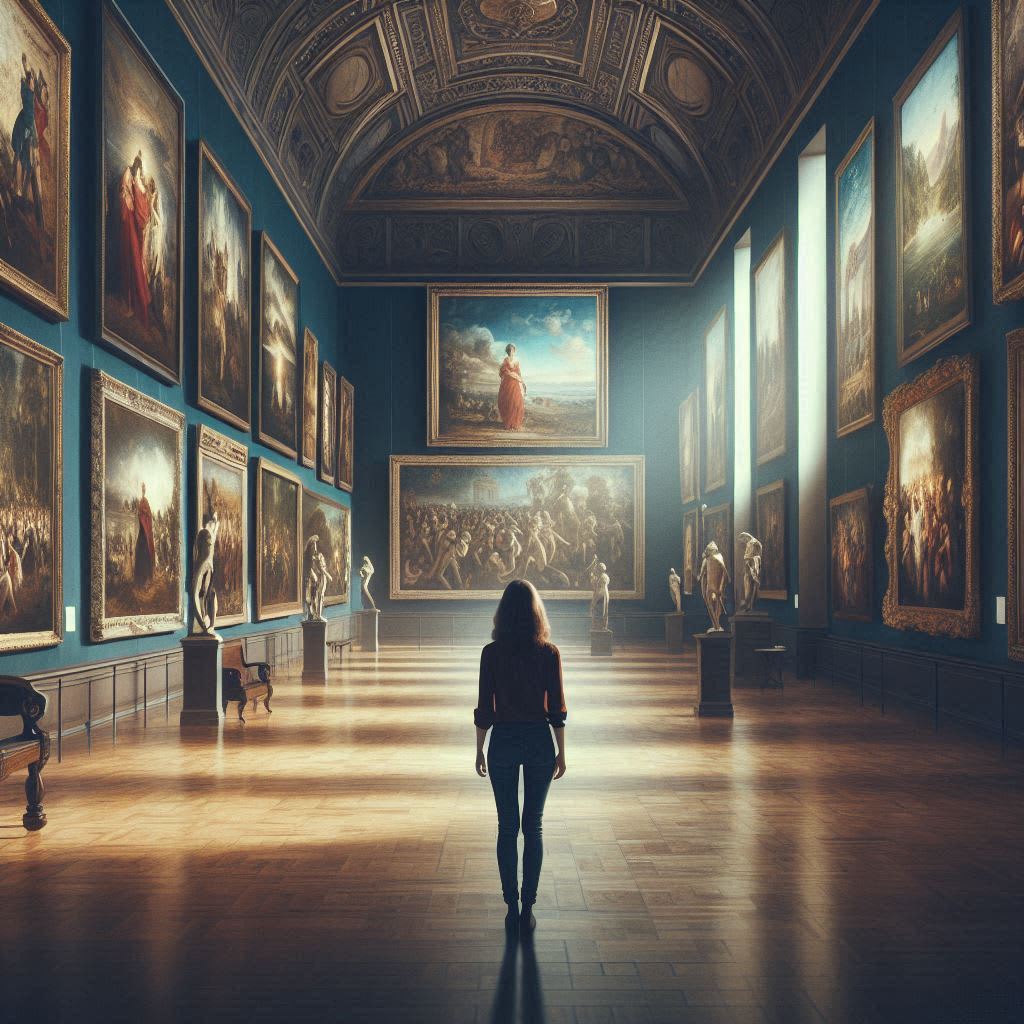
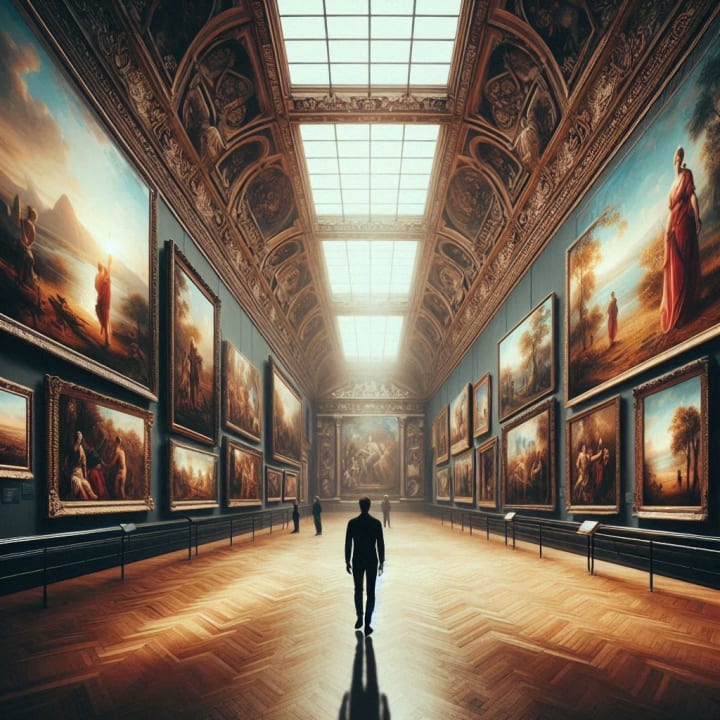
I was twelve the first time I saw her.
She stood beneath a pale sky in a painting no larger than a schoolbook. Her dress was green, her eyes distant, and she clutched a red scarf in her hand as if it were all she had left of someone she loved. No name. No title. Just "Portrait 47B" in the corner of a silent museum hallway.
But I couldn't forget her. Not after the first visit, not after the second, not after ten years had passed. Somehow, every time I saw her again, her eyes seemed to follow me a little more closely—as if she was waiting.
By the time I was twenty-five, the world had changed beyond recognition. The rise of digital art, AI-generated everything, and the slow death of analog culture had pushed traditional art into deep storage. Museums closed down. Paintings were sold, stored, or forgotten. But I remembered her.
I remembered the woman with the green dress and the red scarf—the last human in the paintings.
My job, ironically, had nothing to do with art. I worked in logistics for a tech firm, analyzing shipping routes for AI-coded delivery systems. Efficient. Clean. Meaningless. Every night, I returned to a sterile apartment where even the lighting was optimized for “emotional neutrality.”
No color, no clutter, no character.
Except for her. A photograph of the painting—slightly blurred, taken when I visited that museum years ago—sat on my desk like a relic. And sometimes, I imagined what her life might’ve been.
What her name was.
Who gave her that red scarf.
What she was looking at when the artist painted her.
Or if she had ever existed at all.
Then, one winter morning, something happened that I didn’t expect.
An email. Subject line: Museum Decommission Notice — Final Archive Viewing Opportunity.
It was from the city’s historical archives. They were closing the last public access wing to make room for a virtual experience center. All physical works were being permanently moved to secure, AI-monitored storage. Viewings would be “available online in 3D interactive format.”
It was the end of an era.
Something inside me stirred. I took a personal day from work, packed a thermos of coffee, and went.
The museum was colder than I remembered—emptier, too. Dust floated through fractured shafts of sunlight, and footsteps echoed like whispers from the past.
Room by room, I passed by great works and forgotten pieces alike. But I was searching for her.
And then—I found her.
Same pale sky. Same green dress. Same red scarf, still gripped with invisible urgency.
But this time, I noticed something different.
Her eyes.
They looked... tired.
Not just painted that way. No, it was something deeper. Something impossible. The kind of tired that only grows from waiting far too long for someone to see you.
I stood in front of her for nearly an hour. And for the first time, I whispered:
“I remember you.”
The air didn’t change. The lights didn’t flicker. But I felt something—a strange warmth in my chest, like she had been holding her breath and had finally exhaled.
In the weeks that followed, everything shifted.
I quit my job. Or maybe I just walked away. I couldn’t keep optimizing things I didn’t believe in. Instead, I started painting again—something I hadn’t done since high school. I rented a small studio space, sold off tech I didn’t need, and began attending community art sessions.
I painted people.
Not AI-rendered faces or symmetrical designs. I painted messy, imperfect humans with laugh lines and crooked teeth. With stories in their eyes and emotions in their hands. With realness.
And people came.
First two. Then seven. Then fifteen. Young artists, old ones, shy ones. They came for the stories, the silence, and the soul we were all starving for.
We weren’t just painting pictures.
We were remembering humanity.
Years later, long after the museum closed its doors forever, I returned to the archives one last time. I wasn’t allowed to touch the paintings, but I brought one of my own—a small canvas of a woman in a green dress with a red scarf.
It wasn’t perfect. But it was real.
I left it just outside the vault, leaned carefully against the wall, and smiled.
Because even if no one else remembered her, I did. And maybe that’s all she ever wanted.
Not to be famous. Not to be perfect.
Just to be seen.
Moral of the Story:
In a world racing toward perfection and efficiency, don’t forget to slow down and feel. Remember the beauty of imperfection, the warmth of real connection, and the power of art to preserve what technology can’t replace our humanity.
----------------------------------
Thank you for reading...
Regards: Fazal Hadi
About the Creator
Fazal Hadi
Hello, I’m Fazal Hadi, a motivational storyteller who writes honest, human stories that inspire growth, hope, and inner strength.
Keep reading
More stories from Fazal Hadi and writers in Fiction and other communities.
She Woke Up With Someone Else’s Memories
The Story: Aanya woke to sunlight brushing her face, a soft breeze through linen curtains, and the distant hum of a city she couldn’t name. Her eyes fluttered open, but before she could rise, a wave of confusion washed over her.
By Fazal Hadi6 months ago in Fiction
Miss Persephone's Manual to a Seemingly Ordinary Life
Miss Persephone was found at the dining table, her blue eyes swollen, her tears arriving and retreating like the tides of the ocean. Earlier that day, her family had visited her in the retirement home where she had lived for eight years. It was her eightieth birthday.
By Imola Tótha day ago in Fiction
Thank You for Your Patience
The first announcement thanked us for our patience. It explained that there had been a minor incident and that emergency services were responding accordingly. We were advised to remain indoors, avoid unnecessary travel, and continue normal activities where possible.
By Courtney Jones3 days ago in Fiction


Comments
There are no comments for this story
Be the first to respond and start the conversation.