
The Last Ember
In a world turned to ash, one ember holds the last hope for life.

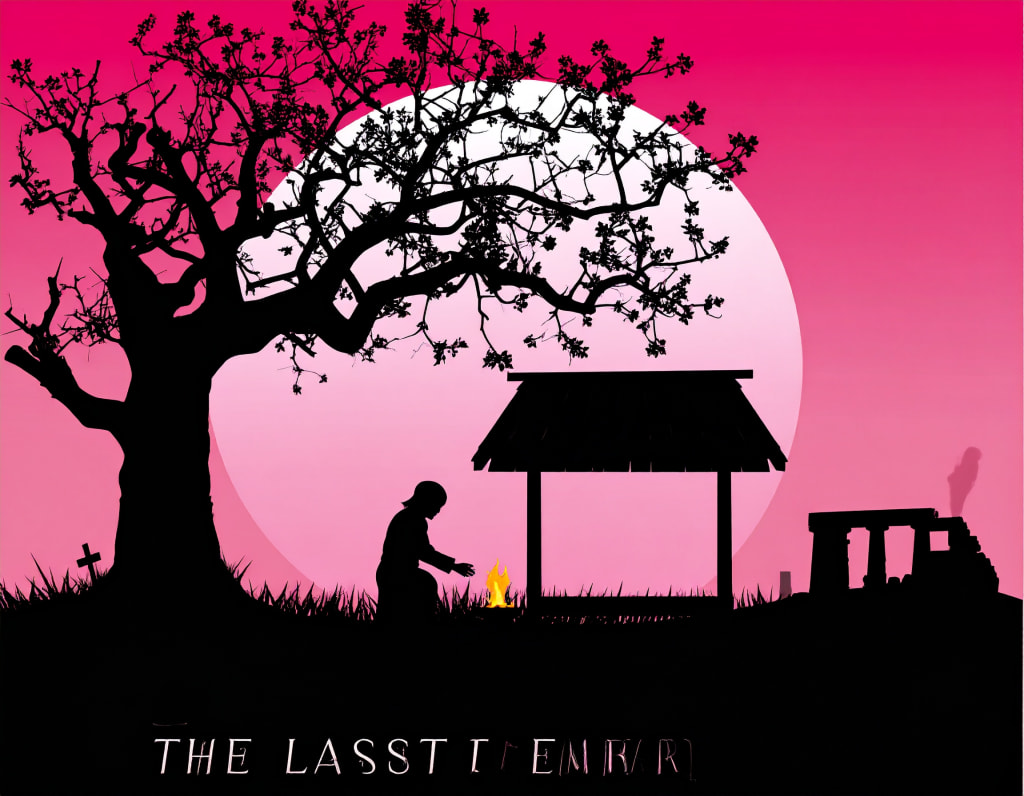
The wind howled like a dying beast across the blackened plains. Ash floated in the air like snow, thick and choking, settling on what remained of the world. The trees were long dead, their bones jutting from the earth in twisted silhouettes, and the sky burned a perpetual red — not from fire, but from the poisoned veil that never lifted after the Final War.
Kael trudged through the dust, a solitary figure wrapped in layers of scavenged cloth and cracked leather. His boots were worn, soles patched too many times to count. The world had ended years ago, but some part of him hadn't stopped walking since. He was searching for something — maybe a place, maybe a sign, maybe just a reason to keep going.
That reason had once been fire.
In the early days, after the cities fell and the sun disappeared behind toxic clouds, fire was life. It cooked what little food was left. It warmed bodies in the bone-chilling nights. It scared off the wild things that now roamed in place of civilization. But fire had grown rare. Wood had become a memory. Fuel was something people killed for.
Now, Kael carried the last ember.
He’d found it a week ago, buried inside the cracked remains of an ancient hearth in a collapsed village. Somehow, sheltered from the wind and time, a single coal had survived. It hadn’t been hot, but it had glowed faintly, the color of dying sunset. He had wrapped it in cloth, tucked it in a copper bowl, and layered the bowl in ash and old wool. Every few hours he checked it, fed it tiny twigs or dry moss, whispering to it as if it could hear.
“You’re all that’s left,” he would say. “You and me, we’re going to find a place where you can live again.”
Today, the wind was crueler than usual. It tore at his cloak, tried to dig its fingers into the ember’s hiding place. Kael dropped to his knees behind a broken wall, shielding the bowl with his body. Carefully, he peeled away the cloth, his heart pounding.
Still there — a soft glow, a living pulse.
He sighed in relief, then coughed. The air was thick with death, and his lungs felt like paper. He didn’t have much time. Neither did the ember.
He reached for the map, a scrap of faded parchment marked with old words. “Sanctuary,” it said, beside a crude drawing of mountains. He wasn’t sure it was real — stories passed down through survivors about a place untouched by the fires, where clean water still flowed and green things still grew.
Kael didn’t believe in miracles. But he believed in embers.
He pushed on, every step slower than the last. As dusk fell, the cold crept in, sharp and merciless. The ember’s light dimmed. Kael knew what it meant — it was running out. It needed more than scraps. It needed fuel. It needed shelter.
He stumbled down a slope and found himself staring at a narrow cave mouth, half-hidden behind stone and debris. With trembling hands, he crawled inside, cradling the bowl like a newborn. The walls were dry. No wind reached here. He set the bowl down and rummaged through his satchel, pulling out the last of his moss and a brittle strip of bark.
"Come on," he whispered. "Just a little more. Hold on."
He fed the ember, breath held.
The coal flared, barely. Enough to cast a flicker of light on the walls.
In that moment, Kael saw it — a root. Thin, wiry, but unmistakably alive, curling down through a crack in the stone. He stared in disbelief. Plants hadn’t grown in years, not where he’d been.
He leaned forward and touched it. It was cool. Real.
With new urgency, Kael scraped the cave floor. Beneath the dust, he uncovered more roots, a trace of soil. The air smelled different here. Fresher. Beneath the mountain, life had hidden — waiting.
Tears filled his eyes, unbidden. He hadn’t cried since the world ended.
He reached into the bowl, placed a sliver of root against the ember. It caught, weak but certain. The flame licked up, yellow and shy.
Kael sat back and watched it dance. Warmth spread into his fingers, his chest.
He wasn’t alone anymore.
He would feed it, tend it, grow it. Fire would return.
And maybe — just maybe — so would the world.
About the Creator
📢 Raise Your Voice Thread: 01/22/2026
Our “Raise Your Voice Threads” are hosted most alternating Thursdays at 12PM ET to offer creators more avenues to uncover exceptional stories on Vocal. As we are continuously searching for fresh creators and inspiring stories, this thread provides an opportunity to exchange and discuss the stories that have moved and motivated us on Vocal.
By Raise Your Voice by Vocala day ago in Resources



Comments
There are no comments for this story
Be the first to respond and start the conversation.