

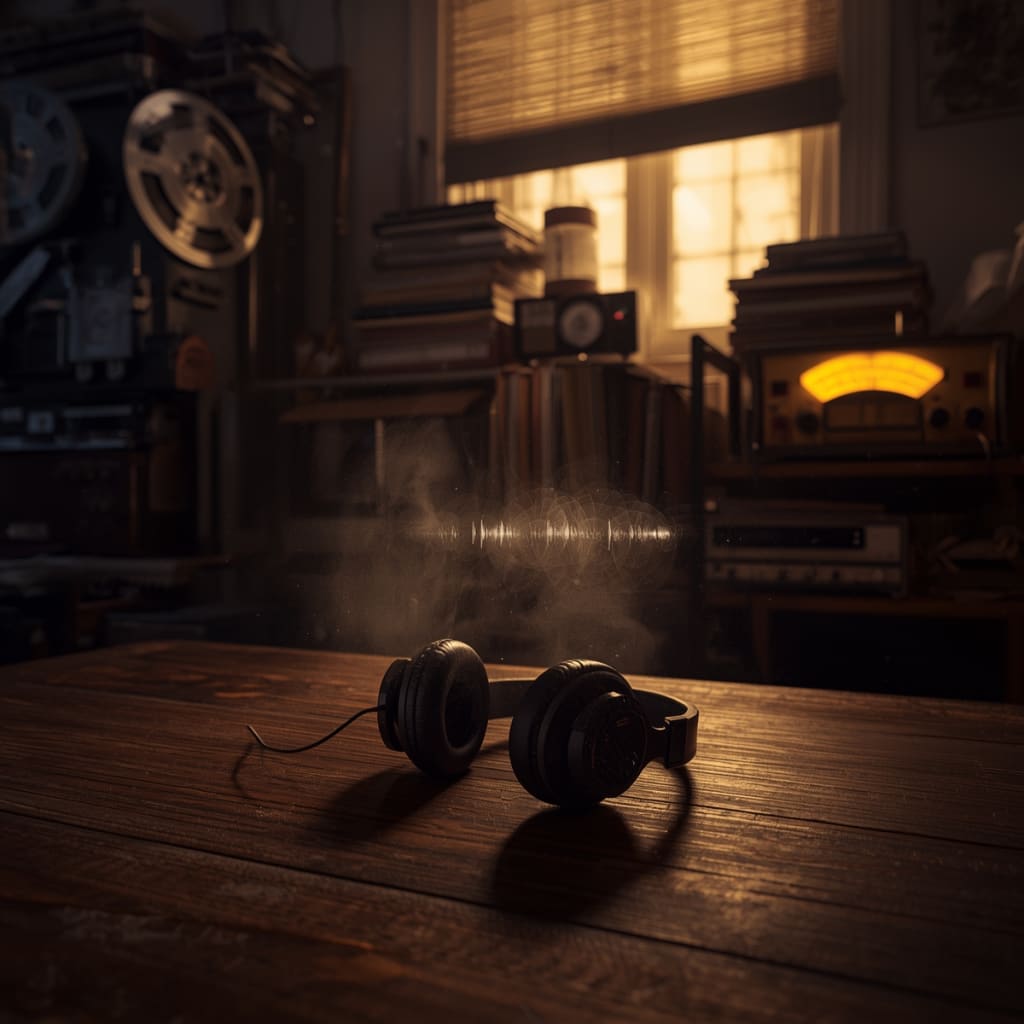
The world hummed in perfect G-sharp. Elara had checked. The transport pods, the auto-servers in the food hall, even the gentle hiss of the climate control in her sterile, white living cube—all were tuned to the Global Standard Note, a frequency scientifically proven to promote calm and productivity. It was a world perfected, polished, and utterly predictable. And Elara, a Level 3 Archivist at the Global Sound Archive, was beginning to hate it.
Her job was to maintain perfection. She spent her days curating terabytes of flawless, algorithmically generated audio. There were over three hundred variants of "Babbling Brook," each one stripped of any jarring gurgles or insect interference. The "Human Laughter" collection was a masterpiece of social engineering, with carefully modulated giggles and guffaws guaranteed to be pleasant and non-disruptive. There was no snorting, no gasping for air, no hint of the messy, chaotic reality that had once been.
It was during the decommissioning of Sector Gamma-7, a relic from the pre-Digitization era, that she found it. Tucked away in a corroded metal box behind a humming server bank was a collection of junk: brittle plastic discs, tangled wires, and a small, rectangular device made of cheap, yellowed plastic. Beside it lay a single cassette tape, its label faded beyond legibility. It was ancient, useless technology. It should have been incinerated. But something about its tangible, imperfect form called to her. On impulse, she slipped the player and the tape into her satchel.
Back in the sterile silence of her cube, the device felt like a forbidden artifact. It took her an hour, cross-referencing schematics in the historical archives, to figure out how to power it. When she finally slid the tape in and pressed the stiff, mechanical "Play" button, the sound that emerged was an assault.
It wasn't the clean, rhythmic pulse of Rain_Soothing_04.wav. This was a wild, chaotic symphony. It was the frantic patter of water against a windowpane, the low rumble of distant thunder that vibrated in her bones, and the distinct, melancholy plink-plonk of a leaky gutter. It was messy. It was imperfect. It was the most beautiful thing she had ever heard.
She listened for hours, mesmerized. The sound wasn't just audio; it was a feeling. It dredged up a phantom memory of a sensation she’d never had—the feeling of being cold and damp, wrapped in a warm blanket, safe from a storm. How could a sound do that? The Archive’s audio files were designed to evoke specific, controlled emotions—calm, focus, mild joy. This was different. This was raw, untamed, and deeply personal.
The tape became her secret. Each night, she would plug in the old, crackling headphones and escape the perfect G-sharp hum. The other side of the tape held more wonders. There was the sound of a crackling fire, not the uniform hiss of a plasma-heater, but a living thing that popped and spit. There was the unedited laughter of a woman, a sound that started as a giggle and exploded into a breathless, joyous roar. And then there was the purr. It was a low, resonant vibration, so real she could almost feel the warmth of the creature it came from.
The analog world began to bleed into her digital one. The perfected sounds of the Archive started to sound thin and hollow. The pleasant, modulated voices of her colleagues felt artificial. The world was a veneer, and she had heard the truth crackling beneath it. She started having dreams—not the pleasant, algorithmically suggested scenarios that usually populated her sleep, but vivid, confusing flashes of green trees, blue skies, and faces crinkled with genuine, unmodulated emotion.
She had to know where the tape came from. Under the highest magnification of her desk scanner, she found a faint marking on the cassette's plastic shell: a stylized drawing of a sound wave morphing into a tree root. It was an elegant, organic design, completely at odds with the stark corporate logos of her world. An encrypted search through the deep archives, bouncing her query through forgotten networks to hide her tracks, finally yielded a single, ghost-like reference: The Analogues.
It was a name whispered in the darkest corners of the net, a bogeyman for the architects of the new world. They were Luddites, they said. Degenerates who clung to the messy, inefficient past. Following a trail of digital breadcrumbs led her to a decommissioned subway tunnel deep beneath the city. The air grew thick with the scent of dust and damp earth as she left the G-sharp hum behind.
She found them in a cavernous station, its tiled walls lit by the warm, flickering light of actual fire. A small community of people sat around it, their faces alive with expression. An old man with kind eyes and lines of real laughter etched around them saw her hesitating in the shadows. He beckoned her forward. His name was Kael.
"You heard it, didn't you?" he said, his voice a warm, unmodulated baritone. "The real sound."
Elara could only nod, pulling the cassette from her satchel. Kael smiled. He explained that the "Great Digitization" wasn't about progress; it was about control. "Raw sound, true sound, evokes unpredictable thought," he told her, his voice low. "It reminds people of a world that wasn't curated for them. It makes them question. Our founders recorded as much of the real world as they could before it was all erased. That tape is one of the last masters."
Just as she began to feel a sense of belonging, a shrill, digital alarm echoed from the tunnel entrance. Red lights flashed on a device Kael was holding. "They tracked you," he whispered, his face grim. "That old player... it emits a frequency they can trace."
Suddenly, Elara was standing at a precipice. Behind her was the warmth of the fire, the messy truth of the past. Ahead of her was the encroaching hum of the world she knew—safe, sterile, and false. The corporation wasn't just coming for the tape; they were coming to silence the last echo of reality. In her hand, the small plastic cassette felt impossibly heavy, a relic containing the soul of a lost world. She had to choose whether to let it fade into silence or to fight for the beautiful, chaotic noise of being truly alive.
About the Creator
Pir Ashfaq Ahmad
Writer | Storyteller | Dreamer
In short, Emily Carter has rediscovered herself, through life's struggles, loss, and becoming.
Keep reading
More stories from Pir Ashfaq Ahmad and writers in Fiction and other communities.
The Message in the Bottle
The Message in the Bottle The waves whispered gently that morning, pulling in slow, steady breaths across the shoreline. Harold, seventy-three, walked the same path he had every morning for the past five years since his wife passed. The beach was quiet. Just the sound of gulls overhead and the rhythmic hush of the tide.
By Pir Ashfaq Ahmad7 months ago in Fiction
Divided By Our Skin
We climbed as far as we could go; it was impossible to reach the top. Obstacles stood out in every way; we never stood a chance together.alone, it all felt so right. Our families said it was wrong, as two people from different countries could never get along. But every step we took, side by side, made the struggle worth it. We laughed when we stumbled, sharing simple smiles that warmed my heart. Each moment together felt like a secret world, just ours, away from what others thought.
By George’s Girl 2026 2 days ago in Fiction
Guard Your Battery
Why are some people so attractive just by standing there? It’s not because they are "likable," but because they don’t need everyone to like them. I realized later that truly charismatic people allow themselves to be criticized, but they never criticize themselves. They never try to please the world; instead, the world stops to watch them.
By Emily Chan - Life and love sharing7 days ago in Poets



Comments
There are no comments for this story
Be the first to respond and start the conversation.