
The Language of Love
When words become the bridge between two distant worlds.


Emma Whitman, a travel blogger from Seattle, had always been drawn to languages that spoke to the soul. Urdu, with its poetic elegance, fascinated her deeply. She enrolled in a three-week course in Islamabad, not knowing that this journey would lead her to something far beyond alphabets and grammar – it would lead her to love. Her instructor, Zayan Ali, was a man of quiet charm, deeply rooted in his culture. Their first meeting was simple – a polite greeting and a shared smile – yet an invisible thread seemed to pull them toward each other. Each day, Zayan introduced Emma to new words, but more than the language, it was his passion for poetry, art, and the beauty of expression that captivated her. “This word,” he said one afternoon, writing محبت (mohabbat) on the board, “means love. But in Urdu, it is more than a word. It is a feeling you carry in your soul.” Emma repeated softly, “Mohabbat…” and Zayan felt the syllables echo in his chest like a whisper he could not ignore.
Their lessons soon moved beyond the classroom – strolling through colorful markets, practicing phrases with shopkeepers, sipping chai at roadside stalls while discussing the meaning of untranslatable words. Emma admired the depth of his culture, while Zayan admired her curiosity and courage. Yet, there was a quiet sadness beneath their growing bond – her time in Pakistan was running out. One evening, as they watched the sun sink behind Margalla Hills, Emma asked softly, “Do you think language can connect hearts?” Zayan replied, “Yes. But sometimes, hearts understand what words cannot say.” Their eyes met, and for a heartbeat, silence spoke louder than anything else.
On the last day of class, Emma gave Zayan a notebook filled with Urdu words she had learned, each carefully written with translations. On the final page, in shaky but heartfelt Urdu, were the words: مجھے تم سے محبت ہے (Mujhe tum se mohabbat hai) – I love you. Zayan froze, his heart aching with emotions he had tried to suppress. “Emma,” he whispered, “some things are felt deeply but spoken softly. My heart understands you, even if my words cannot.” She smiled through tears, knowing her flight was in two days, and fate was cruel to hearts that met too late.
But love has a way of finding moments where reason hesitates. The next evening, they met secretly at a small tea shop overlooking the hills. There, Zayan finally confessed what he had hidden. “Emma, if life were a book, this chapter with you would be my favorite. But I don’t know if I can write the next one.” She reached for his hand. “Then let’s write it anyway, even if it’s just a page.” They spoke little that night, just sat together, memorizing each other’s presence – the way his fingers trembled when they touched, the way her eyes searched his as if engraving them in memory forever.
The day of departure arrived like an unwelcome storm. At the airport, Emma stood before the departure gate, fighting back tears. Zayan, unable to cross the security barrier, stood a few feet away, clutching the notebook she had given him. Their eyes locked one last time – no promises, no goodbye – just a silent exchange of everything they could not say. She turned and walked away, each step heavier than the last, each breath tasting of goodbye.
Months passed. Emma returned to Seattle, her blog now filled with stories of Pakistan, yet every post carried a trace of unspoken longing. Zayan returned to his routines, teaching Urdu to new students, but the notebook remained on his desk – a reminder of a love that lived in words but could not survive reality. One rainy evening, Emma received a letter in Urdu. It was from Zayan. It read: “Some languages are meant to be learned, but some… are meant to be felt. You are the language my heart speaks, Emma. Always.” She cried reading it, knowing she could not return, yet feeling closer to him than ever.
Years later, Emma visited Pakistan again, but this time only to walk the streets they had shared, to sit by the same tea shop, and to whisper into the evening air, “Mujhe tum se mohabbat hai, Zayan.” Somewhere across the world, Zayan whispered the same words into the night sky. They were no longer together, yet bound by something greater than distance – a love that lived eternally in a language neither time nor fate could erase.
About the Creator
Keep reading
More stories from Aman Ullah and writers in Fiction and other communities.
The Message Written in the Sky
It was a quiet night, and the world seemed to hold its breath under a canopy of stars. Ali, a 22-year-old astronomy student, sat cross-legged on the rooftop of his modest house, his telescope angled toward the sky like a silent sentinel. Since childhood, he had been fascinated by the stars, often wondering if they were more than just glowing specks of gas suspended in an infinite void. But tonight, the stars had something unusual to share.
By Aman Ullah7 months ago in Fiction
Pandora’s Burden
“My brother warned me to not accept gifts from the one who commissioned you,” said Epimetheus to the woman clad in silvery raiments standing at the entrance to the temple. Her silver tiara and the silver rings on her fingers and toes glinted in the firelight cast by torches set on either side of the doorway. Lingering in the shadows, beyond the reach of the flames as she was, he could not tell what she held in her hands. At first what appeared to be a box was perhaps a funerary urn, or maybe merely an apple.
By J. Otis Haasabout 8 hours ago in Fiction
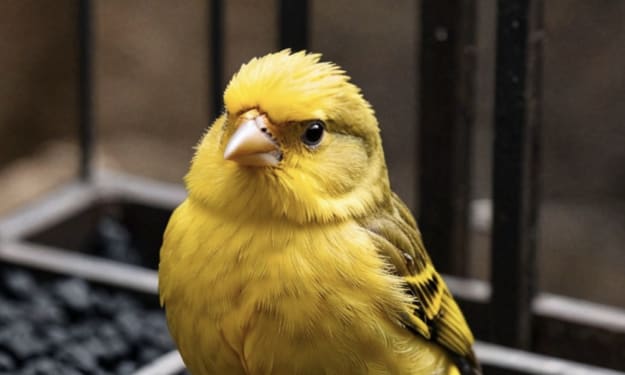
A Canary Down The Coal Pit
A Canary Down The Coal Pit Long ago, when coal mines were deep, dark places and safety equipment was very simple, miners took a small yellow canary down into the coal pit with them. To someone who had never worked underground, it might seem strange that a tiny bird would travel with tough men carrying picks and lamps. But the reason was deadly serious.
By George’s Girl 2026 6 days ago in Fiction



Comments
There are no comments for this story
Be the first to respond and start the conversation.