
"The Keeper of the Flame"
-The Keeper of the Flame-

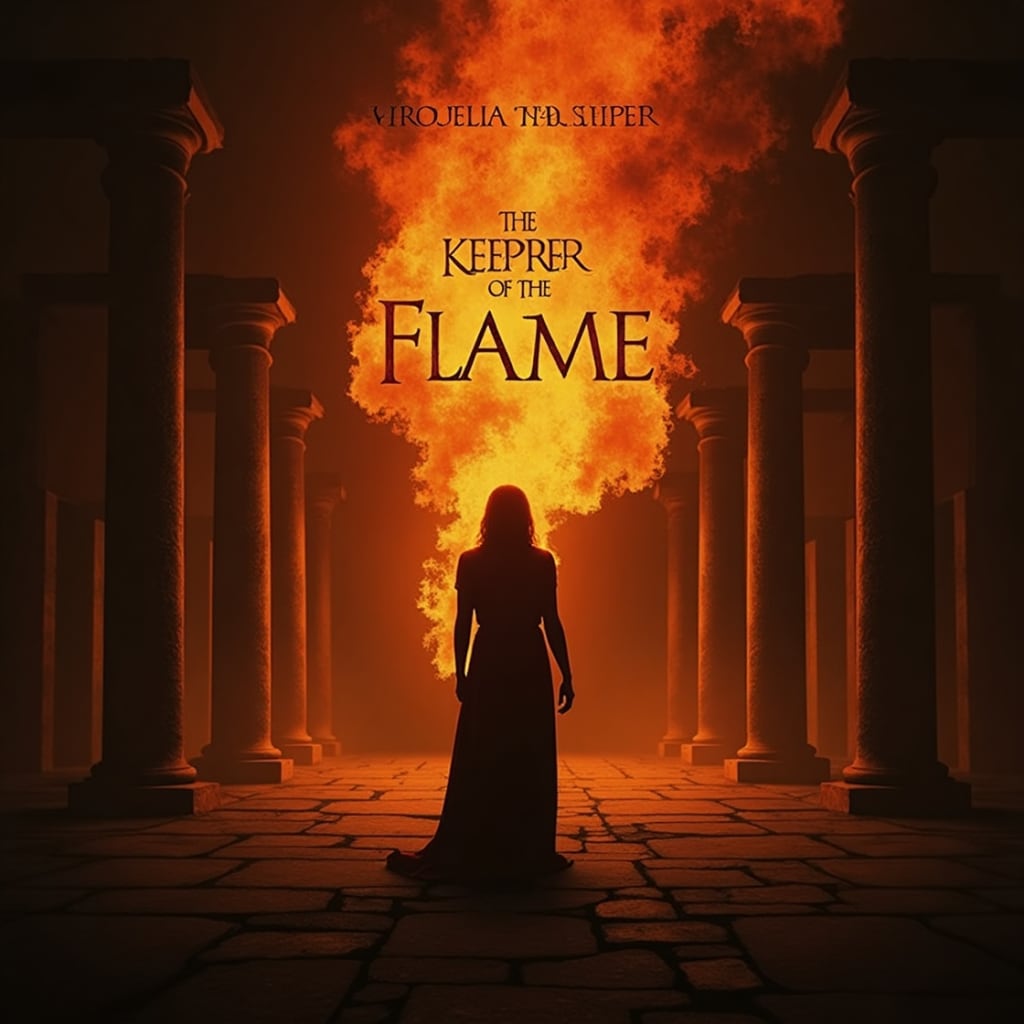
"The Keeper of the Flame"
Ancient Rome, between 27 BC and 14 AD, under the rule of Emperor Augustus.
Plot Synopsis:
Section 1: A Tradition That Burns
In the center of Rome, the Temple of Vesta maintains one of the most sacred duties—the perpetual flame that symbolizes the survival and prosperity of the Roman Empire. The honor of maintaining the flame is reserved for the Vestal Virgins, a group of women who are devoted to the goddess Vesta. The Vestals are selected at a young age, sworn to celibacy, and serve for 30 years, lovingly watching over the sacred fire.
At the age of ten, Livia, a young girl of noble lineage, is chosen to be one of the Vestal Virgins. Despite being honored by the role, she feels a great deal of responsibility to maintain the temple's customs and ceremonies. She must balance her life as a sacred servant to Vesta with the life she had envisioned for herself, which included marriage to a well-respected senator, children, and a life away from the temple.
As the years go by, Livia grows increasingly committed to her position, attending significant religious festivals, learning the sacred rites, and caring for the flame. She develops strong relationships with other Vestals, such as her best friend Tullia, who is considerably happier with her life.
Section 2: Rome's Intrigue
Livia and Tullia are invited to meet with Marcus Antonius, a well-known senator, one evening at a lavish feast commemorating a military triumph. He suggests that there may be a plot to depose the emperor that involves members of the highest echelons of Roman society. Despite her struggles as a religious figure entangled in Roman politics, Livia is dragged into the intrigue.
Livia is confronted with a moral conundrum as the temple's fires flicker in the distance. She has vowed to keep the flame burning no matter what, but now she has to choose between betraying her oath and using her position to help those who are trying to overthrow the emperor or defending the sacred fire and all it represents, even if it means opposing the very people who stand to gain from such a scheme.
Livia's own goals and heart start to clash. She starts to wonder where she fits into the temple and how she fits into the larger picture of Roman society. Her decision becomes more complicated as she grows more attracted to Marcus Antonius. She must balance the demands of duty, loyalty, and love while negotiating a world in which every choice she makes could have disastrous repercussions.
Section 3: The Flame's Breaking
The temple of Vesta takes center stage as the plan to kill Emperor Augustus approaches completion. Vesta's flame is seen by the conspirators as more than just a religious symbol. They think the empire would collapse into anarchy if the flame were put out. In light of this, Livia understands the seriousness of her role: the flame is about the stability of the empire as a whole, not simply religion.
Livia has to make a crucial decision. She has the opportunity to alert the emperor when the conspiracy is discovered, but doing so would violate Marcus Antonius's covert confidence in her. However, she runs the risk of permitting a scheme that could destroy everything she has vowed to defend if she does not speak up.
Livia makes the bold decision to protect Vesta's flame and her honor in a last act of valor. She engages in risky behavior by surreptitiously alerting Marcus Antonius and providing intelligence to the emperor's spies. Rome's citizens rejoice as the plot is thwarted and the conspirators are apprehended. Although the event transforms Livia, she resumes her sacred responsibilities.
Section 4: The Flame's Legacy
Over the next few years, Livia comes to terms with her choice. She still lives her life as a Vestal Virgin, but she now knows what her responsibility really means—not only to the flame, but to Rome as a whole. Vesta's flame is a representation of the empire's enduring power as well as the gods' favor. From the monarch to the lowest citizen, it symbolizes the commitment of all those who serve it.
The name Livia is whispered among those who remember the courage of a young woman who kept the flame alive—both literally and figuratively—during a period when the very heart of Rome was in danger, even though it has never been mentioned out loud in the chronicles of Roman history. Her political and religious legacy is woven with the empire's enduring narrative.
This framework is ideal for incorporating aspects of Roman politics, religion, and society since it provides a blend of historical accuracy and dramatic suspense. The plot is especially rich for examination because of Livia's personal stakes, which present themes of loyalty, duty, and striking a balance between one's own ambitions and the greater good. Do you require more information about Roman life during this time period, or would you like to elaborate on any specific aspect of the story?
-I hope the spooky story was enjoyable! If you require any changes or another story, please let me know. Thank You.-
About the Creator
Rajoan Islam
Hey, Life is very beautiful, you have to enjoy it while it lasts.
Keep reading
More stories from Rajoan Islam and writers in Fiction and other communities.
"The Sky Painted"
"The Sky Painted" There was a legend about the Painted Sky in the little community of Elmsbrook. Elders would tell children this tale while they looked up at the vivid hues of sunrise or sunset. It was supposed that the gods themselves had painted the sky many years ago. There was a catch, though: the hues of the sky were intended to be shared, a gift for everyone to enjoy. However, a self-centered artist by the name of Cael had stolen all the colors, kept them hidden in his studio, and painted only for his own pleasure. Ultimately, the sky became dark and lifeless as the gods punished him by removing the hues.
By Rajoan Islam12 months ago in Fiction
Becca
"Everything is so... flat." Denille said stupidly as she looked around her new neighborhood. She looked around at the muted desert where even the smallest sign of life seemed to have given up. The plant life was shrubs that were half cooked by the heat and where there should have been a lawn, a mess of white rocks laid glistening in the sun. Even the sky looked stretched thin, like the sun had ironed it smooth. She’d moved from Riverside, where at least there were hills, but here in Barstow, everything felt baked and brittle.
By Sara Wilson7 days ago in Fiction
Notes in the Margins of Happily Ever After
The first thing every girl receives in the kingdom where I was born is a book. I am writing in mine now. The leather cover is still white, though the edges are darkened with smoke and forest dirt. Some of the pages curl slightly, as if the book has already survived a small fire. The gold lettering has almost rubbed away, but if you tilt it toward the firelight you can still read the title pressed into the skin:
By Stacey Mataxis Whitlow (SMW)a day ago in Fiction
A More Human Vocal
When we launched Vocal nearly a decade ago, the world was a very different place. LLMs did not exist, and stories were created one at a time by people sitting down to write, revise, and share something personal. Many of our assumptions about publishing, trust, and participation were built for a world where effort and output were inseparable.
By Justin @ Vocal7 days ago in Resources




Comments
There are no comments for this story
Be the first to respond and start the conversation.