
The Keeper of Lost Things
Idea: A reclusive clockmaker's shop is a secret hub for people who have lost things—not just objects, but memories, hopes, or pieces of themselves. The protagonist doesn't find the items, but he helps people make peace with their absence. The story begins when someone enters the shop who has lost something he himself is searching for.

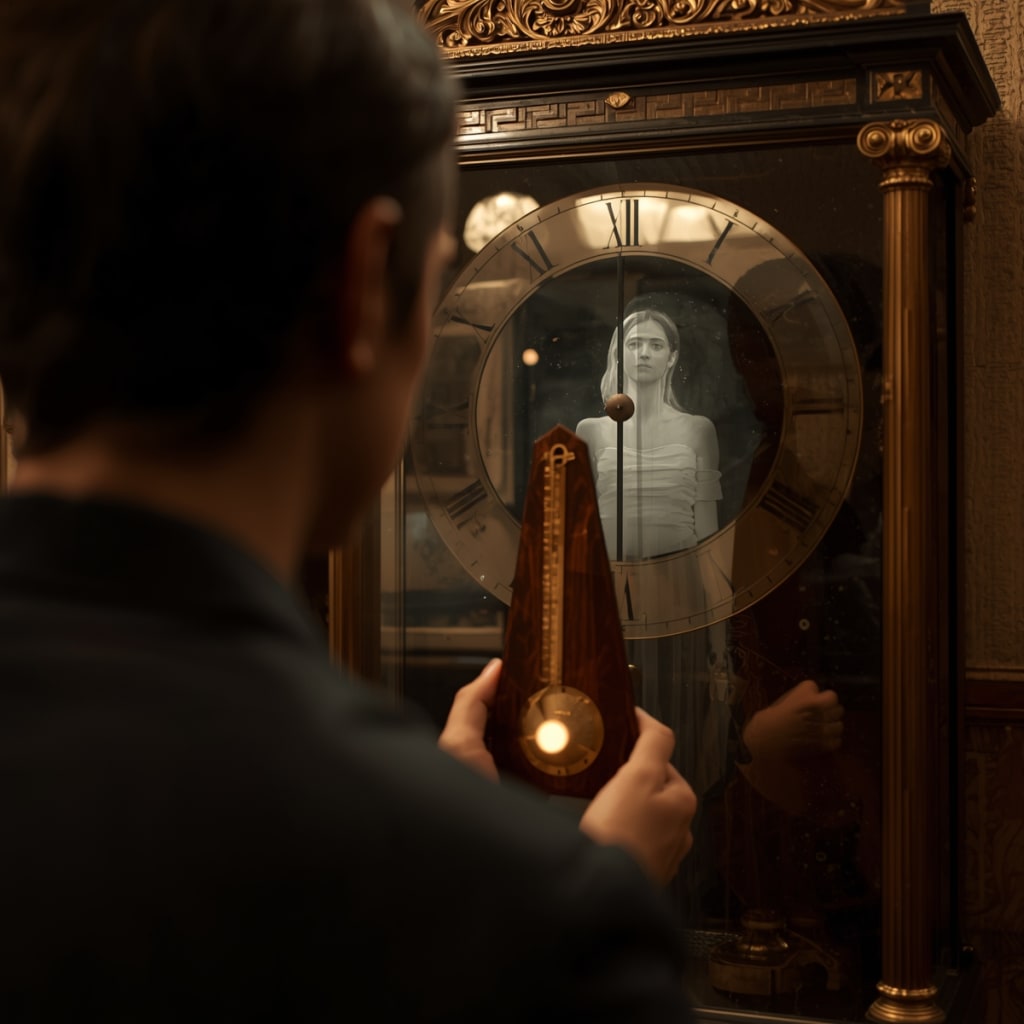
The bell above the door of "Aeternum Clocks" didn't just jingle; it chimed a single, clear note that hung in the dust-moted air like a question. Elias, whose hands were as steady as his pendulum swings, didn't look up. He was calibrating the heart of a 19th-century longcase, his entire world narrowed to the tiny, relentless tick-tock.
The shop was a sanctuary of time. Clocks of every conceivable design covered the walls, filled cabinets, and stood sentinel on the floor, each ticking in a soft, chaotic symphony. But the people who found their way here, down the narrow, forgotten alley, weren't looking for time. They were looking for what they had lost within it.
Elias was a restorer, but not just of clocks. His shop was a secret hub for a different kind of brokenness. He never found their lost things—a vanished locket, a forgotten promise, the confidence of youth. Instead, he helped them make peace with the empty space those things had left behind.
A woman named Clara had come last week, her voice a hollow whisper. "I've lost my laughter," she'd said. "I can feel the shape of it in my memory, but the sound is gone." Elias didn't offer platitudes. He had her describe the last time she remembered it truly ringing out, and then he gave her a small, smooth stone from a jar on his counter. "Hold this when you see something beautiful," he'd instructed. "It won't bring your laughter back, but it will mark the space where it once was. That space has value, too."
Today, the customer was different. The air in the shop shifted as he entered, the clocks seeming to stutter for a fraction of a second. He was a young man, no older than twenty-five, with a frantic energy that vibrated against the shop’s calm. His eyes scanned the room, not seeing the clocks, but searching for something else entirely.
"I was told you... find things," the young man said, his voice tight.
"I help people who have lost things," Elias corrected softly, finally looking up. His own eyes, the colour of old ash, took in the young man's clenched fists and restless posture. "What is missing?"
"It's my future," the young man blurted out, the words tumbling over each other. "My name is Leo. A year ago, I was in an accident. I recovered, physically. But I... I lost my nerve. My ambition. The drive to be a musician, it was just gone. It’s like the part of my soul that contained all my music was scooped out. I can hold my guitar, but I can't find the melody. I've lost the man I was supposed to become."
Elias felt a familiar, dull ache in his own chest. This was a profound loss, a loss of potential. He listened as Leo described the brilliant, burning path he had seen for himself, now vanished into a grey fog.
"The man you were supposed to be is not a lost object, Leo," Elias said, his voice low and measured. "He is a lost tune. You cannot find him, but you can learn to hear the silence he left behind. And in that silence, you might hear a new song."
He led Leo to a workbench at the back. Instead of clock parts, it held an array of simple, beautiful objects: polished woods, strips of brass, clear glass vials.
"I cannot give you back your nerve," Elias said, selecting a piece of dark, resonant cherry wood. "But we can build a vessel for its memory. We will make a metronome. Not to keep a tempo you've lost, but to mark the time while you listen for a new one."
As they worked, planing the wood and fitting the tiny weight, Leo talked. He talked about the roar of the crowd he would never hear, the albums he would never record. Elias listened, his hands guiding Leo's trembling ones. With each turn of a screw, each sanded edge, Leo was not rebuilding his old dream; he was building a testament to its existence.
When the metronome was finished, simple and elegant, Elias placed it in Leo's hands. "Set it in motion when the silence for your music becomes too loud. Watch the swing. It does not play a song, but it proves that rhythm still exists."
Leo stared at the pendulum, his shoulders slumping not in defeat, but in release. A single tear traced a path through the fine layer of dust on his cheek. It wasn't a happy ending, but it was a kind of peace. He had given his loss a shape, a form he could see and touch.
After Leo left, the shop was quiet again, save for the ticking. Elias walked to the back wall, where a single, beautiful ormolu clock stood silent, its face blank, its hands still. He reached into his waistcoat pocket and pulled out a small, tarnished silver key.
This was his loss. Not a thing, but a person. His daughter, Elara, who had walked out one day after a bitter argument and never returned. He had lost his chance to make things right, to hear her laugh, to tell her he was proud. He had lost the father he was supposed to be.
He inserted the key into the clock's face, but he did not turn it. He never did. He couldn't bring her back. He couldn't fix his own broken history. He was the Keeper of Lost Things, a master of helping others make peace with their absences, forever trapped in the silent, ticking heart of his own.
He simply stood there, his hand resting on the cold, still brass, listening to the empty space.
About the Creator
Keep reading
More stories from Waqas Ahmad and writers in Fiction and other communities.
Ganon's Tale
Mokeeru had no idea how much time had passed when she opened her eyes; she could tell that she was back in the Gerudo village, presumably in the healer's hut, based on the smell of herbs. She sat up, wincing as pain bloomed fresh in the back of her head and her vision swam out of focus, blanketing the room in a watery film. She heard the unmistakable voice of Lyrassa, the healer, speaking up from somewhere across the room, likely cautioning her to lie back, but with the ringing in her head and the buzzing in her ears Mokeeru could not discern it clearly. Raising her hand up to the center of where the pain was radiating from in back of her head, she encountered a layer of gauze and could feel the enormous swollen knot beneath it. As the fog in her eyes began to recede and the room gradually swam into focus, Lyrassa's face resolved itself from the surrounding murk and her stern visage came into clear view. The dialogue that accompanied it was slower to attain clarity, but after a few moments Mokeeru was able to piece enough together to glean her meaning. She opened her mouth, intending to placate the healer, but nothing escaped beyond a strained croak. Irritated, Mokeeru gestured to her throat only to find that Lyrassa was already there with a dipper of water for her.
By Chris Walker3 days ago in Fiction
A Transparent Look at Vocal Challenges and Top Stories
Almost three years ago, we shared a resource article that served as a place for people to suggest new challenge prompts. We thought it would be a good idea to refresh that thread, and take the opportunity to answer a few common questions about top stories, how challenges are judged and how submissions are reviewed.
By Vocal Curation Teamabout 10 hours ago in Resources



Comments
There are no comments for this story
Be the first to respond and start the conversation.