
The Judge, the Jihadi, and the Prince’s Tea
A darkly satirical tale of justice gone astray, kings weighed down by illness, and a wandering son searching for forgivenes
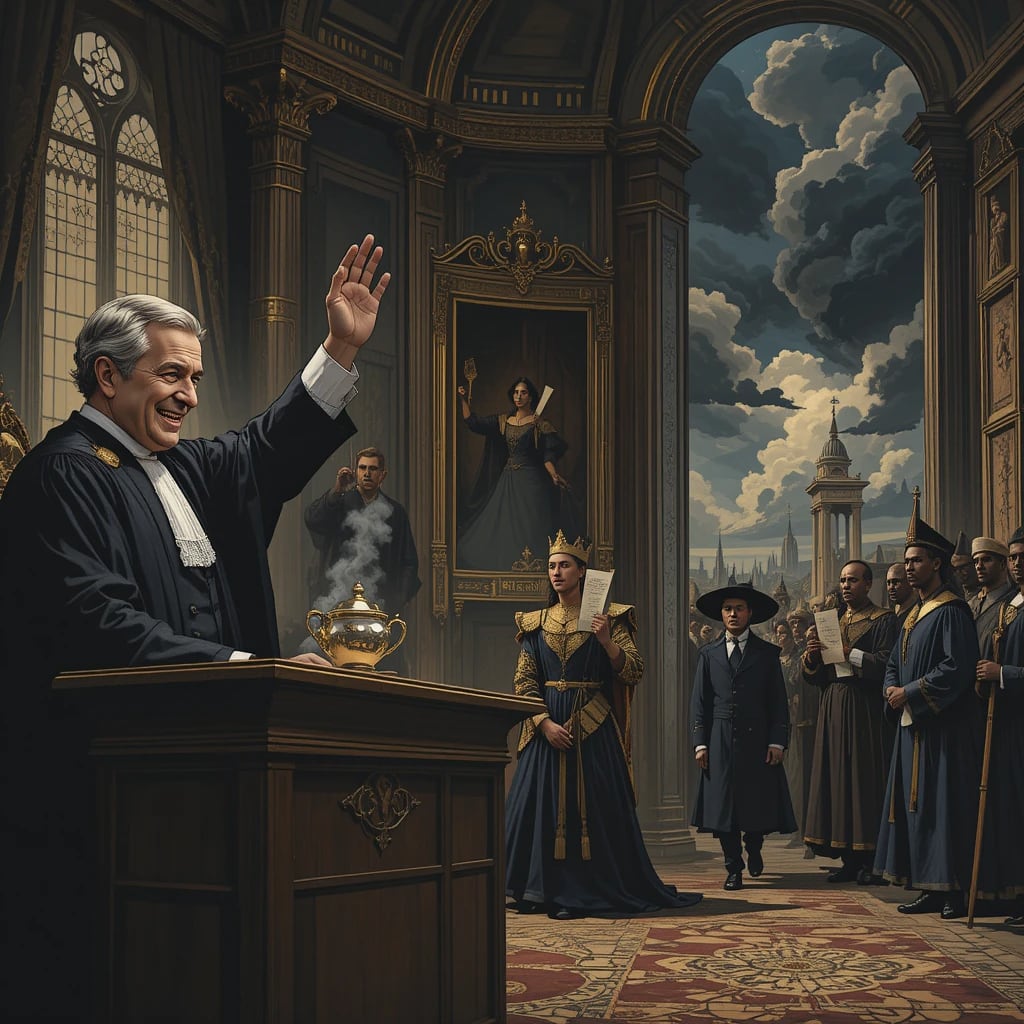
In a kingdom that prided itself on justice, the people found themselves asking a dangerous question: what happens when justice itself becomes a jest?
The uproar began when a senior judge—Sir Reginald Jay, known for his love of florid speeches—offered warm wishes to a man who had once plotted against the realm. This man, called Harun in the court’s scrolls, had been imprisoned far away across the ocean for conspiring to teach young men the art of destruction. He was sent back after serving but a fragment of his sentence, and now, with the chains removed, he was ready to walk free again.
“It could not have been too pleasant,” the judge told him, with the tone one might use when consoling a weary traveler. “All the best. Keep to your medicines, take advice, and… try not to fall into old habits.”
The court fell silent, then restless. Was this truly justice? Or comedy wrapped in robes of power? Mothers who had buried sons on the day of smoke and fire clenched their fists. Fathers who remembered the buses and trains of that dreadful summer in London bit their lips until they bled. What sort of kingdom was this, where terror was met with tea and sympathy?
On the streets, voices grew louder. Some said the judge had lost his senses and should be locked away under the same act of madness he had used to release Harun. Others muttered that the kingdom’s legal circles had been infiltrated by ideologues who cared more for politics than for the safety of the people. The whispers became shouts, and the shouts became storms.
Yet as the storm raged, the palace was busy with its own drama.
For in Clarence House, beneath chandeliers that had seen centuries of whispered confessions, a son met his father. Harold—once a golden prince, now a wanderer of distant lands—had not shared tea with his father, the King, for many long months. Their last meeting had been clouded by illness, for the King carried a shadow of sickness that no crown could lift.
Now Harold returned, perhaps to apologize, perhaps to ask for favors. He had with him not swords, but words, and yet words can cut just as deep.
The King listened patiently, his fingers steady on the porcelain cup. At his side sat the Queen Consort, whose eyes gleamed with the sharpness of memory. For Harold had spoken poorly of her once, carving his bitterness into the pages of a book that sold well but healed nothing. Now he sat before her, asking for grace while she sipped her Earl Grey in silence.
What passed between father and son in those twenty minutes no one can say for certain. But when Harold left, the rain streaked across his carriage window as though the heavens themselves wept. His jaw was clenched, his eyes hard. It was not the face of victory, but of rejection.
And yet, even as Harold’s carriage rolled away, rumors prepared to roll in. Tales of reconciliation, whispers of forgiveness, and the promise of new beginnings were already being crafted for eager ears overseas. For in this kingdom, truth was often less profitable than spin.
Beyond the palace walls, another storm brewed. Across the seas, leaders of nations once ruled by the Crown prepared lists—lists of reparations, debts they claimed were owed for the crimes of empire. They demanded gold, they demanded apologies, they demanded acknowledgment.
“Why now?” the people wondered. “Why, when we already pay the highest taxes in living memory, should more be taken?” They looked at their own rulers—men and women of law and letters who seemed more eager to please distant critics than to protect their own.
And so, three storms battered the land: a judge who blessed a traitor, a son who sought but failed to find redemption, and a continent demanding treasure for the sins of history.
The kingdom stood at a crossroads. Was its justice corrupted? Was its monarchy fractured? Was its treasury about to be emptied by demands from afar?
The old clock in Clarence House ticked on, indifferent to the turmoil. Tick, tock. Tick, tock.
For kingdoms fall not with sudden collapse, but with small betrayals—each one wrapped in good intentions, each one defended with polite words, each one leaving the people wondering if those sworn to protect them had, in truth, become their enemies.
And somewhere in the shadows, Harun walked free.
About the Creator
Beneath the Liquid Sky
Silence. A silence so deep it pressed against the shore like the world itself forgot to breathe. The water remained still, its glazed edges shone with an iridescent glow that pulsed with life beneath the burning sun. Dark trunks rose skyward to the heavens, their branches tracing the outline of the world suspended in silence.
By Caylin Watkinsabout 9 hours ago in Fiction



Comments (1)
wow genius khan great. Also i need your support don,t forget me ok dear.